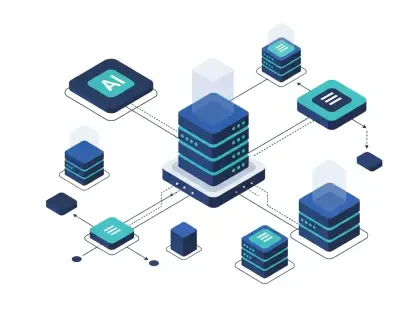

The rapid dissolution of the traditional corporate perimeter has forced a radical rethink of how we secure data in motion, shifting from static hardware to dynamic, cloud-native environments. This transition has historically been painful, characterized by “Franken-platforms” where mismatched security tools are stitched together with digital duct tape. However, the emergence of modular Secure Access Service Edge (SASE) platforms, specifically pioneered by Cato Networks, marks a departure from this fragmented past. By prioritizing architectural unity from the outset, these systems offer a scalable way to manage connectivity and protection without the typical overhead of managing dozens of disparate vendors.
Evolution of the Unified SASE Architecture
The shift toward a unified architecture represents more than just a trend; it is a response to the inherent failures of legacy networking. In the past, companies relied on backhauling traffic to centralized data centers, a method that creates massive bottlenecks in a cloud-first world. The modern modular framework addresses this by converging networking and security into a single software stack. This allows organizations to move away from rigid, appliance-heavy setups toward a fluid environment where security policies follow the user, not the office location.
This evolution is significant because it democratizes high-level security for enterprises that lack the resources to manage complex integrations. Unlike older models that required an “all-or-nothing” commitment, the modular approach allows for a graduated entry. This means a business can solve an immediate connectivity crisis today while laying the groundwork for a full zero-trust environment tomorrow. The transition from fragmented tools to a converged cloud-native stack effectively removes the technical debt that has long hindered digital agility.
Core Pillars of the Modular SASE Framework
High-Performance SD-WAN and Global Private Backbones
At the heart of a robust modular platform lies a global private backbone that replaces the unpredictable public internet. By utilizing a network of over 85 points of presence (PoPs) enhanced with GPU processing, the system ensures that traffic is optimized at the edge. This is crucial for real-time applications where even a few milliseconds of jitter can disrupt operations. The integration of high-performance SD-WAN directly into the backbone ensures that branch offices and remote users experience the same low-latency performance as those in a central headquarters.
Integrated Security Service Edge (SSE)
The security layer functions as a comprehensive cloud-native stack that consolidates firewalls, secure web gateways, and threat protection. Because this is built natively into the platform, there is no need for data to jump between different security engines, which significantly reduces the attack surface. This integration ensures that every packet is inspected once and subjected to a unified policy, eliminating the visibility gaps that occur when multiple vendor products try to talk to each other.
Universal Zero Trust Network Access (ZTNA)
Zero Trust principles are applied across the entire fabric, moving beyond the vulnerabilities of traditional VPNs. This module ensures that access is granted based on identity and context rather than mere network location. By implementing Universal ZTNA, the platform provides a consistent security posture for both remote employees and on-site staff. This granularity allows administrators to define exactly what resources a user can see, effectively neutralizing the threat of lateral movement within the network if a single device is compromised.
AI-Driven Security and Centralized Data Lakes
The true intelligence of the modular framework resides in its centralized data lake, which feeds machine learning modules for real-time threat detection. This setup is particularly effective at governing “shadow AI” and unauthorized cloud usage that often bypasses traditional security. By aggregating data from every corner of the network into a single repository, the system can identify behavioral anomalies that would be invisible to siloed security tools. This proactive stance is essential for defending against the automated threats of the current era.
Trends in Platform Economy and Consumption-Based Models
The cybersecurity industry is currently witnessing a massive shift toward consumption-based pricing, mirroring the flexibility of the broader SaaS market. This move away from rigid, multi-year capacity guesswork allows enterprises to pay only for the bandwidth or user count they actually need. Such a financial model is revolutionary for organizations with seasonal traffic or those undergoing rapid expansion, as it aligns security costs directly with business growth rather than static hardware depreciation.
Furthermore, the rise of the platform economy is killing off the “Franken-platform” model. Modern buyers increasingly demand natively built software stacks that offer a single pane of glass for management. This trend emphasizes economic efficiency by reducing the time IT teams spend on configuration and troubleshooting. When the underlying architecture is unified, the cost of ownership drops because there is no need for specialized training across different interfaces or complex API integrations to make parts work together.
Real-World Implementation and Deployment Strategies
In practice, the modular approach allows industries like retail or manufacturing to modernize legacy infrastructure through phased deployment. For instance, a global retailer might start by deploying SD-WAN to stabilize connectivity across hundreds of sites before slowly layering on SSE and ZTNA as their security needs mature. This “start anywhere” philosophy prevents the operational paralysis that often accompanies massive digital transformation projects, allowing for immediate ROI on specific pain points.
Modular adoption is also a lifesaver for securing highly distributed remote workforces. Instead of shipping hardware to thousands of home offices, enterprises can deploy a software-defined perimeter in minutes. This flexibility proved vital during recent shifts in work patterns, where the ability to scale security up or down instantly became a competitive advantage. The ability to adopt a single module while knowing it will integrate perfectly with future components provides a strategic roadmap that was previously unavailable.
Critical Challenges and Adoption Barriers
Despite the clear benefits, migrating from deeply entrenched legacy hardware remains a daunting task for many IT departments. There is often a significant cultural hurdle, as teams accustomed to managing physical firewalls must transition to managing abstract, cloud-defined policies. This shift requires a change in mindset and a willingness to trust a single-vendor architecture, which some organizations might view as a risk of vendor lock-in despite the operational gains.
Regulatory compliance also poses a challenge, particularly for global firms dealing with diverse data residency laws. While modular platforms offer centralized control, they must also ensure that data handling remains compliant with local regulations across different jurisdictions. Ongoing development efforts are focused on making these platforms more “compliance-aware,” but the integration hurdles between old-world regulatory requirements and new-world cloud speed remain a point of friction that requires careful navigation.
The Future of Converged Networking and Security
Looking ahead, the integration of artificial intelligence will likely lead to fully autonomous network management. We can expect platforms to transition from reactive threat detection to predictive self-healing, where the network automatically reroutes traffic and tightens security protocols before a breach or failure even occurs. This deeper AI integration will be the catalyst for the next stage of digital transformation, allowing humans to focus on strategy while the platform handles the minutiae of defense.
The long-term impact of these scalable security platforms will be the total commoditization of complex networking. As modular SASE becomes the standard, the focus will shift from “how” to connect toward “what” we can achieve with that connectivity. Enterprises will be able to launch new global operations with the same ease that they currently deploy a new cloud instance, effectively erasing the geographic and technical barriers that once limited the reach of digital assets.
Final Assessment of Modular SASE Innovation
The move toward modular SASE platforms has represented a necessary correction in a market that was previously defined by complexity and fragmented security. By decoupling the adoption of specific features from the overall architectural commitment, organizations gained the freedom to evolve at their own pace without sacrificing long-term unity. This review found that the true value of such platforms lay not just in the individual modules themselves, but in the underlying global backbone that tied them together. Ultimately, the successful deployment of these systems provided a blueprint for how modern enterprises could finally reconcile the competing demands of high-performance connectivity and uncompromising security.