
Matilda Bailey is a preeminent figure in the networking and industrial technology sector, specifically recognized for her ability to bridge the high-speed world of IT with the rugged, high-stakes environment of Operational Technology (OT). With a career dedicated to the nuances of cellular, wireless, and next-gen infrastructure, she has become an essential voice for organizations navigating the complexities of digital transformation. As we stand in 2026, the integration of these two once-distinct worlds has reached a fever pitch, driven by a global market projected to hit $151 billion by 2030. In this conversation, we explore how convergence is no longer just a technical upgrade but a survival strategy for modern industry.
Rising security threats are often cited as the primary driver for merging these two worlds, yet this very integration expands the attack surface. How do you advise organizations to balance the need for connectivity with the reality that more connections mean more ways in for cybercriminals?
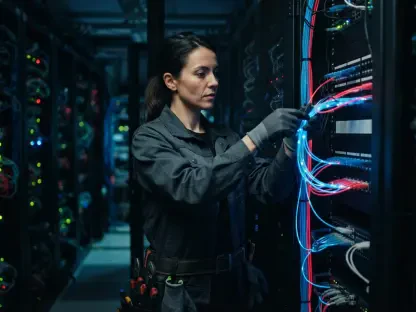
It is a true paradox that the very thing designed to protect us—better visibility and integrated security—initially opens more doors for bad actors. We are coming off a year where ransomware attacks against industrial organizations rose by a staggering 64% in 2025, and manufacturing has officially held the title of the most attacked sector for five years running. To balance this, we have to stop treating OT security as an island and start integrating it into the enterprise risk strategy, something that about 42% of organizations have finally done as of this year. When I walk onto a factory floor, I see the tension; engineers are worried that a security patch will stop a production line that has been running smoothly since the nineties, while the IT team is horrified by the lack of encryption. The key is to implement smart filtering and zero-trust authentication that can flag anomalies in real-time, effectively creating a “digital immune system” that protects legacy devices that were never built with a modem, let alone a hacker, in mind.
With the global IT/OT convergence market expected to grow to $151 billion by 2030, why has this shift moved from being an optional efficiency play to what experts now call “table stakes” for any industrial market?
The reality is that the data trapped inside our machinery is often the most valuable asset a company owns, and we can no longer afford to leave it in a silo. IoT devices have become significantly smaller, smarter, and more cost-effective over the last few years, making it viable for even mid-sized logistics and retail firms to jump in. If you aren’t converging these systems, you are essentially flying blind, relying on manual logs while your competitors are using real-time analytics to shave 10% off their operational costs. This isn’t just about making things “digital”; it’s about institutional survival in a market where margins are razor-thin. When you see a $151 billion valuation on a market, it’s a signal that the infrastructure of the world is being rewritten, and those who stick to the old ways will find themselves with “stranded assets” that simply cannot keep up with the pace of modern commerce.
Beyond the high-level security concerns, there are massive gains to be had in performance and productivity. What are the most impactful operational wins you are seeing for companies that successfully bridge the IT/OT gap?
The most immediate win is the reduction in overhead; by sharing infrastructure, companies are realizing they need fewer systems to procure and maintain, which is freeing up precious data center and real estate space. We’re also seeing a massive shift toward Edge AI, where teams analyze data right where it’s gathered, which drastically cuts down on cloud reliance and the latency that used to plague remote operations. One of the most exciting tools in our arsenal right now is the digital twin, which allows a team to simulate a high-risk upgrade or a new production flow in a virtual environment before they ever touch a physical wrench. This predictive capability prevents the kind of catastrophic downtime that can cost a company millions in a single afternoon. When you combine this with real-time KPI visibility, the entire organization starts to move with a level of agility that was impossible when the factory floor and the executive suite were speaking different languages.
The human cost of industrial operations is often overlooked, with U.S. employers spending roughly $413 billion annually on informal on-the-job training. How is IT/OT convergence specifically addressing this massive financial burden and the skills gap?
This is where the technology becomes incredibly personal and sensory. We are seeing a revolution in training through the use of smart glasses and augmented reality, which provide workers with hands-on, expert guidance regardless of where the senior engineer is located. Imagine a junior technician in a remote facility who can see a digital overlay of a complex valve system, showing them exactly which bolt to turn while a specialist walks them through it from three states away. This effectively offsets a portion of that $413 billion spend by making training “just-in-time” rather than “just-in-case.” It also helps bridge the generational gap; we can take the deep, intuitive knowledge of our veteran workers and codify it into digital systems that guide the next generation. It transforms the job from one of rote memorization to one of high-tech problem solving, which is exactly what we need to attract new talent into the industrial sector.
Even with these benefits, the cultural clash between IT and OT teams remains a significant hurdle. Why is it so difficult to get these two groups to see eye-to-eye on things like system upgrades and maintenance?
It’s a fundamental difference in philosophy: IT lives in a world of “move fast and fix things,” where a software update every Tuesday is the norm, but in the OT world, a system is built to run for twenty or thirty years without an unplanned second of downtime. To an OT manager, an IT patch isn’t an improvement; it’s a threat to production stability that could jeopardize a multi-million dollar contract. Most companies still lack a shared governance model, leading to duplicate processes and a lot of finger-pointing when something goes wrong. We also see major technical friction because many edge devices only support one-way communication or use protocols that are completely incompatible with modern IT networks. Breaking down these walls requires more than just new cables; it requires a unified leadership approach where both teams are incentivized by the same KPIs, rather than working at cross-purposes.
We’ve seen a dramatic shift in how these systems are governed, with CISO or C-suite ownership of OT security rising from 16% in 2022 to over 50% today. What does this shift in leadership mean for the future of industrial safety?
This shift to 52% C-level oversight is a clear admission that OT risk is now a business-ending risk. When half of all organizations experienced an OT-related incident just last year, the board of directors can no longer afford to leave “plant security” to the plant manager alone. This move toward centralized monitoring allows security teams to integrate the factory floor into a global strategy, applying consistent standards for asset management and incident response across the board. We are also seeing a much higher adoption of international frameworks like NIS2 and NIST 800-82, which provide a common language for these leaders to use when auditing their systems. By moving ownership to the CISO, organizations are finally treating a potential breach of a water treatment plant or a power grid with the same level of urgency as a data leak of credit card numbers.
For many organizations, the sheer volume of legacy equipment makes a “rip-and-replace” strategy impossible. What is the most effective way to modernize infrastructure without breaking the bank or the production line?
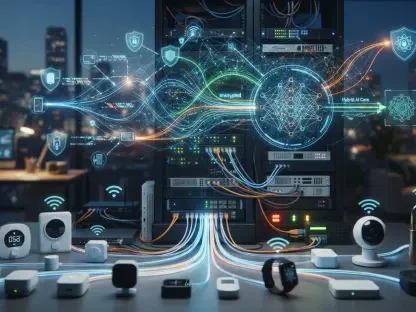
The “rip-and-replace” approach is a myth in the industrial world; nobody is going to throw away a million-dollar machine just because it doesn’t have a Wi-Fi 6 chip. The most successful strategies we see are built on phased increments, using cloud data aggregation services to “wrap” older devices and simulate modern connectivity. You can start with a simple IT asset inventory to identify your biggest integration gaps and then use intermediary infrastructure to manage the data flow into the main network. Digital twins are once again a hero here, as they allow you to surface potential failure points in your modernization roadmap before you ever commit to a physical change. It’s about building a scalable architecture that respects the past while preparing for the future, moving slowly enough to ensure safety but fast enough to stay competitive.
What is your forecast for the evolution of IT/OT convergence as we look toward the end of the decade?
By 2030, I expect the “convergence” conversation to be over, simply because the two will have become indistinguishable; we won’t talk about IT or OT, we will just talk about “The Environment.” We will see an almost universal adoption of autonomous, self-healing networks where AI at the edge manages 90% of the maintenance and security protocols without human intervention. The companies that will thrive are those that are currently investing in “unicorn” talent—those rare individuals who understand both Python and programmable logic controllers. We will see a massive push toward regulatory standardization, where global frameworks will be as strict for industrial cybersecurity as they are for aviation safety. Ultimately, the fusion of these technologies will lead to a more resilient, transparent, and efficient global supply chain, but the journey there will require a relentless focus on unified governance and human-centric training.