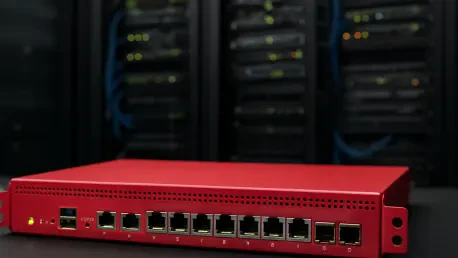

The digital perimeter that once defined corporate security has effectively dissolved, replaced by a complex web of decentralized data and sophisticated, persistent threats that bypass older defenses with ease. For decades, the primary defense mechanism was a simple gatekeeper, yet the shift toward integrated, intelligent systems has redefined what it means to be protected. Traditional firewalls, once the gold standard, now share the stage with a new breed of technology known as Next-Generation Firewalls (NGFWs). These modern hubs do not merely filter traffic; they act as the central nervous system of a security infrastructure. Prominent players in this space, including Check Point Quantum, Cisco Secure Firewall, Fortinet FortiGate, Palo Alto Networks PA-Series, and Sophos Firewall, have moved beyond basic connectivity to provide deep visibility into every byte of data. This evolution marks a transition from reactive packet blocking to proactive threat neutralization, essential for industries ranging from high-frequency finance to global healthcare.
Evolution of Network Security: From Packet Filtering to Next-Generation Hubs
The history of network protection began with simple packet filtering, where a firewall examined the headers of incoming data to decide whether to allow or block based on IP addresses or ports. While this method was efficient for the relatively simple internet of the past, it lacked the ability to understand the context or the actual content of the data being transmitted. In contrast, the current landscape requires a much more nuanced approach. Modern NGFWs serve as multi-functional security hubs that consolidate various features—such as intrusion prevention, virtual private networks, and advanced malware detection—into a single, cohesive platform. This consolidation is not just a matter of convenience; it is a necessity for managing the sheer volume and variety of traffic that defines contemporary business operations.
Organizations today must choose between maintaining legacy systems or adopting these advanced platforms. Each of the major vendors offers a unique perspective on this challenge. For instance, Check Point Quantum focuses heavily on a unified security architecture, while the Palo Alto Networks PA-Series emphasizes a cloud-native approach to policy management. Cisco Secure Firewall leverages its vast networking heritage to provide deep integration across existing infrastructure, and Fortinet FortiGate prioritizes hardware-driven performance. Meanwhile, Sophos Firewall targets accessibility and cross-product communication. Understanding these distinctions is the first step in recognizing how the definition of a “firewall” has expanded from a perimeter fence to a comprehensive intelligence center.
Technical Capabilities and Performance Metrics
Deep Packet Inspection and Application Awareness
The most significant technical divide between traditional and next-generation systems lies in how they inspect data. Traditional firewalls operate primarily at the network layer, looking at the “envelope” of the data rather than the letter inside. They rely on port-based rules, which savvy attackers easily circumvent by disguising malicious traffic as legitimate web data. Next-generation platforms employ Deep Packet Inspection (DPI) to look into the actual payload. This allows an NGFW to identify specific applications regardless of the port or protocol they use. For example, Cisco Secure Firewall supports the identification of over 6,500 distinct protocols and applications, ensuring that an administrator can allow “Slack” for communication while blocking the file-sharing sub-functions that might pose a data leak risk.
Policy flexibility further distinguishes these systems, particularly in how they handle user identity. Palo Alto Networks has set a high bar in this area, allowing administrators to write policies based on specific users or groups rather than just static IP addresses. This means that if a marketing executive moves from the office to a remote coffee shop, the security policy follows the individual, not the device location. This level of application awareness prevents the “lateral movement” of threats within a network, a common tactic where a hacker enters through a low-security port and migrates toward sensitive data. By scrutinizing the behavior of the application itself, an NGFW can detect anomalies that a traditional packet filter would simply ignore.
Security Ecosystem Integration and AI Automation
In the current environment, a firewall that operates in isolation is a liability. Traditional units often functioned as standalone silos, requiring manual updates and separate management consoles for every new feature. Modern NGFWs have moved toward a “security fabric” model, where the firewall shares intelligence with other parts of the network. Sophos Firewall exemplifies this with its synchronized endpoint security, where the firewall and the antivirus software on individual laptops communicate in real-time. If a laptop becomes infected, the Sophos system can automatically isolate that device from the rest of the network, preventing the spread of the threat before a human administrator even sees the alert.
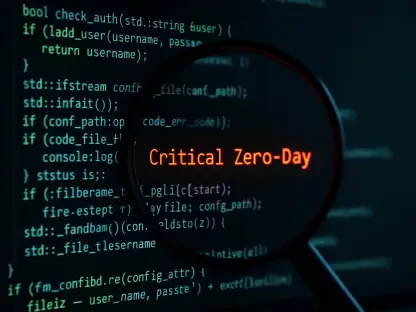
Artificial intelligence and machine learning have also become core components of these platforms. Check Point’s “SandBlast” technology uses AI-driven threat intelligence to identify zero-day attacks that have never been seen before. Instead of relying on a database of known threats, it analyzes the behavior of files in a safe “sandbox” environment to see if they perform malicious actions. Similarly, Cisco Secure Firewall utilizes machine learning to enhance detection by identifying patterns in encrypted traffic without needing to decrypt every single packet, which preserves privacy while maintaining security. This transition from manual rule-setting to automated, intelligent response allows security teams to keep pace with automated attack bots that can strike thousands of times per second.
Throughput and Future-Proofing for Modern Traffic
As network speeds increase, the computational demand on firewalls has skyrocketed. Inspecting every packet in real-time requires immense processing power, leading to a performance bottleneck in many older systems. Fortinet has addressed this challenge by developing specialized Security Processing Units (SPUs) that offload the heavy lifting from the main CPU, allowing FortiGate devices to maintain high throughput even when all security features are active. This is particularly important for handling encrypted traffic, which now accounts for the vast majority of web data. Without specialized hardware or highly optimized software, a firewall can become a significant point of latency, frustrating users and slowing down business operations.
Looking toward the horizon, the rise of quantum computing presents a new set of challenges for data encryption. To counter this, both Fortinet and the Palo Alto PA-Series have begun implementing post-quantum cryptography in their VPN modules. This ensures that data intercepted today cannot be decrypted by quantum computers in the coming years. This proactive approach to future-proofing is a hallmark of the NGFW category. While traditional firewalls might still function for basic tasks, they lack the architectural depth to adapt to these shifts in the global computing landscape, making the transition to next-generation hardware a strategic imperative for long-term data integrity.
Practical Challenges and Implementation Obstacles
Despite their advanced capabilities, NGFWs are not without their hurdles. One of the most common complaints involves the steep learning curve associated with high-performance platforms like Fortinet. While FortiGate offers incredible power, many of its most advanced configurations require a deep understanding of the Command Line Interface (CLI), which can be daunting for smaller IT teams. Furthermore, firmware updates across these enterprise-grade devices can occasionally introduce bugs or change the way existing rules function, requiring a rigorous testing process before deployment. The complexity-usability trade-off is a constant theme; the more powerful the tool, the more expertise is required to keep it running smoothly.
Financial barriers also play a significant role in the selection process. Check Point, for instance, is frequently noted for its high licensing costs and complex subscription models. Organizations must account not only for the initial hardware purchase but also for the ongoing costs of threat intelligence feeds, support contracts, and software updates. For some mid-sized enterprises, these costs can become prohibitive, leading them to look for more budget-friendly alternatives that might offer slightly less features but a simpler pricing structure. Additionally, the sheer amount of data generated by these systems can lead to “alert fatigue,” where security teams are overwhelmed by the number of notifications, potentially causing them to miss a critical threat buried in the noise.
Strategic Recommendations for Firewall Selection
The decision-making process for a firewall refresh required a careful balance of technical needs and administrative capacity. For organizations that prioritized raw performance and were concerned about the long-term implications of quantum computing, Fortinet or Palo Alto Networks stood out as the primary candidates. These platforms offered the necessary throughput for data-heavy environments and the advanced cryptographic support required for future-proof security. However, these choices often demanded a higher level of internal technical expertise to manage the sophisticated configuration options and the deeper granularities of their policy engines.
Conversely, for those who valued an intuitive administrative experience or had smaller IT departments, Sophos or Check Point provided more accessible interfaces. Sophos, in particular, was an excellent choice for organizations seeking a “set and forget” style of synchronized security between their network and endpoints. For companies already deeply embedded in a specific networking ecosystem, such as those using Cisco switches and routers, the Cisco Secure Firewall remained the most logical integration choice to ensure seamless visibility across the entire stack. Ultimately, the successful implementation of network security relied less on the theoretical maximum specifications and more on how effectively a team could utilize the chosen platform to defend its specific digital assets. The transition to next-generation technology was less of a final destination and more of a commitment to a continuous cycle of updates, monitoring, and adaptation in a world where the only constant was the evolution of the threat itself.