
A fresh capital injection of £2.6 million is helping CSignum scale its EM2 product portfolio to bridge the communication gap between submerged sensors and topside receivers. This new investment round, which follows a significant £6 million Series A funding phase, includes key contributions from Archangels, PXN Ventures, and Scottish Enterprise, as well as the British Business Bank and American angel groups. The core mission of this funding is to accelerate the commercial deployment of a technology that avoids the physical limitations of traditional cabling systems. For years, industries operating in aquatic environments have struggled with the exorbitant costs and maintenance headaches associated with hard-wired data links. By utilizing specialized electromagnetic fields, the company is enabling a seamless transition of data across the water-air barrier, reaching receivers on shorelines or offshore platforms without a single physical connection. This advancement is critical for the future of maritime infrastructure and real-time environmental monitoring.
Transitioning to Electromagnetic Communication Standards: The Path Forward
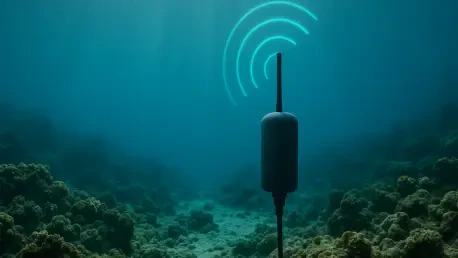
The fundamental innovation of the EM2 platform involves using electromagnetic fields to enable robust Internet of Things (IoT) communications from deep underwater to topside receivers. Traditional acoustic and optical methods often face limitations due to water turbidity, ambient noise, or the presence of thermal layers that distort signals. In contrast, this electromagnetic approach provides a stable and reliable channel that remains unaffected by these environmental factors. This technology is particularly transformative for the offshore wind industry and water utility companies, where monitoring structural health or chemical composition is paramount. By removing the need for physical tethers, operators can deploy autonomous sensor networks across vast areas with minimal logistical overhead. The cost savings are immediate, but the long-term value lies in the continuous, uninterrupted stream of data that was previously too difficult or expensive to capture in such harsh and inaccessible settings.
As the company moves toward global commercialization, a strategic leadership transition has placed John Nicholls at the helm as the new CEO, succeeding Jonathan Reeves. Nicholls is tasked with converting the organization’s deep technological intellectual property into large-scale deployments that can support international industrial standards. This pivot from specialized engineering to broad market penetration is reflected in the company’s aggressive hiring plan, which spans the United Kingdom, the United States, and the European Union. By expanding its workforce, the firm is ensuring it has the local expertise required to tailor its wireless solutions to different regulatory and environmental landscapes. This global footprint allows for the rapid scaling of the EM2 portfolio into new sectors, such as underground infrastructure monitoring and deep-sea mineral exploration. The strategic focus remains squarely on making wireless underwater communication an industry standard for all remote sensing projects.
The implementation of the CSignum Cloud service effectively rounded out the company’s wireless offering by providing a sophisticated platform for data analysis and storage. This move allowed industrial operators to integrate submerged sensor data directly into their digital twin models and AI-driven decision systems. For organizations looking to modernize their monitoring capabilities, the transition to wireless electromagnetic protocols became an essential step in reducing operational risk and ensuring environmental compliance. Industry leaders who adopted these cable-free solutions early found that they could respond much faster to changes in water quality or structural stress. The integration of such data into broader asset management strategies proved that the barrier between the underwater world and the digital landscape was no longer an obstacle. Moving forward, the focus shifted to refining these wireless networks to handle even higher data throughputs for real-time video and complex sensor arrays.