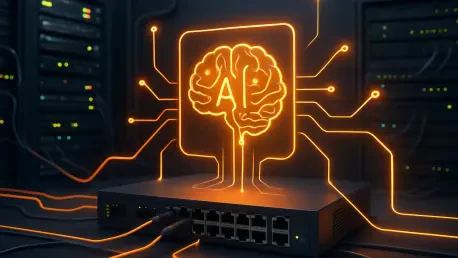

The rapid maturation of artificial intelligence has moved past the novelty of creative content generation and is now confronting the unforgiving demands of industrial-scale network infrastructure. While generative models have successfully automated text and image production, the world of network operations, commonly known as NetOps, requires a much more rigorous level of precision, reliability, and situational awareness. In this high-stakes environment, where a single misconfiguration can lead to catastrophic outages or security breaches, the focus is shifting toward “operational AI” that acts as a participatory agent rather than a simple information retriever. The emergence of specialized tools, such as the InCloud Agent developed by InHand Networks, represents this transition by integrating directly into the live engineering workflow. This technology moves beyond the role of a passive advisor, becoming an active participant in the inspection, diagnosis, and remediation of complex networking issues. As global supply chains and critical infrastructure become increasingly dependent on persistent connectivity, the necessity for an AI that can function within the messy reality of physical and virtual networks has never been more apparent. This change marks the end of the era where artificial intelligence was viewed merely as a luxury, positioning it instead as a fundamental component of the modern engineering stack.
Overcoming Structural Barriers: The Four Pillars of Network Intelligence
Integrating sophisticated intelligence into a corporate or industrial network requires a profound understanding of four major hurdles that traditional, general-purpose AI models cannot adequately address: context, reachability, control, and expertise. General AI typically lacks the granular situational awareness necessary to explain why a specific industrial gateway in a remote manufacturing facility is dropping packets or failing to authenticate with a carrier. Operational AI solves this fundamental deficiency by grounding its decision-making processes in live platform data, ensuring that every recommendation is derived from real-time logs, signal strength metrics, and the unique configuration files of the organization. Instead of offering generic troubleshooting steps that might apply to any router, the system analyzes the specific telemetry of the device in question. This contextual grounding prevents the “hallucinations” often associated with large language models, providing engineers with a reliable partner that understands the specific nuances of their environment. By utilizing this data-centric approach, organizations can reduce the time spent on initial data collection and move directly to the more complex aspects of problem-solving and infrastructure optimization.
Beyond the challenge of context, an effective operational AI must possess the ability to reach devices across a multitude of environments, ranging from cloud-managed gateways to air-gapped systems located behind stringent private firewalls. Security remains a paramount concern in these scenarios, as any automated agent must respect the established authorization boundaries of the enterprise to prevent unauthorized changes or accidental reboots during mission-critical hours. To address the persistent gap in human expertise, this technology transforms the specialized logic and troubleshooting methodologies of senior engineers into repeatable, AI-driven tasks that can be executed by frontline personnel. By codifying expert knowledge into the AI’s operational framework, companies can ensure that even junior technicians are equipped to handle complex diagnostic sequences that would otherwise require the intervention of a specialist. This democratization of technical skill is essential for maintaining large-scale IoT deployments where the sheer volume of devices makes manual oversight by a handful of experts impossible. Consequently, the AI acts as both a protective barrier against human error and a bridge that connects various levels of technical proficiency within a single, unified operational strategy.
Strategic Integration Models: Adapting to Diverse Network Environments
To accommodate the varied architectures found in modern digital infrastructure, operational AI is now being delivered through several distinct integration models that cater to specific organizational needs. For teams that already rely on centralized management portals, the AI provides a natural language interface that can instantly interpret the entire history and alert status of any device currently being viewed by the user. This integration allows for a rapid consolidation of disparate data points, such as traffic patterns, firmware versions, and hardware health, into a single, cohesive summary. Instead of forcing an engineer to manually hunt through dozens of tabs and graphical dashboards, the agent synthesizes this information into an actionable narrative. This approach not only speeds up the diagnostic process but also provides a more holistic view of the network’s health, identifying subtle trends that might be missed by a human operator focusing on a single metric. As organizations scale their operations from 2026 to 2028, this type of native integration will likely become the standard expectation for all high-end network management platforms.
For larger enterprises that have invested in their own proprietary AI ecosystems, the availability of specialized APIs allows for the secure extension of networking intelligence into existing corporate tools. This flexibility ensures that the operational AI does not become another isolated silo, but rather a versatile resource that can be leveraged across the entire business intelligence framework. Furthermore, for high-security environments like electrical substations, water treatment plants, or sensitive manufacturing floors that lack a persistent internet connection, local connection tools enable the AI to function directly on an engineer’s laptop. This “direct skill” capability allows for the local debugging and management of equipment via a private connection, ensuring that even the most isolated or air-gapped segments of the network can benefit from intelligent, automated assistance. By providing these multiple pathways for implementation, the technology remains accessible regardless of the physical location or security constraints of the infrastructure. This adaptability is crucial for maintaining consistent operational standards across a global enterprise that might operate in both highly connected urban centers and extremely remote industrial sites.
Operational Evolution: Moving from Tool-Centric to Goal-Oriented Workflows
The true transformative value of operational AI lies in its ability to shift the NetOps workflow from a tool-oriented process to one that is fundamentally goal-oriented. In a traditional setting, identifying the root cause of a network failure is a tedious, manual endeavor that requires an engineer to gather logs from multiple sources, check SIM card registration statuses, and review a history of recent software updates or configuration changes. This process is inherently time-consuming and prone to human oversight, particularly when under the pressure of a service-level agreement. Operational AI automates this entire discovery phase by structuring an investigation that follows a logical, expert-driven progression from start to finish. It identifies the most likely cause of an outage by cross-referencing multiple data streams and then presents its findings with evidence-backed conclusions. This shift allows the human engineer to focus on making high-level decisions and implementing final solutions rather than getting bogged down in the repetitive task of raw data collection and preliminary analysis.
This move toward goal-oriented workflows also significantly changes how organizations handle the lifecycle of an incident, from initial detection to final resolution. When the AI agent is tasked with a specific objective, such as restoring a lost connection or optimizing a low-bandwidth link, it does not simply provide a list of possibilities; it actively tests hypotheses and verifies conditions in a way that mimics the thought process of a seasoned veteran. For instance, if a cellular gateway is underperforming, the agent might automatically check for local interference, evaluate the health of the internal modem, and verify the APN settings before ever bothering a human operator with a notification. By the time the engineer is alerted, the AI has already performed the “heavy lifting” of the diagnostic phase, providing a clear path forward. This proactive approach to network maintenance ensures that issues are often identified and analyzed before they result in a noticeable loss of service for the end user. As these automated systems become more integrated into the daily routine of the network operations center, the overall resilience of the infrastructure increases, leading to higher uptime and a more predictable operational environment.
Guardrails and Scaling: Securing the Future of Technical Knowledge
Maintaining the stability and security of a live network environment requires the implementation of strict operational guardrails that prevent the AI from taking unintended or harmful actions. To ensure safety, the AI functions strictly within the predefined permissions of the user and performs comprehensive “pre-flight” checks before initiating any sensitive task, such as a firmware upgrade or a full system reset. For example, the agent might verify that a device has a stable power supply and an alternative communication path before proceeding with a significant update that could otherwise result in a bricked device or a permanent loss of contact. Once an action is successfully executed, the agent does not simply stop; it continues to monitor the device in real-time to confirm that it has returned to a healthy state and is functioning according to the expected parameters. This rigorous process culminates in a final verification report that is presented to the human engineer, providing a clear audit trail of what was done, why it was done, and what the final outcome was.
The implementation of these intelligent systems eventually served as a significant force multiplier for organizational knowledge, effectively narrowing the gap between senior experts and junior technicians. When a technician utilized the AI to diagnose a complex connection issue, the agent followed the same rigorous diagnostic path that an expert would have taken, covering everything from signal quality analysis to modem-level debugging. This consistency allowed organizations to scale their operations and support increasingly complex IoT environments without requiring a linear increase in their highly specialized staff. The transition to this model proved that the primary bottleneck in network growth was not a lack of hardware, but rather the limited bandwidth of human experts who were previously required for every minor troubleshooting task. By the end of this developmental cycle, the technology successfully established a new standard where network resilience was maintained through a combination of automated precision and human oversight. The resulting landscape was one where technicians focused on strategic expansion while the operational AI handled the intricate, high-frequency tasks of maintenance and troubleshooting, ensuring a more stable and secure global network.