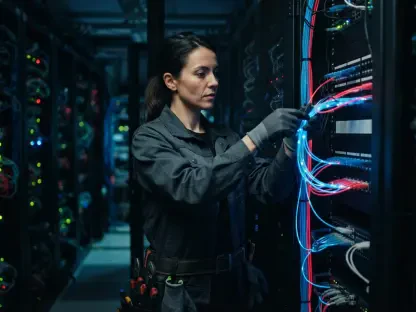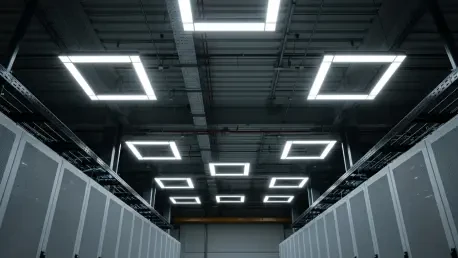

As the global demand for artificial intelligence capabilities continues to accelerate at an unprecedented pace, the underlying physical infrastructure required to support these massive computational workloads has reached a critical turning point regarding energy consumption and thermal management. The transition from general-purpose data processing centers to high-density AI environments necessitates a radical rethink of every subsystem within a facility, including the often-overlooked area of industrial lighting. Orion Energy Systems, a long-standing veteran in the energy-efficient lighting sector, is repositioning its core strategy to meet this challenge head-on by launching the MPHL2 LED lighting system. This specialized hardware is designed to alleviate the pressure on electrical grids by optimizing Power Usage Effectiveness (PUE) in facilities where every watt saved in peripheral systems can be redirected to power intensive GPU clusters. By targeting the intersection of clean-tech and digital infrastructure, the company is moving beyond its traditional strongholds in the retail and automotive sectors to become a foundational player in the rapid expansion of the digital economy.
Engineering High-Efficiency Lighting Solutions
Technical Advantages: The Design Philosophy Behind the MPHL2 Series
The MPHL2 fixture was engineered to address the specific environmental rigors found in modern, high-density data centers where high temperatures and constant uptime are the standard operating conditions. Unlike traditional commercial lighting, these units are designed with advanced thermal management systems that allow them to operate at peak efficiency even when situated near heat-intensive server racks. The series offers a highly configurable design, providing operators with a variety of lens options and beam angles to ensure that light is directed precisely where it is needed, minimizing waste and reducing the overall number of fixtures required per square foot. Furthermore, the inclusion of integrated sensors and control systems allows for real-time monitoring and automated dimming, which is essential for facilities aiming to achieve the lowest possible energy footprint without compromising safety or visibility for on-site technicians during maintenance cycles.
Building on this technical foundation, the MPHL2 series provides a level of modularity that is critical for the evolving nature of artificial intelligence hardware deployments. As data centers scale their computing power from 2026 toward the end of the decade, the lighting infrastructure must be able to adapt to changing floor layouts and equipment densities. Orion has addressed this by ensuring that their systems are compatible with a wide range of mounting hardware and digital communication protocols, allowing for seamless integration into existing building management systems. This forward-thinking approach ensures that the lighting does not become a legacy bottleneck as facilities undergo hardware refreshes. The durability of the MPHL2 also means that maintenance requirements are significantly lower than older technologies, which is a vital consideration for high-security environments where frequent access by outside contractors is discouraged for both safety and operational continuity reasons.
Domestic Manufacturing: Strengthening the American Supply Chain
One of the most significant strategic advantages for Orion Energy Systems is its commitment to domestic production, with its primary manufacturing facilities located in Wisconsin. In an era where global supply chains remain vulnerable to geopolitical shifts and logistical bottlenecks, the ability to source high-quality components and assemble finished products within the United States provides a major competitive edge. This domestic footprint allows Orion to offer significantly shorter lead times than competitors who rely on overseas manufacturing, which is a deciding factor for data center developers working on tight construction schedules. By maintaining a local workforce and supply chain, the company also ensures a higher level of quality control and oversight, ensuring that every MPHL2 unit meets the stringent performance standards required for critical infrastructure projects where failure is not an option.
The “Made in the USA” status of the MPHL2 series is becoming increasingly important as domestic infrastructure projects prioritize local sourcing to meet both corporate sustainability goals and federal procurement requirements. Many of the 3,000 new data centers planned for the United States over the coming years are being built by entities that value the reliability and transparency of domestic partners. This focus on local resilience helps to insulate Orion from the rising costs of international shipping and the complexities of trade tariffs that often plague the electronics and hardware industries. Moreover, the proximity of the design and engineering teams to the manufacturing floor allows for a tighter feedback loop, enabling the company to implement iterative improvements based on customer feedback much faster than firms with fragmented international operations. This localized agility is a core pillar of Orion’s strategy to become the preferred provider for the next generation of American digital hubs.
Strategic Leadership and Financial Growth
Executive Vision: Pivoting Toward High-Density Infrastructure Markets
Under the strategic leadership of CEO Sally Washlow, Orion Energy Systems has embarked on a deliberate pivot away from general commercial lighting toward more specialized, high-growth sectors like electric vehicle charging and AI-driven data centers. This transformation is driven by the recognition that the general lighting market has become increasingly commoditized, whereas high-tech infrastructure requires specialized engineering and deep industry expertise. By focusing on the unique needs of data center developers, the company is positioning itself as a “provider of choice” within the clean-tech ecosystem. Washlow’s vision involves leveraging Orion’s decades of experience in the retail and automotive sectors to create a diversified portfolio that can withstand fluctuations in any single market segment, effectively turning the company into a comprehensive energy management partner for large-scale industrial clients.
The financial results reported in the third quarter of 2026 serve as a testament to the success of this strategic transition, with the company showing resilient growth amid a broader period of market volatility. Orion reported a revenue increase of over seven percent, with total sales reaching $21.1 million, a figure that reflects the growing demand for its specialized LED solutions and its burgeoning electric vehicle charging business. This steady upward trajectory is particularly notable because it occurred while the company was investing heavily in research and development for its new data center product lines. The ability to maintain profitability while simultaneously funding a major strategic shift indicates a disciplined approach to capital allocation and operational efficiency. As the market for AI infrastructure continues to mature, these financial foundations provide the company with the necessary resources to scale its operations and capture a larger share of the multi-billion dollar data center equipment market.
Institutional Support: Tracking Investor Confidence and Insider Activity
Confidence in the company’s future direction is increasingly visible through recent insider activity, which serves as a barometer for internal sentiment among the executive team. Executive Vice President J Per Brodin recently increased his personal stake in Orion Energy Systems by purchasing additional shares of OESX stock, a move that is often interpreted by the market as a strong signal of optimism regarding the company’s valuation and long-term prospects. While individual insider purchases can vary in size, the consistent trend of leadership team members maintaining or increasing their holdings suggests a unified belief that the current pivot toward AI infrastructure will create significant value for shareholders. This alignment between executive interests and company performance is a key factor for retail and institutional investors who are looking for stability and clear direction in a rapidly changing technological landscape.
Furthermore, professional money managers and institutional investors have been actively adding Orion Energy Systems to their portfolios, recognizing the company’s potential as a play on both the green energy and AI infrastructure booms. Data from recent regulatory filings shows that dozens of hedge funds and investment firms, including Myda Advisors and North Star Investment Management, have either initiated or expanded their positions in OESX. This institutional accumulation suggests that the broader financial community sees Orion as an undervalued player with a unique niche in the data center supply chain. These sophisticated investors are typically attracted to companies that offer a combination of a proven core business and a clear pathway to high-growth markets. As Orion continues to secure large-scale contracts with data center operators, the influx of institutional capital is likely to provide additional liquidity and support for the company’s ambitious expansion plans.
Navigating Competitive Landscapes and Future Hurdles
Market Competition: Proving Economic Value in a Global Industry
Despite the strong momentum and technical advantages, Orion Energy Systems faces an intensely competitive landscape characterized by the presence of large global conglomerates with massive marketing budgets. To maintain its foothold, the company must continue to prove the economic value of its products through transparent performance metrics and verifiable return-on-investment (ROI) data. Data center operators are notoriously risk-averse and require concrete evidence that a lighting system will not only reduce energy costs but also contribute to the overall reliability and safety of the facility. Orion’s strategy involves providing comprehensive energy audits and long-term performance guarantees, which help to demystify the transition to advanced LED systems. By focusing on the total cost of ownership rather than just the initial purchase price, the company can effectively compete with lower-cost, lower-quality alternatives from overseas.
Execution and operational excellence will be the primary factors determining Orion’s success as it navigates the complexities of large-scale construction projects across different regions. The company must ensure that its manufacturing capacity can keep pace with the projected demand, particularly as the number of operational data centers globally is expected to exceed 10,000 by 2030. Any delays in delivery or installation could damage the company’s reputation and lead developers to seek more established global partners. To mitigate this risk, Orion is focusing on building strong relationships with electrical contractors and distributors, ensuring that its products are readily available and that installation teams are well-trained on the MPHL2’s specific features. This boots-on-the-ground approach is essential for securing repeat business and establishing a long-term presence in the competitive infrastructure market.
Strategic Roadmap: Prioritizing Scalable Efficiency and Grid Integration
Looking ahead, the role of high-efficiency lighting in data centers will only become more critical as electrical grids around the world struggle to accommodate the massive surge in power demand from artificial intelligence. The industry is moving toward a model where facilities must operate as “grid-interactive” buildings, capable of reducing their load during peak times to help maintain overall stability. Orion’s lighting systems, with their advanced digital controls, are perfectly suited for this evolution, as they can be integrated into demand-response programs that automatically adjust lighting levels based on grid conditions. This capability not only saves the operator money through reduced utility rates but also enhances the facility’s standing as a sustainable corporate citizen. As environmental regulations become stricter, the ability to demonstrate a low PUE through efficient peripheral systems will become a mandatory requirement for new developments.
The conclusion of this phase of Orion’s expansion was marked by a shift in how lighting was perceived within the broader digital infrastructure community. Operators realized that ignoring peripheral systems like lighting led to cumulative inefficiencies that hampered their ability to scale AI workloads effectively. By prioritizing high-efficiency LED technology and domestic supply chain reliability, early adopters established a framework for more sustainable and resilient facility operations. These companies recognized that every kilowatt saved in the ceiling was a kilowatt that could be utilized for core computational tasks. This strategic foresight ensured that the infrastructure built during this period remained viable and cost-effective as energy prices and environmental standards continued to evolve. Moving forward, the industry prioritized integrated energy solutions that addressed the total power footprint, setting a new standard for excellence in high-density data center design.