
The rapid expansion of global sensing networks has reached a critical tipping point where the manual configuration of millions of individual devices is no longer a viable strategy for industrial growth. As the Internet of Things undergoes a radical expansion fueled by artificial intelligence, the demand for seamless physical-to-digital monitoring has never been higher. LoRaWAN has emerged as a cornerstone of this movement, already supporting over 125 million devices across critical sectors like precision agriculture and industrial asset tracking. This evolution signifies a shift from a specialized tool to a global utility.
Technical milestones, specifically the new TS014, TS018, and TR016 specifications, are designed to eliminate the friction points currently hindering mass-market adoption. Industry observers suggest that these updates are essential for bridging the gap between current network capabilities and the future requirements of an AI-driven economy. By focusing on maturity and interoperability, the protocol is being positioned to handle a massive influx of data from diverse environments without compromising on its core promise of low power consumption.
Bridging the Digital Divide With Low-Power Technological Maturity
Low-power networking is entering a phase of industrial-grade maturity that addresses the widening digital divide in rural and remote areas. For many years, the lack of reliable connectivity in regions like deep farmland or isolated mining sites prevented the implementation of high-tech monitoring. However, the stabilization of the LoRaWAN protocol has allowed for the deployment of ruggedized sensors that can operate for a decade on a single battery. This longevity is the primary driver behind the adoption of solar-powered cattle collars and soil moisture sensors that operate autonomously in the most demanding conditions.
The transition from specialized hardware to a standardized global utility is occurring as the LoRa Alliance refines its technical framework. By providing a predictable and scalable communication layer, the protocol enables organizations to move away from fragmented proprietary systems. This standardization allows for a more competitive marketplace where hardware from different vendors can coexist on the same network. As a result, the cost of entry for large-scale IoT projects has plummeted, making it feasible for developing regions to bypass traditional wired infrastructure in favor of wireless sensing.
Engineering Efficiency to Overcome Traditional IoT Bottlenecks
The primary challenge facing the next generation of wireless networks is the sheer logistical weight of managing millions of unique endpoints. Traditional methods of deployment often lead to bottlenecks where the time spent on installation and configuration exceeds the value of the data collected. To remain competitive, the ecosystem must prioritize engineering efficiency that minimizes human intervention and maximizes network throughput.
Transitioning From Manual Inputs to Automated Cloud-Based Onboarding
A significant hurdle in massive sensor deployments has been the labor-intensive handshake process required to register devices on a network. The introduction of the TS014 specification solves this by moving capability discovery away from the power-hungry radio link and into the cloud backend. Instead of using valuable airtime for administrative negotiations, an API is used to query device profiles directly from a server. This shift challenges the traditional, chatty negotiation patterns seen in cellular or Wi-Fi networks, offering a leaner alternative for long-term deployments.
By offloading this dialogue to the cloud, the network preserves the critical battery life of the end device, which is a fundamental priority for LoRaWAN. Operators can manage thousands of sensors without worrying that administrative traffic will clutter the radio channels or drain power supplies prematurely. This automated approach ensures that the “out-of-the-box” experience for enterprise users is as close to plug-and-play as possible, reducing the need for specialized technicians during the rollout phase of a project.
Implementing Zero-Touch Provisioning via Standardized Physical Identification
To achieve true scalability, the industry is moving toward a low-touch environment where thousands of sensors can be activated simultaneously. The TS018 specification standardizes QR code formats on device hardware, allowing operators to scan and instantly link physical assets to their digital profiles in a centralized server. This physical-to-digital bridge is already being utilized in large-scale livestock monitoring, where solar-powered collars are deployed by the millions. By standardizing this identification, the LoRa Alliance is reducing human error and the logistical costs associated with site-wide sensor integration.
Field reports indicate that using standardized QR codes significantly reduces the time required for site surveys and commissioning. When a technician can simply scan a code to provision a device, the potential for manual data entry errors—such as mistyping a device ID—is virtually eliminated. This level of automation is particularly valuable in industrial settings where sensors may be installed in difficult or dangerous locations. Standardized identification ensures that once a device is physically mounted, the digital connection is established immediately and accurately.
Extending Network Reach Into Subterranean and Shielded Environments
Even with its long-range capabilities, LoRaWAN faces challenges in RF-impenetrable zones such as deep wells, mine shafts, and reinforced building interiors. The TR016 technical guidance addresses this through the implementation of battery-operated relays that act as cost-effective range extenders. This innovation allows for network densification without the capital-intensive requirement of installing additional full-scale gateways. By analyzing the economic tipping point between relays and base stations, organizations can optimize their coverage-to-cost ratio, ensuring connectivity in the most difficult geographic conditions.
Relays provide a strategic advantage in urban environments where thick concrete and metal structures often block signals from external gateways. Instead of running expensive cabling for a new indoor base station, a relay can be placed in a stairwell or corridor to bounce signals from deep interior rooms to the main network. This flexibility allows facility managers to extend coverage incrementally as their sensing needs grow. Furthermore, the low-power nature of these relays ensures that they do not require a permanent power source, simplifying the installation process in legacy buildings.
Orchestrating Global Reach Through Satellite Clusters and Industrial Synergy
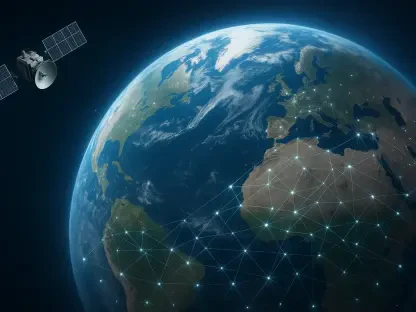
The evolution of LoRaWAN is no longer confined to terrestrial infrastructure; it is expanding into the vacuum of space and the intricacies of the factory floor. Through strategic partnerships with the OPC Foundation and enhancements for Low Earth Orbit satellite connectivity, the protocol is becoming a ubiquitous layer for global data collection. Emerging walk-by and drive-by data harvesting techniques are also being refined, allowing mobile gateways to capture information from isolated sensors on the fly. This multi-dimensional growth ensures that LoRaWAN remains competitive against emerging 5G and satellite IoT alternatives by offering unparalleled energy efficiency.
Satellite integration is particularly revolutionary for maritime and logistics sectors that require continuous tracking across international waters and uninhabited territories. By allowing devices to switch seamlessly between terrestrial gateways and satellite clusters, the network provides a truly global footprint. In industrial settings, the synergy with the OPC Foundation ensures that data from wireless sensors can be easily integrated into existing supervisory control and data acquisition systems. This alignment of wireless and wired standards is crucial for the holistic digital transformation of global manufacturing.
Strategic Recommendations for Navigating the New Era of Interoperability
To capitalize on these advancements, organizations should prioritize moving toward API-based discovery to maximize the lifespan of their sensor fleets. Implementing the new QR identification standards will drastically reduce deployment timelines, while the strategic use of relays can fill coverage gaps at a fraction of the traditional cost. Industry leaders are encouraged to align their hardware procurement with these new specifications to ensure long-term compatibility with the global LoRaWAN ecosystem. Adopting these best practices now will allow businesses to scale their IoT infrastructure rapidly as AI-driven data demands continue to climb.
It is also advisable to conduct a thorough audit of existing network coverage to identify potential RF-shadowed areas where relays could improve performance. Operators should evaluate the cost-benefit of adding satellite connectivity for mobile assets that frequently travel outside of terrestrial range. Furthermore, training deployment teams on the use of automated onboarding tools will ensure that the efficiency gains promised by the new specifications are realized on the ground. By staying ahead of these technical shifts, companies can build a resilient and future-proof data infrastructure.
Cementing the Role of LoRaWAN in an AI-Driven Global Ecosystem
The transition from manual configuration to automated, standardized connectivity marked the coming of age for LoRaWAN. The LoRa Alliance systematically removed the technical and economic barriers to entry, positioning the protocol as a permanent fixture of modern infrastructure. This evolution demonstrated that for the Internet of Things to thrive, connectivity must be transparent, low-power, and accessible in every corner of the globe. The consensus among industry leaders was that these innovations successfully laid the groundwork for a world where every object can be a source of intelligence.
As organizations look toward future deployments, the focus must shift from basic connectivity to data integration and advanced analytics. Enterprises should now investigate how the high-density data provided by these scaled networks can feed into machine learning models to optimize supply chains and reduce environmental impact. Exploring the potential of edge computing in conjunction with LoRaWAN gateways will also be a key step in reducing latency for time-sensitive applications. By building on this invisible foundation of connectivity, the global community can realize the full potential of a truly connected and data-informed society.