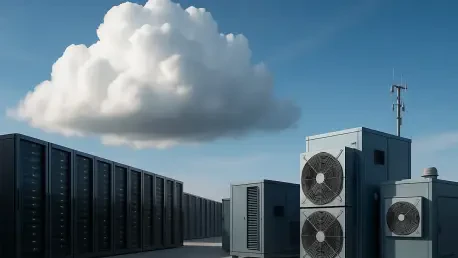

The massive influx of high-resolution sensors and interconnected devices within modern commercial skyscrapers has pushed traditional cloud-centric architectures to their breaking point, necessitating a fundamental shift toward localized intelligence. For several years, the paradigm of smart building management centered on shipping every byte of data to a remote data center, where powerful algorithms would dictate climate control and lighting adjustments. However, as the density of Internet of Things hardware reached unprecedented levels in 2026, the inherent limitations of this centralized model became impossible to ignore. High latency, excessive bandwidth consumption, and the risk of total system failure during internet outages forced facility managers to reconsider their approach. Today, the industry is witnessing a rapid migration toward edge computing, where processing occurs on-site. This decentralized strategy ensures that buildings remain responsive, efficient, and capable of handling massive data streams generated by thousands of concurrent points without overwhelming external networks.
Overcoming Operational and Financial Hurdles
Solving the Latency Gap: The Case for Immediate Response
In high-performance commercial environments, the difference between a successful intervention and a system failure often comes down to milliseconds, making the delay of cloud round-trips a significant liability. Consider a situation where a fire suppression system or a smoke ventilation protocol must activate based on sudden air quality changes detected by localized sensors. If these sensors are forced to transmit data to a cloud server hundreds of miles away, wait for processing, and then receive a command back, critical time is lost that could compromise the safety of occupants. By utilizing edge nodes, these life-safety systems can execute complex logic locally, responding to environmental threats the instant they are detected. This immediate processing is equally vital for dynamic lighting and HVAC adjustments, where delays can lead to noticeable discomfort for workers and residents. Removing the “middleman” of the open internet allows for a more fluid, organic interaction between a physical structure and its inhabitants.
Reducing Bandwidth Constraints: Addressing the Financial Realities
Beyond the technical limitations of speed, the economic burden associated with continuous data transmission has become a primary catalyst for moving building operations away from a pure cloud model. Modern smart facilities generate terabytes of telemetry data every week, ranging from vibration patterns in elevator motors to granular energy consumption metrics at individual power outlets. Transferring this raw volume of information to a cloud provider incurs substantial egress fees and subscription costs that can quickly erode the operational savings promised by smart technology. Edge computing offers a more sustainable financial path by performing data filtering at the source, ensuring that only the most critical or summarized insights are sent to the cloud for long-term storage. This approach dramatically reduces the necessary bandwidth requirements and allows property owners to scale their sensor networks without worrying about exponential increases in monthly utility and IT bills. Shifting the heavy lifting to local hardware allows organizations to maximize their return on investment.
Implementing a Scalable Hybrid Framework
Balancing Local Intelligence: The Synergy of Edge and Cloud
A successful transition to modern building management does not require the complete abandonment of the cloud, but rather a strategic division of labor that leverages the strengths of both architectures. While edge devices excel at handling high-frequency, immediate tasks—such as modulated fan speeds based on real-time occupancy—the cloud remains the superior choice for high-level aggregate analysis and historical benchmarking. This hybrid framework allows a facility to maintain a high degree of local autonomy while still benefiting from the massive computing power required for deep learning and portfolio-wide optimization. For instance, an edge controller might manage a building’s daily energy load, while a cloud-based platform compares that performance across ten different properties to identify long-term efficiency trends. This balance ensures that the building is not only reactive to the present moment but also contributing to a broader strategy of continuous improvement. The result is a resilient system that avoids the bottlenecks of centralization while maintaining visibility.
Modernizing Infrastructure: Bridging the Gap for Legacy Systems
Integrating advanced edge computing solutions provides a practical and cost-effective pathway for upgrading older commercial facilities that were never originally designed for the digital age. Many existing buildings still rely on mechanical systems using legacy protocols like BACnet or Modbus, which are often incompatible with modern web-based applications or cloud APIs. Edge gateways serve as the essential middle layer in these scenarios, acting as sophisticated translators that can ingest data from older chillers and boilers and convert it into a standardized format for modern analysis. This allows building owners to implement phased retrofits, where they can add layers of smart intelligence to their property without the massive capital expenditure required for a total hardware overhaul. By deploying intelligent nodes at the “last mile” of the facility’s network, property managers can extend the useful life of expensive mechanical assets while still enjoying the benefits of modern automation. This strategy lowers the barrier to entry for sustainability initiatives and digital transformations.
Strengthening Asset Protection and Cybersecurity
Driving Reliability Through Maintenance: Real-Time Equipment Health
The implementation of localized processing power has fundamentally changed how facilities handle equipment maintenance by moving from a reactive “fix-it-when-it-breaks” mentality to a proactive predictive model. By running specialized artificial intelligence models directly on the edge, building systems can monitor the acoustic and thermal signatures of critical machinery like HVAC units or large-scale pumps in real-time. These localized algorithms are capable of detecting the earliest signs of mechanical wear—such as a slight increase in bearing vibration or a minute rise in operating temperature—long before the component actually fails. Addressing these minor anomalies during scheduled maintenance windows prevents catastrophic breakdowns that could lead to building-wide outages or expensive emergency repair costs. Furthermore, this localized monitoring significantly extends the lifespan of the building’s most expensive assets by ensuring they always operate within their optimal parameters. This shift not only protects the physical infrastructure but also ensures that the operational budget is used more predictably.
Protecting Sensitive DatEnhancing Privacy and Cyber Defense
Security remains a paramount concern for modern facility managers, and the shift toward edge computing provides a more robust defense-in-depth strategy by significantly shrinking the potential attack surface for cyber threats. In a traditional centralized setup, every smart light bulb or thermostat represents a potential entry point that could be exploited to reach sensitive cloud databases or corporate networks. By processing data locally and only communicating with the cloud through a secure, singular gateway, building managers can isolate their operational technology from the broader internet. This “air-gapped” logic ensures that even if an external network connection is compromised, the building’s core life-safety and environmental systems remain operational and secure within the local perimeter. Additionally, keeping occupant data—such as high-resolution video feeds or granular occupancy tracking—processed on-site addresses growing privacy concerns among tenants. By ensuring that sensitive information never leaves the building’s physical boundaries, owners provide assurance regarding data sovereignty and privacy.
Building Resilience Through Localized Intelligence Strategies
As the migration toward localized processing matured, it became evident that the most successful implementations prioritized the use of open-source protocols and vendor-neutral hardware. These strategic choices allowed facility managers to avoid the pitfalls of proprietary lock-in while ensuring that their buildings remained adaptable to new sensor technologies as they emerged. Property owners recognized that the true value of edge computing lay not just in speed, but in the creation of self-healing networks that operated independently of the public internet. They moved away from generalized cloud models, opting instead to train localized artificial intelligence on the unique environmental patterns of specific buildings. This decision significantly improved the accuracy of climate control and lighting systems, resulting in higher tenant satisfaction scores. By grounding their digital transformations in physical proximity, these organizations established a new standard for operational resilience. This shift ultimately proved that the future of smart facilities relied on local autonomy.