
The migration of critical federal data from outdated, agency-owned facilities to highly specialized commercial hosting environments has fundamentally redefined the security and operational baseline for the United States government’s digital infrastructure. This shift, catalyzed by the Data Center Optimization Initiative, has forced a professional divergence where commercial providers must now choose between standard enterprise offerings and the rigorous, multi-layered requirements of federal tenants. Adapting an existing facility for government use is rarely a matter of simple floor-space allocation; rather, it represents a deep structural and cultural transformation of the provider’s business model. To succeed in this high-stakes market, operators must view their facilities not as passive real estate, but as active components of a national security ecosystem. This involves a comprehensive audit of physical assets, a complete overhaul of operational governance, and a strategic commitment to “federal-only” environments. By isolating government workloads from commercial multi-tenancy risks, providers can ensure that federal security priorities are never compromised by the competing resource demands of private sector entities.
Navigating Certification: The Dual-Track Approval Process
Operators attempting to enter the federal marketplace must successfully navigate a complex, dual-track certification process that validates the physical reliability of the facility alongside the digital security of the hosted systems. The foundation of this trust is built upon widely recognized standards such as the Uptime Institute’s Tier III or Tier IV certifications, which provide a third-party guarantee of concurrent maintainability and fault tolerance. In addition to these mechanical benchmarks, providers must maintain rigorous SOC 2 Type II reports and ISO 27001 certifications to prove their commitment to information security management. However, these industry-standard credentials are merely the starting point. For federal agencies to move workloads into a commercial site, the facility must support the specific security controls required for an Authority to Operate under the NIST Risk Management Framework. This involves a granular mapping of the infrastructure against NIST Special Publication 800-53, ensuring that every cooling pump, power backup, and access control point is documented and monitored to the highest levels of government scrutiny.
The technological landscape of 2026 has introduced a secondary challenge in the form of extreme power densities required for modern government workloads. As federal agencies increasingly integrate Artificial Intelligence and High-Performance Computing into their missions, the power requirements for individual server racks have surged from traditional enterprise levels to 60 or even 100 kilowatts per rack. This evolution has pushed traditional air-cooling methods to their absolute physical limits, making advanced liquid cooling solutions like direct-to-chip or immersion cooling a necessity rather than a luxury. Adapting a commercial facility for these high-density demands requires a significant retrofit of mechanical, electrical, and plumbing systems. Operators must install specialized water quality management systems and sophisticated leak detection sensors within the data hall to protect sensitive government hardware. These upgrades are not just about performance; they are about maintaining the reliability targets mandated by federal agencies that cannot afford downtime when managing mission-critical national security or public safety data.
Strengthening Security: Defense-in-Depth and Site Resiliency
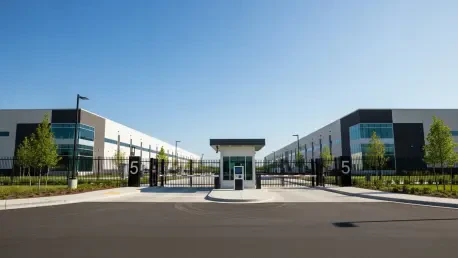
Federal compliance demands a “defense-in-depth” approach to physical security that begins at the property line and extends to the individual server cabinet. Unlike standard commercial sites that may prioritize ease of access for local tech talent, federal-grade facilities show a clear preference for suburban or rural campuses where substantial “standoff distance” can be maintained. This physical buffer is essential for meeting anti-terrorism standards and protecting the facility against external threats ranging from extreme weather events to physical attacks. Within these secured perimeters, operators must install hardened physical barriers, such as anti-ram fencing and high-retention CCTV networks integrated with sophisticated biometric access controls. Every vehicle entering the site must pass through authenticated checkpoints, ensuring that the facility remains a fortress that can withstand external disruption while maintaining internal continuity. This external hardening creates a stable environment where federal agencies can confidently house their most sensitive digital assets without fear of physical breach.
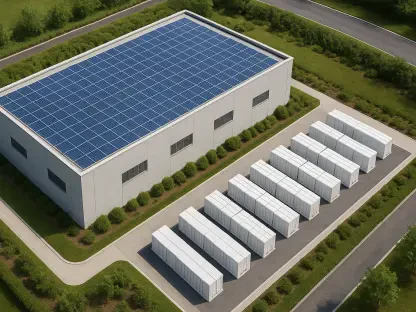
The internal architecture of a federal data center must also be significantly more robust than its commercial counterparts to support specialized government operations. Interior designs often require the construction of Sensitive Compartmented Information Facilities or Special Access Program Facilities that adhere to the strict ICD 705 standards for classified work. These areas are far more than just locked rooms; they require specialized construction techniques to achieve high Sound Transmission Class ratings for acoustic privacy and, in many cases, electromagnetic shielding to prevent electronic eavesdropping. The structural integrity of the entire building must also be evaluated to ensure it can support the massive floor loads created by high-density AI hardware and the heavy battery arrays required for long-term backup power. Furthermore, the facility must be resilient against local natural hazards, including seismic activity and high-wind events, ensuring that the critical data housed within remains accessible and protected even during the most severe regional emergencies or environmental crises.
Operational Reliability: Mechanical Integrity and Personnel Compliance
The mechanical, electrical, and plumbing systems within a federal-grade data center must achieve near-perfect availability to meet the expectations of government missions. This level of reliability is typically achieved through concurrently maintainable designs, where every piece of equipment, from generators to chillers, can be removed from service for maintenance without interrupting the power or cooling delivered to the IT load. Beyond internal redundancy, the facility must demonstrate total network resilience by utilizing physically separate conduits and diverse fiber entry points. This ensures that a single point of failure—such as an accidental fiber cut by a utility crew outside the property—does not sever the communication lines vital to national security or agency operations. This commitment to path diversity and mechanical redundancy creates a foundation of operational transparency that allows government auditors to verify the facility’s resilience at any moment, fostering a long-term partnership based on proven performance and technical excellence.
While physical infrastructure is the most visible part of federal compliance, the human element is equally critical to maintaining a secure and compliant environment. Managing federal data requires a specialized workforce of US citizens who are often required to hold high-level security clearances. Many top-tier providers actively recruit individuals with military or law enforcement backgrounds, as these professionals are already acclimated to the culture of security and accountability required in government environments. Beyond individual clearances, the operational governance of the facility must align with standards like NIST SP 800-171 for handling Controlled Unclassified Information. This personnel-focused compliance ensures that every technician, security guard, and manager understands the gravity of the mission they support. By maintaining a cleared, “federal-only” operational team, data center providers eliminate the risks associated with unauthorized access and ensure that the administrative reporting required by federal oversight bodies is both accurate and delivered with the necessary urgency.
Strategic Evolution: The Path to Future-Proof Infrastructure
When providers evaluated the decision to enter the federal market, the choice between retrofitting an older commercial asset and embarking on a “clean-sheet” new build became a central strategic dilemma. The retrofit path offered a faster route to market and often required lower initial capital expenditure, provided the existing building’s structural “bones” were strong enough to support heavy floor loads and the necessary mechanical upgrades. However, many operators found that the physical constraints of older buildings—such as insufficient ceiling heights for modern cooling or the lack of adequate standoff distance from public roads—made the cost of compliance higher than expected. In contrast, new purpose-built facilities allowed for the seamless integration of federal standards from the design phase, including the placement of Sensitive Compartmented Information Facilities and the installation of high-capacity liquid cooling loops. These clean-sheet designs proved to be more easily auditable and provided the flexibility to scale with the government’s rapidly evolving technical needs.
The transition toward federal compliance demonstrated that the most successful providers were those who moved beyond the traditional role of a landlord and became integrated partners in the federal mission. Operators who mastered the overlap of NIST, FedRAMP, and Department of Defense standards successfully created “trust ecosystems” that offered agencies more than just power and cooling. These environments became stable, high-demand hubs where the government felt confident deploying its most sensitive AI and cybersecurity initiatives. Looking forward, the industry learned that modularity and transparency were the primary drivers of longevity in this sector. Facilities that were designed to adapt to shifting regulatory landscapes and new technical requirements, such as immersion cooling for next-generation processors, remained the most competitive. By prioritizing long-term security and operational excellence over short-term cost savings, these providers established themselves as indispensable assets in the national strategy for digital resilience and governmental modernization.