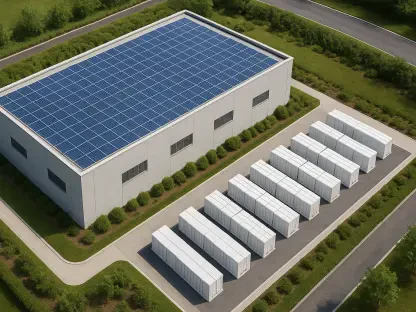

The race for artificial intelligence dominance has transformed from a boardroom debate over venture capital into a frantic scramble for the heavy machinery of physical reality. While the previous half-decade was defined by a desperate search for funding, the current landscape in 2026 presents a different challenge altogether. Billions of dollars are ready to be deployed, but the physical world is pushing back. The primary hurdle is no longer the availability of cash, but the fundamental inability to build facilities, secure power, and lay fiber at a pace that matches the breakneck speed of silicon evolution.
The Shift from Capital Abundance to the Execution Bottleneck
The global digital landscape is no longer starving for investment, as sovereign wealth funds and institutional investors have saturated the sector with capital. However, this abundance of dollars has revealed a much more stubborn obstacle: the physical limits of land, skilled labor, and the aging electrical grid. Building a high-performance data center requires more than a massive bank account; it demands surgical precision in navigating bureaucratic tape, environmental constraints, and a complex web of local regulations. The “gold rush” is increasingly being won not by those with the deepest pockets, but by those who can successfully navigate the logistical minefield of modern industrial construction.
This paradigm shift means that market leadership is no longer determined by who can write the largest check. Instead, the competitive edge has moved toward the entities that can effectively turn blueprints into operational realities. The current environment rewards those who possess the technical grit to manage global supply chains and the political influence to secure critical utility agreements in an increasingly crowded field. As the focus moves from financial engineering to physical engineering, the industry is witnessing a dramatic revaluation of operational competence as the most critical asset in the digital economy.
Why the Data Center Delivery Model Is Currently Broken
The traditional approach to developing data centers is failing to withstand the pressure of exponential artificial intelligence growth. Historically, development has been a siloed process where architects, engineers, and general contractors operate independently, often leading to expensive synchronization failures and project delays. This fragmented lifecycle creates a disconnect between the vision of the developer and the reality of the construction site. When these disparate vendors fail to align, the resulting friction can extend timelines by years, rendering a facility’s design obsolete before it even opens its doors to the first rack of servers.
Furthermore, a surge of speculative developers has entered the market, lured by the promise of high returns but lacking the technical expertise required for advanced high-density environments. These newcomers often underestimate the “power procurement wall,” a multi-year ordeal where securing massive electrical loads from a strained global grid becomes the ultimate project killer. As hardware cycles shrink to mere months, the inability to deliver capacity at speed represents a catastrophic failure of the existing delivery model. The mismatch between the rapid pace of software innovation and the slow, linear nature of traditional construction has reached a breaking point.
Strategic Responses to the Capacity Crunch
New industry alliances are emerging to bypass traditional bottlenecks and stabilize the supply chain. A notable example is the joint venture between Core AI Holdings and Allianca Group, which seeks to consolidate the entire development lifecycle—from site selection and power procurement to final commissioning—into a single, integrated platform. By eliminating the friction inherent in multi-vendor models, these integrated delivery platforms offer a more predictable path to operational readiness. This consolidation allows developers to act with the speed of a technology company rather than the deliberate slowness of a traditional real estate firm.
Market dynamics are also shifting toward “buildable” regions that offer a favorable combination of immediate power availability, streamlined permitting, and robust fiber connectivity. Developers are increasingly moving away from established hubs that are now grid-constrained, seeking out new territories where the path to groundbreaking is less obstructed. Additionally, hyperscalers are taking greater control by increasing their owned infrastructure to approximately 60% of their total footprint. This pivot ensures they maintain direct oversight of their environments, though they continue to rely on veteran operators with proven track records to fill the immediate gaps in their global capacity.
Expert Perspectives on the Scarcity of Operational Expertise
Industry leaders emphasize that the ability to deliver physical capacity has become the most valuable currency in the modern world. Aitan Zacharin, CEO of Core AI Holdings, argues that execution capability is now the most limited asset in the sector, surpassing even the scarcity of capital and high-end silicon. This perspective highlights a growing realization that without the physical infrastructure to house them, the most advanced AI models remain purely theoretical. The focus has shifted from the “what” of technology to the “how” of infrastructure delivery, placing a premium on those who can manage the transition from digital concept to physical asset.
John C. Haley, CEO of Allianca, identifies disjointed delivery models as the primary cause of failure for large-scale infrastructure projects. His insights reflect a broader industry trend where the complexity of high-performance cooling and power management requires a more holistic approach to construction. Analysts at firms like JLL note that while many new partnerships are forming, the most critical capacity deals are still being routed through a small circle of experienced global operators. This “flight to quality” suggests that in a high-stakes environment, reliability and a history of successful execution are far more important than the lowest bid.
Frameworks for Accelerating AI Infrastructure Delivery
To overcome the execution crisis, forward-thinking developers are adopting standardized strategies designed for maximum speed and scale. The adoption of modular deployment has become a cornerstone of this movement, utilizing prefabricated components that can be assembled on-site with minimal disruption. This methodology mitigates the unpredictability of local labor markets and weather conditions, allowing for a level of industrialization that traditional construction cannot match. By treating the data center as a manufactured product rather than a bespoke building, operators are significantly shortening the time to market.
Strategic site selection now prioritizes immediate grid proximity over traditional real estate metrics, ensuring that power-hungry AI clusters can be energized without waiting for extensive utility upgrades. Furthermore, consolidated program management allows a single partner to manage the entire lifecycle, reducing administrative drag and improving communication. Developers are also aggressively pre-positioning their supply chains, securing long-lead items like specialized transformers and liquid cooling systems well in advance of construction. This proactive approach ensures that the physical components are ready the moment the site is prepared, creating a seamless path from design to operation.
The industry transitioned toward a model where logistical mastery and vertical integration defined the successful expansion of digital infrastructure. Stakeholders recognized that the old methods of fragmented construction were no longer viable in an era of rapid technological shifts. It became clear that solving the capacity crisis required a fundamental commitment to modularity and long-term power partnerships. Moving forward, the focus moved toward decentralized energy solutions and the industrialization of the build process. Success was ultimately found by those who viewed execution not as a secondary concern, but as the essential foundation for all future innovation.