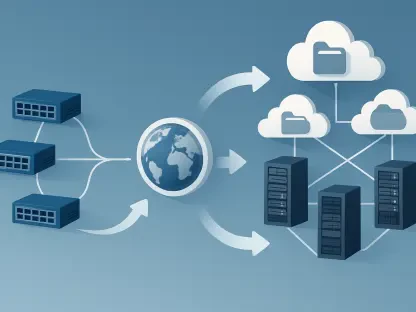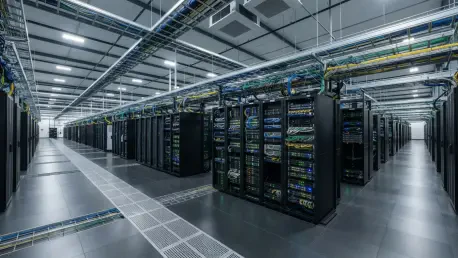

The shift from monolithic, carrier-owned data centers to vibrant, open-access ecosystems has fundamentally rewritten the rules of corporate networking and digital agility for the contemporary enterprise. In this environment, the traditional reliance on a single telecommunications provider has become an unacceptable bottleneck, stifling the rapid data exchange required by modern artificial intelligence and multi-cloud architectures. Carrier-neutral connectivity emerges as the critical solution, offering a decentralized model where the physical infrastructure is agnostic to the service provider. This review examines how this technology has matured into a cornerstone of IT strategy, facilitating a more resilient and cost-effective digital landscape.
The Evolution of Carrier-Neutral Infrastructure
Historically, businesses were tethered to the specific provider that owned the data center where their servers resided, creating a stagnant “vendor lock-in” scenario. Moving data or changing service providers involved grueling physical migrations, often resulting in massive downtime and logistical nightmares. In contrast, carrier-neutral infrastructure decouples the facility from the service provider, transforming data centers into open marketplaces.
By providing a floor for numerous different carriers, these facilities foster competition that drives down prices and enhances service quality. This is essential as organizations increasingly manage workloads across disparate cloud platforms and edge locations simultaneously. This evolution reflects a broader technological shift toward transparency and interoperability, ensuring that the underlying network can scale at the same pace as the software it supports.
Technical Components and Performance Advantages
Multi-Carrier Interconnection and Meet-Me Rooms
At the heart of this model is the “meet-me room” (MMR), a secure physical space within the data center where different networks terminate their equipment to enable direct interconnections. This specialized nexus allows for a seamless exchange of data across diverse network-to-network interfaces without the need for expensive and slow local loops. The efficiency of the MMR is not merely a matter of convenience; it is the fundamental cornerstone of modern network resilience.
By maintaining multiple physical connections within the MMR, a business can achieve near-instantaneous failover capabilities that were previously impossible. If one provider suffers a hardware failure or a fiber cut, the network traffic is automatically redirected through an alternative path via another carrier in the same room. This level of redundancy ensures that the integrity of mission-critical operations remains intact, even during significant external network disturbances.
Direct Cloud Connectivity and Low-Latency Routing
Modern infrastructure requirements have shifted toward direct cloud connectivity, which establishes a private, dedicated link between an enterprise network and a cloud service provider. These links bypass the congested public internet entirely, offering a level of throughput and security that significantly outperforms standard VPN connections. This architecture is particularly vital for handling “east-west” traffic, which refers to data moving laterally between server nodes within a data center.
As AI models become more computationally intensive between 2026 and 2028, the demand for this low-latency routing will only accelerate. Training massive neural networks requires the transfer of vast datasets across distributed clusters, and carrier-neutral hubs provide the high-density networking fabric necessary to sustain these workloads. By eliminating the jitter and latency associated with the public internet, organizations can maximize hardware utilization and reduce the total time required for complex AI training cycles.
Emerging Trends in Network Interconnection
The rise of software-defined interconnection (SDI) is currently transforming how businesses interact with their networking partners. SDI allows IT teams to provision or reconfigure virtual connections on demand through a centralized portal, replacing the weeks-long manual process of ordering physical circuits. This shift toward automated network fabrics provides the strategic agility needed to respond to sudden market shifts or spikes in data demand.
Furthermore, the surging requirements of AI are forcing a redesign of data center architecture, emphasizing liquid cooling and ultra-high-density power delivery. These facilities are becoming specialized environments capable of hosting the massive power draws of next-generation GPU clusters. As hybrid IT environments become more decentralized, the role of the carrier-neutral hub is expanding to serve as the primary orchestration point for data flowing between on-premise hardware and various public clouds.
Real-World Applications and Sector Deployment
In sectors like high-frequency trading and digital media, every millisecond of delay translates into lost revenue or diminished user experience. For financial institutions, the proximity to a carrier-neutral exchange allows for the execution of trades at speeds that outperform traditional architectures. These institutions utilize diverse fiber paths to ensure that their trading algorithms remain operational even if one segment of the regional network fails.
Similarly, healthcare providers rely on these hubs to manage high-resolution medical imaging data across multi-cloud environments, ensuring that specialists can access patient records securely from any location. The ability to aggregate multiple clouds at a single point of presence simplifies the Wide Area Network (WAN) for global enterprises. This turns a chaotic web of disparate connections into a streamlined highway that supports real-time collaboration and data-intensive research.
Navigating Implementation: Challenges and Market Obstacles
Despite the clear advantages, migrating to a carrier-neutral environment involves complexities that require careful navigation. The physical transition of legacy hardware and the precise re-routing of IP addresses demand meticulous planning to avoid operational disruptions. Furthermore, while competition between carriers lowers data rates, organizations must account for the ongoing operational expense of cross-connect fees—the recurring costs charged by facility operators for maintaining a physical wire between two parties.
Regulatory environments also present a significant hurdle, particularly regarding data sovereignty and privacy laws. Enterprises must ensure that their choice of interconnectivity partners does not inadvertently violate regional mandates governing where data is stored and processed. Managing these complexities requires a sophisticated level of network visibility, leading many organizations to adopt automated provisioning tools to mitigate human error and reduce the overhead associated with manual network management.
Future Outlook and Technological Trajectory
Looking ahead, the integration of edge computing into carrier-neutral fabrics is set to redefine the global digital supply chain. Instead of centralized data processing, compute power is moving closer to the source of data generation, such as autonomous vehicles and industrial sensors. This expansion into regional connectivity hubs will democratize access to high-speed networking, fostering innovation in markets that were previously underserved by major telecommunications infrastructure.
The maturation of automated network fabrics will eventually make the physical layer of the network almost invisible to the end user. Between 2026 and 2030, the industry will see a greater emphasis on self-healing networks that utilize AI to predict and mitigate potential outages before they affect service. This evolution will further enhance the resilience of the global digital economy, ensuring that infrastructure remains an accelerator of business growth rather than a technical bottleneck.
Summary of the Carrier-Neutral Landscape
The analysis of carrier-neutral connectivity revealed a fundamental departure from the restrictive, single-provider models that once dominated the industry. It was clear that the strategic agility and financial benefits provided by these open ecosystems outweighed the initial hurdles of physical migration and cross-connect management. The industry moved toward an era where the data center functioned as a neutral utility, empowering organizations to reclaim control over their networking destiny.
By prioritizing vendor independence and low-latency interconnects, enterprises built a technical foundation capable of supporting the most demanding AI and cloud-native applications of the decade. This review determined that carrier-neutrality was not just a trend but a structural necessity for maintaining a competitive edge in a hyper-connected world. Moving forward, the focus must shift to integrating these hubs with regional edge facilities to ensure a truly distributed and resilient global IT architecture.