
The global race for computational supremacy has officially breached the boundaries of Earth’s atmosphere as Cowboy Space Corp. secures a massive infusion of capital to redefine the very foundation of artificial intelligence infrastructure. This recent $275 million Series B funding round, spearheaded by Index Ventures and supported by industry titans like NEA and IVP, has catapulted the startup’s valuation to a remarkable $2 billion. Under the strategic guidance of Robinhood co-founder Baiju Bhatt, the firm is moving beyond the conceptual phase to execute a plan that involves deploying high-density data centers into low-Earth orbit. This initiative represents a direct response to the escalating power demands and environmental constraints currently hampering the expansion of terrestrial AI clusters. By positioning massive computing resources in the vacuum of space, the company aims to bypass the terrestrial bottlenecks of land availability, cooling requirements, and strictly regulated energy grids that have begun to plateau in their ability to support the next generation of large-scale neural networks.
Harnessing Infinite Energy Beyond the Atmosphere
The evolution of Cowboy Space Corp. from its origins as Aetherflux reveals a sophisticated strategic pivot that addresses the fundamental physics of energy collection and utilization. Originally, the mission focused on space-based solar power transmission, which involved using infrared light to beam energy from orbit down to receptors on the surface of the planet. However, the leadership team recognized that the inherent inefficiencies of energy transmission through the atmosphere represented a significant hurdle to profitability and technical scaling. Instead of struggling with atmospheric scattering and the energy loss associated with long-distance wireless power transfer, the company decided to move the high-consumption hardware to the source of the energy itself. This shift ensures that the massive power requirements of modern AI training and inference are met by harvesting sunlight in its purest form, far above the clouds and interference that reduce the efficiency of terrestrial solar panels.
Operating in low-Earth orbit provides a unique advantage in terms of energy consistency and intensity that simply cannot be replicated on the ground. Terrestrial solar arrays are limited by the rotation of the planet, the changing of the seasons, and atmospheric absorption, which collectively restrict peak generation to only a few hours per day. In contrast, orbital data centers can be positioned to receive nearly constant solar radiation, allowing for a steady and uninterrupted flow of clean electricity to power thousands of processors. This level of energy sovereignty allows Cowboy Space to operate independently of traditional power grids, which are increasingly strained by the dual demands of electrification and digital expansion. By eliminating the need for complex cooling systems that rely on terrestrial water sources or massive fans, the orbital environment offers a sustainable path forward for the most energy-intensive industry in the modern technological landscape.
The Architecture of an Orbital Supercomputer
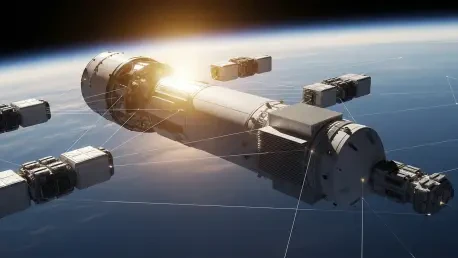
The technical core of this orbital initiative centers on the development of proprietary data center modules that represent a significant leap in aerospace and electrical engineering. Each unit is engineered to provide approximately one megawatt of computing power, a density that requires specialized hardware capable of operating within the harsh thermal fluctuations of the space environment. To achieve this, the company has integrated roughly 800 Nvidia Space-1 Vera Rubin GPUs into every module, creating a concentrated cluster of processing power. These chips are specialized adaptations of Nvidia’s terrestrial accelerators, modified to ensure reliability in a vacuum where heat dissipation relies entirely on radiation rather than convection. The result is a highly efficient “supercomputer in the sky” that can deliver up to 50 petaflops of performance per chip, providing the raw muscle necessary to process the vast datasets required by modern generative AI models.
Constructing a 25-ton computing module presents immense structural and thermal challenges that go far beyond the requirements of standard satellite design. Each module must house not only the CPUs and GPUs but also advanced auxiliary cooling systems and structural housing designed to protect sensitive electronics from solar radiation and high-energy particles. Since there is no air to move heat away from the processors, Cowboy Space utilizes massive radiator panels that extend from the module to bleed off thermal energy into the cold void of space. This architecture allows the hardware to maintain optimal operating temperatures while running at full capacity around the clock. The sheer mass of these systems requires a robust frame that can survive the intense vibrations of launch, making the engineering of the module’s chassis just as critical as the silicon it protects. This integration of heavy industry with microelectronics marks a new era in the design of space-bound payloads.
Engineering Rockets as Functional Data Centers
A defining characteristic of the Cowboy Space business model is the vertical integration of launch services, which moves the company away from the traditional role of a passive satellite manufacturer. Instead of purchasing fairing space on generic rockets, the firm is developing its own launch vehicles with a focus on long-term structural utility. The most innovative aspect of this approach is the plan to repurpose the rocket’s second stage as the permanent container for the data center once it reaches orbit. Usually, the second stage is a discarded component that burns up in the atmosphere or remains as space debris, but Cowboy Space envisions it as a pre-built, pressurized hull that can house the 25-ton computing payload. This strategy significantly reduces the complexity of deployment and eliminates the need for expensive, specialized deployment mechanisms that often represent a point of failure in traditional satellite launches.
By transforming the rocket’s architecture into the data center’s foundation, the company achieves a level of cost efficiency that could disrupt the entire aerospace sector. This “second-stage-as-module” philosophy means that every kilogram of material sent into orbit serves a dual purpose, first as propulsion and then as permanent infrastructure. This methodology also simplifies the manufacturing pipeline, as the rocket factory and the data center assembly line are essentially the same operation. Furthermore, the company’s long-term roadmap includes the development of fully reusable first-stage boosters, which will further lower the barrier to entry for expanding their orbital fleet. This integrated approach ensures that the company maintains total control over its supply chain and deployment schedule, allowing for a rapid scaling of the orbital network as the global demand for AI processing continues its exponential climb through the coming years.
Navigating a High-Stakes Competitive Landscape
The pursuit of orbital computing is not a solitary endeavor, as Cowboy Space enters a market where other well-funded entities are racing to establish their own extraterrestrial infrastructure. Competitors such as Starcloud Inc. are already advancing their own visions of space-based data centers, though their technical philosophies differ in scale and complexity. Starcloud, for instance, has proposed the construction of massive solar arrays covering several square miles, which would serve as centralized power hubs for clusters of tethered computing modules. This competition underscores a broader realization within the technology sector: the next major bottleneck for artificial intelligence is not just the availability of advanced silicon, but the sheer volume of energy required to run those chips. Cowboy Space must rely on its specialized integration with Nvidia’s Rubin architecture and its streamlined launch strategy to maintain its first-mover advantage in this high-stakes environment.
While specialized startups are making significant strides, the presence of established aerospace giants like SpaceX remains a dominant factor in the strategic calculations of the industry. SpaceX’s Starship vehicle, with its projected payload capacity of 150 tons, represents a potential paradigm shift in how heavy hardware is moved into low-Earth orbit. If SpaceX decides to integrate its own AI infrastructure into the Starlink constellation or offer data-center-as-a-service through its massive launch fleet, the competitive landscape could shift overnight. However, Cowboy Space’s focus on repurposing the second stage of its own rockets provides a unique niche that emphasizes hardware density and thermal management over simple payload volume. By focusing on the specific needs of high-performance computing rather than general-purpose satellite deployment, the company positioned itself to offer specialized services that might be more efficient than those provided by larger, more generalized aerospace firms.
Paving the Way for the Future of Space AI
The emergence of Cowboy Space Corp. signaled a fundamental change in the relationship between aerospace engineering and the digital economy. By securing the necessary capital and technical partnerships, the organization moved closer to a reality where the constraints of terrestrial power grids no longer dictated the pace of technological innovation. The strategic pivot from energy transmission to localized orbital computing demonstrated a keen understanding of the physical limitations inherent in the current AI expansion. Throughout the development phase, the company prioritized the integration of advanced Nvidia hardware with a unique launch architecture that minimized waste and maximized structural utility. These decisions laid the groundwork for a scalable model that sought to leverage the limitless solar energy available beyond the atmosphere, effectively creating a sustainable and independent ecosystem for the world’s most demanding computational tasks.
As the first satellite launch approached, the industry began to recognize the long-term implications of moving massive data centers into orbit. This transition required a reassessment of how hardware was maintained and how data was transmitted back to Earth, prompting new advancements in laser communication and orbital logistics. The success of the Series B funding round proved that investors were willing to support high-risk, high-reward ventures that addressed the core vulnerabilities of the global AI supply chain. Ultimately, the work performed by Cowboy Space suggested that the future of large-scale computation was not confined to the surface of the planet but was instead destined to expand into the cosmos. This shift toward orbital energy sovereignty provided a viable path for the continued growth of intelligence systems, ensuring that the next generation of neural networks would have access to the clean, constant power required to function at their highest potential.