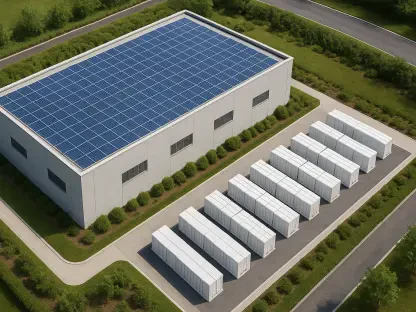

The sheer magnitude of electricity required to sustain a modern intelligence ecosystem has transformed the digital landscape into a complex map of high-voltage grids and cooling towers. While the early days of generative technology focused on the novelty of chat interfaces, the current era demands a physical foundation capable of supporting autonomous agents that do more than just process text. This shift from digital curiosity to industrial-scale utility has culminated in a monumental $5 billion joint venture between Google and Blackstone. By anchoring this partnership in the physical world of real estate and energy, these giants are signaling that the next frontier of innovation is not found in code alone, but in the massive concrete structures that house the silicon.
This massive investment reflects a fundamental change in the economics of the cloud, moving toward a model where high-performance compute is treated as an independent asset. As enterprises move past the experimental stage, they are finding that the “hyperscaler bundle”—which traditionally included storage, networking, and software—is no longer sufficient for the specialized demands of massive-scale inference. This decoupling marks a significant maturation of the market, where the ability to secure power and cooling at a competitive price point has become the primary competitive advantage. The venture specifically addresses the bottleneck of site availability, ensuring that the physical limitations of the power grid do not throttle the expansion of digital intelligence.
The Silicon Gold Rush Moves into Private Equity
The $5 billion price tag associated with this partnership is more than just a headline-grabbing figure; it represents the financial gravity required to pull AI out of the realm of software and into the world of hard infrastructure. In the previous era of computing, growth was measured in user acquisition and software licenses, but today, progress is measured in megawatts and thermal efficiency. The transition from models that simply answer queries to autonomous agents that act on behalf of users has created an insatiable appetite for power. This demand has outstripped the capacity of traditional corporate balance sheets, necessitating a marriage between the technical expertise of Google and the immense capital reserves of private equity firms like Blackstone.
Moving beyond the software layer requires a confrontation with the physical reality of data centers. These are no longer just warehouses for servers; they are becoming the central nodes of a global energy transition. Blackstone’s involvement signifies that AI infrastructure has reached the status of an institutional asset class, comparable to national energy grids or transportation networks. By focusing on the “bricks and mortar” of the digital age, this venture ensures that the ambitious roadmaps of tech developers are not derailed by a lack of physical space or electrical capacity. The strategy shifts the focus from who has the best algorithm to who has the most reliable and scalable environment to run it.
Why the Decoupling of AI Compute Matters
The hardware supporting modern artificial intelligence is rapidly transitioning from being a hidden feature of cloud platforms to becoming a standalone infrastructure asset. Historically, companies accessed compute power as part of a broader, standardized cloud package, but the specialized nature of high-performance silicon has broken this bundle apart. This decoupling allows for more granular control over costs and performance, meeting the specific demands of enterprises that require massive, dedicated clusters for their proprietary workloads. As the market matures, the separation of the compute layer from the software stack allows for a more efficient allocation of resources and capital.
Addressing the global bottleneck has become the primary mission for leaders in this space. While the industry spent previous years worried about chip shortages, the focus has now shifted toward the scarcity of power and site availability. There is a finite amount of land equipped with the necessary fiber connectivity and electrical infrastructure to support 2026-era workloads. By forming a dedicated venture, Google and Blackstone can move more nimbly than traditional cloud providers to secure these rare assets. This proactive approach treats the data center site itself as the most valuable piece of the puzzle, ensuring that when the hardware is ready, the lights will stay on.
Strategic Pillars of the Google-Blackstone Partnership
One of the most significant aspects of this partnership is the rise of the “Neocloud” strategy, which positions Google’s proprietary Tensor Processing Units (TPUs) as a direct alternative to the Nvidia-heavy environments offered by specialized providers. By creating a lean, distribution-focused channel specifically for these high-performance accelerators, the venture provides a streamlined path for firms to scale their operations. This move effectively bypasses the traditional, often cumbersome, cloud procurement process, offering a high-octane environment tailored specifically for the rigors of modern machine learning. It provides a viable alternative for global firms looking to diversify their technical dependencies and optimize their performance-to-cost ratios.
This diversification of the hardware supply chain is a critical step toward reducing enterprise reliance on a single architecture. While Nvidia has dominated the training phase of development, the industry is now pivoting toward the economics of inference—the phase where models are deployed and begin generating invoices rather than just headlines. Google’s TPUs are specifically architected to handle these production-scale tasks with high efficiency. By delivering 500 megawatts of dedicated data center capacity by 2027, the partnership is building the physical foundation necessary to treat AI compute with the same financial stability as a municipal utility, providing the reliable throughput needed for the next generation of autonomous enterprise systems.
Expert Perspectives on the Evolving AI Landscape
Analysis from Greyhound Research suggests that the primary challenge for the industry has shifted from silicon design to the creation of “powered, cooled, and financeable” sites. Sanchit Vir Gogia, a leading analyst in the field, has noted that the ability to secure 100-megawatt blocks of power is now the defining metric of success in the tech world. This perspective highlights why private equity capital has become an essential ingredient for the expansion of tech giants. Even the largest technology firms face constraints on their capital expenditure, and partnering with firms like Blackstone allows them to scale their physical footprint without overextending their own balance sheets.
The transition of AI compute into a stable, long-term infrastructure asset class represents a pivotal moment in financial history. Investors now view the data centers housing TPU clusters as the digital equivalent of oil refineries or power plants—essential utilities that provide a constant service to the global economy. This shift in perception attracts a different type of capital, focused on long-term stability and predictable returns rather than the volatility of software-as-a-service stocks. It creates a more resilient ecosystem where the physical growth of the technology is supported by a robust financial framework, ensuring that the infrastructure can withstand the cyclical nature of the tech market.
Frameworks for Enterprise AI Infrastructure Management
For organizations navigating this complex landscape, a multi-accelerator approach has become the standard for ensuring operational resilience. Relying on a single hardware provider introduces significant risks, both in terms of supply chain disruptions and escalating costs. By securing a mix of GPUs and TPUs, enterprise leaders can optimize their infrastructure based on the specific requirements of their workloads, whether they are focused on massive-scale training or high-velocity inference. This strategic flexibility allows firms to pivot as the technology evolves, ensuring that they are not locked into a legacy architecture that may become inefficient as newer, more specialized silicon reaches the market.
Future-proofing for the era of agentic AI requires a fundamental rethink of data placement and sovereign requirements. As autonomous systems become more integrated into core business processes, the need for low-latency, high-security environments has never been greater. Decisions regarding where data resides and how it is processed are no longer purely technical; they are strategic choices that impact compliance, performance, and long-term viability. By establishing a framework that prioritizes these physical and regulatory constraints, enterprises can build a foundation that supports the constant, high-speed compute demands of the future. The focus moved toward creating an adaptable environment that can grow alongside the increasingly complex demands of autonomous intelligence.
The partnership between Google and Blackstone redefined the relationship between finance and technology by prioritizing the physical requirements of modern compute. This venture established a new benchmark for how digital infrastructure should be funded and deployed, moving away from centralized cloud models toward specialized, high-capacity environments. Enterprise leaders responded by diversifying their hardware portfolios and focusing on the long-term sustainability of their power and cooling strategies. These actions ensured that the transition to an agentic economy was supported by a robust and scalable foundation. The industry successfully moved beyond the limitations of software, securing the physical resources necessary to drive a new era of global productivity.