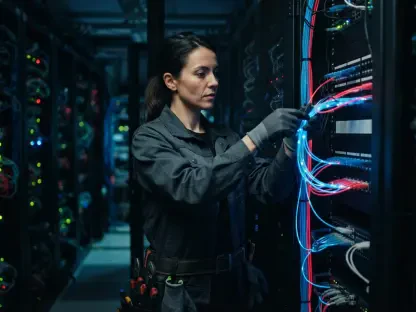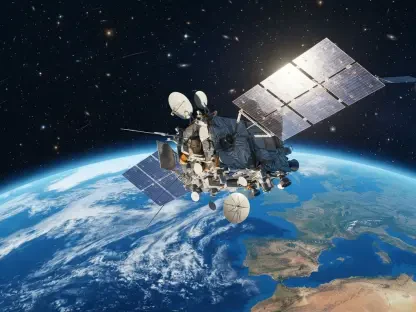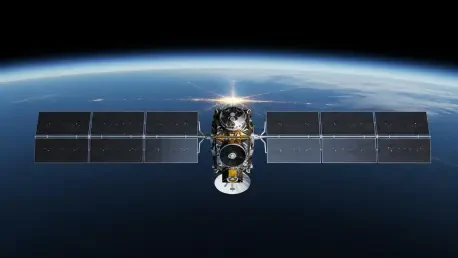

The quest for sufficient electricity to fuel the current artificial intelligence revolution has officially moved beyond the constraints of the terrestrial landscape and into the silent expanse of Earth’s orbit. While most technology firms are searching for more land to house their infrastructure, the race for artificial intelligence has triggered a search for energy that extends far beyond the atmosphere. A single generative AI query can require ten times the electricity of a standard search engine request, pushing the global energy grid to its absolute breaking point. Meta is now exploring the possibility of capturing sunlight in orbit and beaming it down to Earth, a concept once reserved for science fiction that is becoming a strategic necessity as terrestrial resources dwindle.
The energy consumption associated with large-scale language models is transformative, fundamentally altering how data center operators perceive resource management. As these models grow in complexity, the hardware required to train and run them generates heat and draws power at levels previously unseen in the digital age. This surge in demand occurred at a time when traditional energy sources were already under pressure to transition toward greener alternatives. Consequently, the search for a consistent, high-output power source led researchers to look upward, where the sun never sets and the atmospheric interference that weakens solar panels on the ground is entirely absent.
Turning to the Heavens to Solve Earth’s Power Scarcity
The shift toward space-based solar power represents more than just a technological curiosity; it is a response to the physical limitations of our planet. Terrestrial solar farms are inherently limited by the day-night cycle and weather patterns, necessitating massive battery arrays to provide a steady stream of power. In contrast, satellites positioned in geostationary orbit can collect solar energy nearly 24 hours a day, providing a constant flow of electricity that matches the “always-on” nature of modern AI data centers. This move toward orbital collection seeks to capitalize on the fact that solar intensity in space is roughly eight times higher than it is on the surface of the Earth.
Furthermore, the environmental footprint of massive ground-based solar installations has become a point of contention in many regions. Finding enough contiguous land to power a gigawatt-scale data center often involves complex negotiations and environmental impact assessments that can stall projects for years. Space-based systems bypass the land-use issue entirely, utilizing the vastness of the orbital environment to generate power that is then transmitted to relatively small receiving stations. This strategy allows for the scaling of energy production without the traditional geographic constraints that have historically hampered large-scale utility projects.
The Widening Gap Between Innovation and Infrastructure
The primary challenge for hyperscalers like Meta is not just generating green energy, but the physical inability of the power grid to deliver it. In the United States, the average wait time for a new project to connect to the electrical grid has stretched to five years due to aging transmission lines and complex regulatory hurdles. This “interconnection queue” acts as a massive bottleneck for AI expansion, preventing even fully funded and constructed facilities from reaching their operational potential. By exploring unconventional sources like space-based solar and long-duration storage, Meta is attempting to bypass these systemic limitations and secure a “firm” power supply that operates independently of traditional grid constraints.
This infrastructure gap has forced a rethink of how technology companies interact with local utilities. The existing grid was built for a previous era of predictable, centralized energy consumption, and it is struggling to adapt to the decentralized, high-intensity loads required by modern computing clusters. As a result, companies are increasingly looking for ways to generate power on-site or through direct transmission methods that do not rely on the overtaxed public wires. Orbital energy beaming presents a radical alternative that could potentially deliver power directly to a data center, effectively cutting the traditional utility middleman out of the equation for specialized high-power applications.
A Two-Track Strategy for Energy Resilience and Orbital Generation
Meta’s approach splits its focus between immediate reliability and speculative, high-reward ventures. The near-term strategy involves partnering with firms like Noon Energy to develop long-duration storage systems that can hold renewable energy for multiple days, effectively eliminating the intermittency of wind and solar. These systems use carbon-based thermal storage to bridge the gap during periods of low renewable output, ensuring that data centers remain operational regardless of weather conditions. This provides a necessary buffer while more ambitious technologies undergo the rigorous testing required for deployment.
Simultaneously, the long-term track focuses on Space-Based Solar Power through partnerships with frontier tech companies like Overview Energy. This technology aims to use satellites to collect solar energy in a permanent daylight environment and beam it via radio frequency or lasers to ground-based receivers, potentially providing constant, 24/7 carbon-free power to data centers. While the storage track provides a safety net for current operations, the orbital track represents a bet on the future of energy independence. By funding both, Meta is attempting to insulate its AI roadmap from the volatility of the global energy market and the physical limitations of the terrestrial environment.
Weighing Technical Feasibility Against the Realities of Physics
Industry experts remain cautious about the timeline for orbital energy, citing significant hurdles in economic cost and transmission efficiency. While Meta’s orbital demonstrations are not expected until 2028, the company is diversifying its risk by investing in 7.7 GW of nuclear capacity through deals with Constellation Energy and Oklo. Experts from across the tech sector point out that beaming energy from space involves substantial power loss compared to traditional cables. The process of converting solar energy to microwaves or laser light, sending it through the atmosphere, and then converting it back to electricity on the ground is a sequence fraught with thermodynamic challenges.
Despite these hurdles, the potential to add massive wattage to existing facilities without triggering new, decades-long interconnection studies makes these speculative bets highly attractive to a company that needs to scale at AI speed. The cost of launching payloads into orbit has dropped significantly over the last decade, making the economics of SBSP more plausible than they were at the turn of the century. If the efficiency of the transmission “link” can be improved, the high initial capital expenditure of satellite deployment might be offset by the lack of maintenance costs and the incredibly high capacity factor of space-based collectors.
Frameworks for Transitioning from Utility Consumer to Energy Developer
To survive the energy crunch, Meta moved away from the traditional model of being a mere customer of local utilities. The company’s framework for future-proofing its infrastructure involved a combination of supply-side innovation and demand-side efficiency. On the supply side, the focus remained on securing firm power through a mix of nuclear, advanced storage, and space-based research. This integrated strategy provided a blueprint for other hyperscalers who realized that waiting for the grid was no longer a viable path. They shifted their focus toward becoming active participants in the energy market, funding the very technologies that would eventually free them from traditional constraints.
On the demand side, the industry prioritized partnerships with hardware firms like Broadcom to develop custom AI silicon that extracted more computational power per watt. This multifaceted approach recognized that the energy crisis required both more power and better efficiency. The transition was defined by a pivot toward self-reliance, where tech giants assumed the role of energy pioneers. They invested in a diverse portfolio that balanced the immediate needs of the grid with the long-term possibilities of orbital power. Ultimately, the industry moved toward a future where the limitations of the Earth’s atmosphere were no longer the ceiling for digital growth, as the heavens became the new frontier for powering the next era of human intelligence.