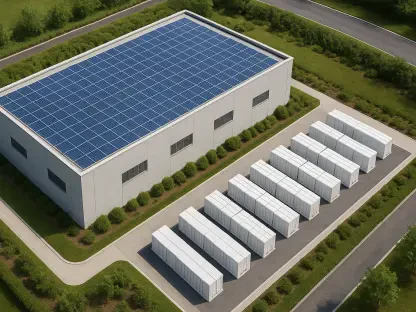

The insatiable global hunger for artificial intelligence and cloud storage is finally colliding with the physical limits of local power grids and water reserves, sparking a fierce backlash in communities that were once eager for digital investment. As the digital economy accelerates, the massive warehouses of silicon and steel that power it are no longer viewed as silent economic engines but as resource-intensive neighbors that threaten the stability of the very towns they inhabit. This tension has transformed from isolated grassroots grumbling into a coordinated legislative movement, signaling a definitive end to the period of unchecked industrial growth.
The Geography of Resistance: Policy Shifts and Project Halts
Statistical Indicators of a Decelerating Trend
Recent legislative sessions across the United States have revealed a startling shift in policy, with eleven states introducing measures designed to curtail or pause data center development. This regulatory pivot is driven by the realization that these facilities, which currently account for a significant portion of domestic power usage, are on a trajectory to consume 10% of the total U.S. electricity supply by 2030. The urgency is further underscored by the “Virginia Effect,” a situation where data centers already command 26% of available power, leaving little room for residential or other industrial growth.
Case Studies in Civic and Legislative Pushback
In Maine, a landmark proposal seeks to halt any projects exceeding 20 megawatts until late 2027, allowing the state time to study environmental impacts and grid resilience. This legislative brake is mirrored at the municipal level in places like Smithfield, Rhode Island, where officials have moved toward requiring specific use variances for any new developments. These local ordinances often include biennial reviews to prevent unregulated industrial sprawl, ensuring that municipal leaders can pivot if resource consumption exceeds manageable levels.
Exemptions and Loopholes
Despite the broad sweep of these bans, certain exceptions highlight the complexity of the current landscape. For example, a planned facility in Jay, Maine, has been granted a carve-out, demonstrating that projects already deep in the planning stages or those offering specific localized benefits may still find a path forward. These loopholes suggest that while the door is closing on easy expansion, it is not entirely locked for developers willing to navigate intense bureaucratic scrutiny.
Industry Expert Perspectives on the Utility Crisis
Urban planners and environmentalists warn that the current rate of expansion is placing an irreparable strain on aging electrical grids and sensitive water tables used for cooling. Many energy market analysts express deep concern that this surge in industrial demand will inevitably lead to higher electricity prices for residential consumers, turning data centers into a political liability. Consequently, tech policy experts have observed a rapid transition from local opposition to formal, bipartisan resistance at the state level, as lawmakers prioritize utility integrity over tech sector expansion.
The Future Landscape: Regulation, Relocation, and Resilience
The era of the “Data Center Wild West” is effectively over, giving way to a highly regulated and jurisdiction-specific development model that prioritizes sustainability. Developers are now being forced into an “infrastructure migration,” seeking out regions with underutilized power capacity or more favorable regulatory climates rather than clustering in traditional hubs. This geographic shift might slow the national AI race, but it is simultaneously pushing the industry toward more efficient engineering, such as advanced low-water cooling technologies that minimize environmental footprints.
The long-term survival of the sector depends on its ability to prove that it can coexist with local utilities without degrading public services. If the industry fails to innovate in energy efficiency, the risk of a total developmental collapse in high-demand regions remains high. However, a tactical shift toward high-efficiency models could allow for a more balanced growth trajectory that respects the physical constraints of the host communities.
The tension between the digital economy and local infrastructure has necessitated a fundamental recalibration of governance. Moving forward, a collaborative framework where developers must demonstrate long-term sustainability before breaking ground will become the standard. This shift toward accountability ensured that technological progress did not come at the cost of community stability or environmental health. Ultimately, the industry had to adapt by integrating more deeply with local needs, proving that innovation and infrastructure integrity could be mutually beneficial goals.