
The global scramble for high-end silicon has historically defined the artificial intelligence race, but a seismic shift is occurring as the focus transitions from raw processing power to the strategic placement of intelligence across global networks. When Akamai Technologies and Anthropic unveiled a strategic partnership with a potential valuation of $20 billion, it represented more than just a massive financial transaction. It served as a clear indicator that the dominant paradigm of centralized, massive data centers is giving way to a more agile, distributed cloud model. This shift suggests that the next phase of progress is not merely about how much power is generated, but where that power resides and how efficiently it can be accessed by users worldwide.
As generative AI moves from the experimental phase into deep integration within corporate environments, the hardware requirements are undergoing a significant re-evaluation. The “bigger is better” philosophy that drove early model training is now being supplemented by a need for low-latency delivery and operational scalability. By committing to a seven-year partnership, these two industry leaders are building a backbone that prioritizes the reach of the network as much as the depth of the models. This evolution marks a transition from the laboratory to the production floor, where the reliability of the infrastructure determines the ultimate success of the application.
The $20 Billion Pivot Toward Distributed Intelligence
The current market dynamic has long focused on a winner-take-all scramble for high-end GPUs, but the Akamai-Anthropic deal signals a diversification of interest toward a broader infrastructure stack. This strategic commitment, which includes an initial $11.6 billion investment, highlights a transition toward distributed intelligence. Rather than relying solely on monolithic campuses, the industry is exploring how to spread compute resources across a vast network of smaller, highly efficient sites. This allows for a more responsive environment where AI can react to user inputs in real time without being tethered to a single geographic hub.
Moving away from the centralization of compute power offers a solution to the increasing physical constraints of the modern grid. Massive data centers are often limited by the local power supply and the extreme cooling requirements of high-density hardware. By distributing the workload, the partnership leverages Akamai’s existing global footprint to bring Anthropic’s models closer to the digital edge. This approach does not replace the need for training clusters but instead creates a complementary layer that focuses on the agility and accessibility required for large-scale enterprise deployment.
Why the Post-Training Lifecycle Is the New Frontier
While the spotlight often remains on the massive clusters required for training “frontier” models, the industry is entering a secondary phase where the post-training lifecycle dictates success. Training a model is a concentrated, one-time expenditure of resources, but serving that model to millions of concurrent users is an ongoing, complex challenge. This operational phase involves massive data preprocessing and the enforcement of real-time safety guardrails, tasks that require a different kind of infrastructure than the one used for the initial creation of the model.
The current bottleneck in the industry is no longer just the supply of chips, but the logistical difficulty of managing the heat and energy demands of traditional GPU-centric hubs. As AI becomes a production-grade utility, the infrastructure must adapt to handle the everyday workloads that surround the core model. This involves managing the metadata, context, and security protocols that allow a model to function safely in a commercial setting. Consequently, the focus is shifting toward maximizing the efficiency of the entire ecosystem rather than just the raw speed of the training processor.
Decoupling AI Performance from GPU Dominance
One of the most notable aspects of the new infrastructure model is the identification of CPUs as the unsung heroes of the modern stack. While GPUs handle the heavy lifting of matrix multiplication, CPUs are far more efficient at managing agentic orchestration, memory management, and API termination. These supporting systems are critical for the functionality of AI agents that must call external tools and manage multi-step workflows. By utilizing CPU versatility, companies can ensure that the “connective tissue” of their AI applications remains fast and reliable without over-relying on expensive and power-hungry GPU resources.
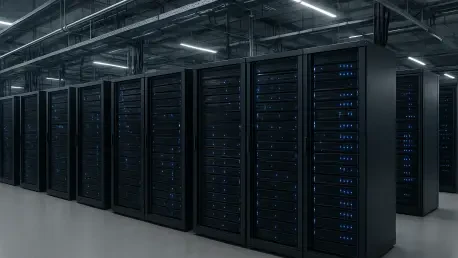
The economic advantages of this shift are also becoming increasingly apparent, as CPU-based deployments generate a higher revenue per megawatt. Because these systems fit into a wider variety of existing facilities, they do not require the bespoke, high-cost liquid cooling setups essential for dense GPU racks. The financial dynamic is further improved by the lower power density of CPU hardware, which typically draws between 10 kW and 20 kW per rack compared to the 100 kW common in high-end GPU environments. This disparity makes CPU-heavy infrastructure more sustainable for operators and more profitable for cloud providers over the long term.
Redefining the Modern Data Center Landscape
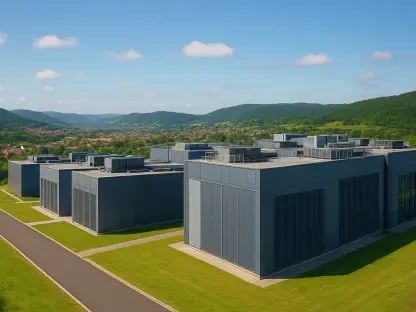
Infrastructure experts are observing a clear movement toward a distributed serving tier where capacity is assembled across multiple smaller sites. This methodology bypasses the current race for liquid-cooled “gigawatt” sites that are often difficult to permit and slow to construct. By securing smaller parcels of 10 to 30 MW in diverse geographic locations, the partnership proves that AI compute can thrive in secondary metropolitan areas. This geographic diversity brings processing power closer to the end-user, which is a vital component in reducing latency for real-time applications.
Utilizing standard air-cooled co-location facilities allows for a much faster deployment schedule than the construction of massive hyperscale campuses. This flexibility means that capacity can be added incrementally where demand is highest, rather than being locked into a single megacampus. This strategy effectively decentralizes the power grid load, making it easier for utility providers to accommodate the growing needs of the AI industry. As a result, the physical map of the internet is expanding to include more diverse processing hubs that serve local markets with higher efficiency.
Strategies for Building a Scalable AI Infrastructure
Building a scalable infrastructure in the current environment requires a multi-faceted approach to managing supply chains and capital expenditures. Akamai plans to spend approximately $5.5 billion in capital investment over the next two years, with significant portions allocated to pre-purchasing hardware components like memory and networking gear. By securing these components years before revenue realization, the company future-proofs its ability to deliver on massive long-term contracts. This forward-looking financial strategy is essential for navigating a market where hardware lead times can often stretch into several quarters.
The successful implementation of this model relies on a balanced hardware mix that bridges the gap between high-density training and lower-density delivery. Implementing a mix of GPU clusters for model creation and CPU environments for orchestration creates a more resilient infrastructure. This tiered approach lowers the barriers to entry for data center operators who can now capture AI-related business without redesigning their entire cooling architecture. By integrating these diverse environments, the industry can create a seamless pipeline that takes an AI model from its initial training phase to global production with minimal friction.
The partnership between Akamai and Anthropic established a new standard for how enterprises deployed large-scale intelligence across the global network. The industry transitioned toward a model that favored distributed nodes and energy-efficient hardware stacks over the traditional reliance on centralized, high-density power hubs. Organizations shifted their focus to securing long-term supply chains and leveraging existing air-cooled data centers to bring compute power closer to end-users. This evolution ensured that artificial intelligence functioned as a pervasive, low-latency utility, setting the groundwork for a more sustainable and accessible digital ecosystem. Industry leaders prioritized operational versatility, which allowed for the rapid scaling of agentic workflows and real-time processing in previously underserved metropolitan areas. In doing so, the sector moved beyond the initial training surge to create a robust, resilient infrastructure capable of supporting the next decade of digital transformation.