
Matilda Bailey has spent her career at the intersection of complex infrastructure and emerging technology, helping organizations navigate the shift from manual hardware management to software-defined environments. As a specialist in cellular, wireless, and next-gen networking solutions, she understands the high-stakes pressure that IT professionals face when keeping global networks online. Recently, the conversation in the industry has shifted toward the integration of generative AI within management dashboards, specifically looking at how playful interfaces can coexist with serious security demands. This discussion explores the recent introduction of “Galaxy Mode” and the underlying “Deep Reasoning” capabilities that aim to transform how network operators interact with their systems. We dive into the psychology of playful interfaces, the mechanics of preventing AI hallucinations during security audits, and the transition toward natural language agentic workflows that promise to eliminate the clutter of traditional troubleshooting.
Galaxy Mode introduces Star Wars themes and “Easter egg” surprises into management interfaces. How does adding a playful layer to technical tools impact daily operations for IT teams, and what is the strategy for ensuring these temporary features do not distract from critical security tasks?
There is a unique psychological relief that comes when a high-stress environment, like a network operations center, acknowledges the human element through a bit of levity. When an administrator logs into a Meraki or ThousandEyes dashboard and sees a starfield flowing behind the prompt or hears a voice echoing, “Down, the network is,” it breaks the tension of a potential “war room” scenario. These playful elements, like the concealed “Easter Eggs” hidden within the interface, serve as a morale booster for teams who are often working under the gun to maintain five-nines of uptime. However, Cisco is very intentional about the lifecycle of these features; Galaxy Mode is strictly a temporary release available only until June 4, ensuring that the novelty doesn’t overstay its welcome or become a permanent clutter in the UI. By time-boxing the “May the Fourth” theme, the strategy allows for a moment of community culture among “network nerds” without compromising the long-term professional rigor required for managing critical infrastructure. The goal is to brighten the workday with “hidden surprises” while the underlying AI continues to work on solving real, complex connectivity issues without the need for an actual laser blaster.
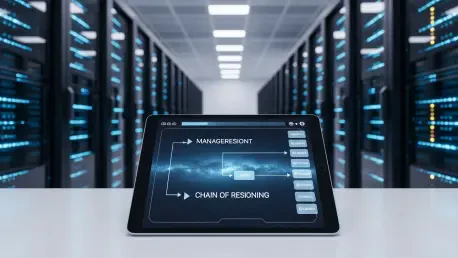
Deep Reasoning now interprets signals across domains to predict how a single misconfiguration might ripple through a network. How does providing a visible “chain of reasoning” help engineers validate AI conclusions, and what specific steps are taken to prevent the technology from hallucinating during complex security audits?
Deep Reasoning is designed to mimic the intuition of a veteran engineer who can sense how a misconfigured policy in one corner of the architecture might send ripples three hops away. This beta feature is critical because it moves beyond simple event monitoring to provide a rapid analysis of security compliance and network diagnostics that might be missed by human eyes. By making the “chain of reasoning” visible, the system allows an engineer to trace the logic from the initial signal to the final recommendation, essentially showing the AI’s math so the human co-pilot can verify its accuracy. To combat the inherent risks of generative AI—specifically the tendency to “hallucinate” or invent data—the system relies on the fact that expert-level IT professionals are still in the driver’s seat to evaluate the output. The technology is framed as a tool for sensing a “disturbance” before it cascades into a full-scale outage, providing the diagnostic “firepower” needed to expedite responses to emerging threats while keeping the final decision-making power with the human operator.
Agentic workflows allow administrators to describe automation tasks, such as expanding a DHCP pool, using natural language. How does this shift toward low-code execution change the daily workload for network operators, and what specific metrics indicate that these automated plans are both auditable and reliable?
The shift toward agentic workflows fundamentally changes the “blank screen” problem that many network operators face when they need to build complex automations from scratch. Instead of manually writing scripts or navigating deep sub-menus, an administrator can simply describe their intent—like asking the AI Assistant to “generate a workflow to expand the DHCP pool for my network”—much like they would explain it to a colleague at a whiteboard. This low-code/no-code approach turns intent into execution by having the system draft a plan that the administrator must then approve before it ever touches the production environment. These workflows are designed to be deterministic and reusable, meaning that once a plan is approved, it executes the same way every time, which is a key metric for reliability in enterprise settings. Because every step of the generated plan is handed back for approval and is fully auditable within the Meraki Dashboard, it reduces the manual workload while maintaining a strict paper trail for compliance and troubleshooting.
Consolidating the path from alert to resolution into a single conversational window aims to eliminate “tab graveyards” and manual data transfers. How does surfacing buried features like packet capture and configuration recommendations improve troubleshooting efficiency, and what are the practical implications for teams managing cross-domain environments?
The “tab graveyard” is a very real pain point for engineers who often find themselves copy-pasting MAC addresses between six different tools just to identify a single point of failure. By collapsing the long arc from “something is wrong” to “something is fixed” into a single conversation window, the AI Assistant acts as a co-pilot that has the entire network “star map” memorized. Features that were previously buried—such as AI Radio Resource Management (RRM), packet capture, and specific configuration recommendations—are pulled up to “eye level” so they can be activated by a simple natural language prompt on a busy Wednesday. This consolidation means that instead of hunting through menus, the engineer stays focused on the narrative of the problem while the assistant handles the manual data retrieval and tool activation. For teams managing cross-domain environments, the practical implication is a massive reduction in “mean time to resolution” (MTTR), as the AI points, narrates, and suggests actions that once took hours of manual cross-referencing.
What is your forecast for AI-driven network management?
I expect that we are moving toward a “zero-touch” diagnostic era where the distinction between the network and the AI assistant will virtually disappear. Following the upcoming announcements at events like Cisco Live, we will likely see “Deep Reasoning” move out of beta and become the standard operating procedure for predictive maintenance across all global domains. The transition from “Galaxy Mode” fun to “Deep Network Model” utility shows that while we can enjoy the Star Wars references today, the real future lies in systems that sense disturbances and execute complex security audits autonomously. My forecast is that within the next two years, the ability to “describe the thing to build the thing” will become so refined that the role of the network engineer will shift entirely from tactical configuration to high-level strategic orchestration. We will no longer be managing boxes or ports; we will be managing the intent and the intelligence that keeps the data flowing across the galaxy.