
LoRa’s mesh networking capability allows decentralized sensors to relay data through one another, extending the security net across vast urban green belts and plazas. This technological synergy marks a departure from the days of isolated CCTV cameras that relied on spotty Wi-Fi or expensive wired connections. The global smart security market is currently surging toward an estimated value of $86 billion by 2028, reflecting a fundamental transition from reactive surveillance to proactive risk mitigation. By layering narrowband cellular connectivity, long-range radio, and fifth-generation high-speed networks, engineers have solved the long-standing trilemma of range, power, and bandwidth. Modern security ecosystems no longer force a choice between a device that lasts ten years on a battery and one that can stream high-definition video; instead, they deploy specialized nodes that communicate across a unified architecture. This shift is particularly evident in the way cities now manage public safety, using a heterogeneous mix of sensors that can penetrate deep underground or span miles of open terrain without losing signal integrity. As urban density increases, these integrated systems provide the granular data necessary to predict incidents before they escalate, turning the concept of a smart city into a practical, defensible reality. This unified approach ensures that no corner of the urban environment remains a blind spot.
NB-IoT and the Mastery of Cellular Depth
Narrowband IoT, or NB-IoT, has emerged as the definitive solution for high-density environments where physical barriers once created communication dead zones. Traditional wireless signals often struggle to penetrate the thick, reinforced concrete used in modern skyscrapers and subterranean parking complexes, leading to dangerous lapses in security monitoring. NB-IoT operates within licensed cellular frequency bands, which provides it with a level of signal robustness that unlicensed spectrum alternatives simply cannot match. This deep penetration capability ensures that smoke detectors, occupancy sensors, and electronic locks located in the bowels of a building remain connected to the central management system at all times. By utilizing existing cellular infrastructure, property managers can deploy thousands of sensors throughout a facility without the need for additional gateways or complex network configuration. This plug-and-play nature of NB-IoT makes it highly attractive for retrofitting older buildings with modern smart security features, as it avoids the prohibitive costs associated with pulling new cables through established structures. The technology serves as a reliable bedrock for fire safety and intrusion detection in environments that were previously considered offline by design.
Beyond its impressive ability to pierce through physical obstacles, NB-IoT is optimized for exceptional energy efficiency and mobility. Sensors using this standard can operate for several years on a single small battery, drastically reducing the labor costs and logistical headaches associated with frequent maintenance cycles. This longevity is critical for wide-scale deployments like smart locks on rental properties or environmental sensors in hard-to-reach industrial areas. Furthermore, NB-IoT supports seamless handovers between cellular base stations, a feature that is indispensable for mobile security assets. For instance, high-value assets being transported across a city can be tracked with accuracy without the risk of a dropped connection as the vehicle moves between different cell tower coverage areas. This mobility also extends to the growing use of law enforcement body cameras and portable panic buttons for security personnel, providing a consistent data link that remains active even in transit. The combination of low power consumption and cellular reliability ensures that the most basic yet vital components of a security network are always functional, regardless of how many floors of concrete sit between the sensor and the cellular core.
LoRa and the Expansion of Wide-Area Infrastructure
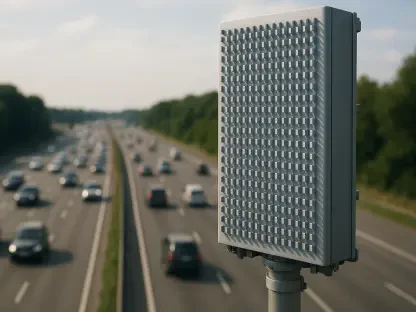
While cellular solutions dominate the urban core, Long Range Radio (LoRa) has become the primary tool for securing expansive geographic territories where infrastructure is sparse. LoRa operates on a non-cellular, sub-gigahertz frequency that allows small packets of data to travel over distances exceeding ten miles in rural settings. This makes it the ideal technology for monitoring perimeters at massive industrial sites, such as solar farms, oil refineries, and regional water treatment facilities. The cost of running fiber optic cables or establishing a comprehensive cellular network across these vast distances is often economically unfeasible. LoRa bridges this gap by allowing organizations to build their own private, low-cost networks that operate independently of major telecom providers. By installing a single gateway on a high point, a security team can monitor hundreds of vibration sensors on a perimeter fence or water-level sensors in remote reservoirs. This autonomy provides a level of resilience that is highly valued in critical infrastructure sectors, where a disruption in public cellular service could otherwise blind the entire security operation. The ability to maintain a dedicated, private line of communication ensures that critical alerts regarding unauthorized access or environmental hazards are always prioritized.
The versatility of LoRa is further demonstrated in its application within large-scale public parks and recreational plazas where aesthetic and environmental concerns prevent the installation of traditional cabling. In these settings, LoRa-enabled emergency call boxes and lighting controllers can be deployed with minimal impact on the landscape. Because these devices require very little power, many can be equipped with small solar panels, making them completely self-sufficient and carbon-neutral. This decentralized approach allows city planners to extend a layer of safety into previously unmonitored green spaces, providing peace of mind for citizens using these facilities after dark. Moreover, LoRa’s ability to handle thousands of nodes per gateway makes it highly scalable; as a city grows, new sensors can be added to the network with ease. This scalability is particularly useful for managing temporary events, such as music festivals or large outdoor markets, where security needs fluctuate. Portable LoRa gateways can be set up in minutes to create a temporary security mesh that monitors crowd density and monitors entry points, providing real-time data to event coordinators. This flexibility transforms how regional authorities approach safety, moving away from rigid, fixed systems toward dynamic networks that adapt to the changing needs of the population.
5G and the High-Definition Nerve Center
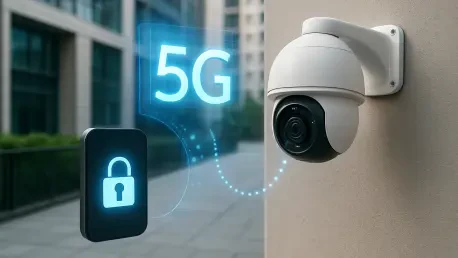
If NB-IoT and LoRa represent the durable senses of a smart security system, then 5G acts as its high-speed nervous system, capable of carrying the massive data loads required for modern surveillance. The defining characteristic of 5G in the security sector is its bandwidth, which allows for the simultaneous streaming of multiple 4K and even 8K high-definition video feeds. This level of visual clarity is no longer a luxury; it is a necessity for the effective operation of advanced artificial intelligence and computer vision algorithms. At busy transit hubs or international airports, identifying a specific face in a crowd or detecting an abandoned bag requires an incredible amount of detail and zero-latency processing. Traditional wireless networks often suffer from congestion and lag when tasked with such heavy data requirements, leading to dropped frames or blurry images that can render AI tools useless. 5G eliminates these bottlenecks, providing a dedicated fast lane for mission-critical security data. This allows for real-time video analytics that can instantly spot suspicious behavior or recognize a license plate on a vehicle traveling at high speeds. The high reliability and low latency of 5G ensure that security operators are seeing what is happening right now, which is the difference between stopping a crime and simply recording it.
The true power of 5G is realized when it is combined with edge computing, a configuration that moves data processing away from centralized clouds and closer to the actual cameras and sensors. In a 5G-enabled security environment, an intelligent camera can analyze a video feed locally and only send an alert when a specific threat is detected, significantly reducing the overall network load. However, when a threat is identified, 5G can instantly transmit full-resolution footage to a command center while simultaneously triggering automated responses. For example, if a 5G-connected thermal camera detects a fire in a chemical storage facility, it can trigger the suppression system, shut down ventilation, and alert local fire departments within milliseconds. This rapid-fire sequence of events is made possible by the ultra-low latency that 5G provides, effectively turning the security system into an autonomous preventative shield. This transition represents a paradigm shift in the industry; security is no longer just a forensic tool used to reconstruct events after they occur. Instead, it has become an active participant in disaster prevention, capable of executing complex safety protocols at a speed that exceeds human reaction time. As these systems become more integrated, the synergy between high-speed connectivity and localized intelligence will redefine the standard for safety.
Industry Innovation and Strategic Selection
The successful implementation of these diverse communication standards relies on a sophisticated supply chain of hardware manufacturers and system integrators who must balance performance with cost-effectiveness. Upstream companies are now producing tri-mode or multi-protocol modules that allow a single security device to switch between NB-IoT, LoRa, and cellular 5G depending on the available signal and the priority of the data. This hardware innovation is crucial for global security firms that manage assets across varying geographies and infrastructure qualities. For instance, a logistics company might use a multi-protocol tracker on a shipping container that uses LoRa while in the shipyard, switches to NB-IoT during transit through urban centers, and utilizes 5G for high-speed data offloading when it reaches a high-security terminal. These modules often incorporate additional features such as GNSS for precise satellite positioning and integrated antennas that are resistant to jamming. The focus of the industry has shifted toward creating modular, interoperable components that allow security directors to mix and match technologies to suit their specific operational requirements. This flexibility ensures that the security architecture is not tied to a single vendor, enhancing the overall resilience of the network.
Choosing the correct technology for a specific project requires a deep understanding of the operational trade-offs between range, data rate, and power consumption. Security integrators are increasingly taking on the role of strategic consultants, helping clients navigate these choices based on the unique risk profile of their environment. For a static, low-density application like monitoring a remote fence line or a water pipeline, LoRa remains the most cost-effective and energy-efficient choice. In contrast, for high-density urban environments where sensors need to operate from within building basements or on moving assets like buses, NB-IoT provides the necessary cellular reliability and penetration. Meanwhile, 5G is reserved for high-value nodes—the command centers, the facial recognition gates, and the autonomous patrol robots—where the sheer volume of data and the need for near-instantaneous response times justify the higher operational costs. This tiered approach to connectivity ensures that resources are allocated where they are most needed, preventing the over-engineering of simple tasks while ensuring that mission-critical links are robust. By strategically selecting the right communication standard for each specific layer of the security net, organizations can build comprehensive, multi-layered defenses that are both technically superior and financially sustainable.
Addressing Connectivity Risks and Cybersecurity
As the number of connected security devices grows into the billions, the focus of the industry has expanded beyond physical safety to encompass the digital integrity of the data being transmitted. Every new sensor or camera added to a network represents a potential entry point for malicious actors, making cybersecurity the most critical component of the modern smart security framework. Connectivity is no longer seen merely as a feature; if it is not secured, it is a significant liability. This realization has led to the widespread adoption of end-to-end encryption as a non-negotiable standard for all IoT communications. Unlike earlier generations of smart devices that relied on basic password protection, current systems utilize advanced authentication protocols and PKI (Public Key Infrastructure) to ensure that only authorized users can access sensitive data. Modern security hardware now includes secure elements—dedicated microchips that store encryption keys in a physically isolated environment. This prevents hackers from extracting sensitive credentials even if they gain physical access to the device. By building security into the silicon itself, manufacturers are creating a trust anchor that ensures the integrity of the entire data chain, from the remote sensor to the dashboard of the security operator.
Furthermore, the concept of trajectory auditing has become a standard requirement for high-security installations, providing a transparent and immutable record of how data has moved through the network. This level of oversight is essential for maintaining public trust and complying with increasingly stringent data privacy regulations worldwide. Security providers are now being evaluated not just on the resolution of their cameras or the range of their sensors, but on their ability to defend against sophisticated cyberattacks like DDoS or man-in-the-middle exploits. This has led to the development of embedded firewalls within the IoT modules themselves, which can detect and block unusual traffic patterns at the edge of the network. In this new landscape, protecting a security feed from being intercepted or tampered with is considered just as vital as the ability to capture a clear image in the first place. As we move deeper into this hyper-connected era, the convergence of physical security and cybersecurity will continue to drive innovation, ensuring that the very systems meant to protect us are themselves resilient against the evolving threats of the digital age. This holistic approach to safety guarantees that the benefits of smart technology are not undermined by systemic vulnerabilities, providing a stable foundation for urban development.
Strategic Integration for Future Resilience
The integration of NB-IoT, LoRa, and 5G into a cohesive security framework effectively addressed the critical gaps that previously limited the scope of wide-area monitoring and high-definition surveillance. In the past, security directors often faced a binary choice between high-quality video and long-range connectivity, but the current multi-standard approach successfully bridged that divide. By deploying NB-IoT for deep urban penetration, LoRa for expansive regional coverage, and 5G for data-intensive analytics, organizations created a tiered defense system that was both flexible and robust. This technological evolution moved the industry away from the limitations of proprietary, siloed systems and toward open, interoperable platforms where data flowed seamlessly across different networks. The result was a significant improvement in situational awareness and a reduction in response times, as automated systems took over the routine tasks of monitoring and alerting. Security teams were able to shift their focus from watching screens to high-level decision-making, supported by a wealth of real-time, accurate data. The successful rollout of these technologies demonstrated that the true value of smart security lied not in any single device, but in the intelligent orchestration of multiple connectivity standards to create a seamless, protective canopy.
Looking back at the initial implementation phases, the most successful organizations were those that prioritized a security-by-design philosophy, ensuring that every node on the network was authenticated and encrypted from the moment of deployment. They avoided the temptation to use a single connectivity solution for all tasks, instead opting for a heterogeneous network that leveraged the specific strengths of each protocol. For those planning future expansions, the focus must remain on maintaining this balance while staying adaptable to emerging threats. It is recommended that security architects conduct regular connectivity audits to identify potential dead zones or bandwidth bottlenecks as urban landscapes change. Furthermore, investing in modular hardware that can be upgraded via software-defined networking protected against technological obsolescence. As the digital and physical worlds continued to merge, the priority remained the continuous refinement of the edge-computing capabilities that allowed for localized, rapid response. By maintaining a rigorous standard for data integrity and network resilience, the industry secured the foundations of modern society, ensuring that the smart cities of today remained safe, efficient, and resilient for the years that followed.