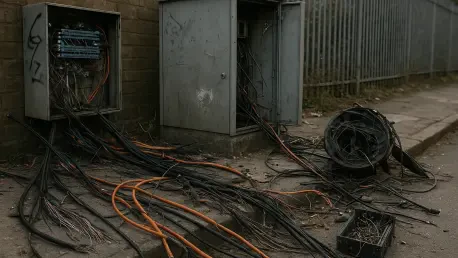

When a single fiber-optic cable is severed by vandals, it can instantly trigger a total blackout for 911 emergency services and local hospital communications. This legislation represents a significant bipartisan effort to address a burgeoning national crisis involving the systematic theft and destruction of telecommunications infrastructure, specifically focusing on copper, fiber, and coaxial cables. As the United States becomes increasingly reliant on high-speed internet for everything from remote work to life-saving emergency responses, the vulnerability of the physical networks that facilitate these services has become a point of major concern for both policymakers and industry stakeholders. The introduction of the “Combating Critical Infrastructure Vandalism Act” by Senators Alex Padilla and Eric Schmitt seeks to ensure that the hardware supporting education, commerce, and emergency services remains resilient against physical threats.
Modernizing Federal Law: Closing Legal Gaps in Infrastructure
Currently, Section 1362 of Title 18 of the United States Code provides federal protections against the vandalism of communications facilities, but these protections are largely limited to infrastructure owned or operated by the federal government. The “Combating Critical Infrastructure Vandalism Act” proposes to expand this jurisdiction to include privately-operated networks, which comprise the vast majority of the nation’s connectivity. By doing so, it classifies the willful or malicious destruction of essential communications hardware as a federal criminal offense, regardless of whether the network is public or private. This legislative shift recognizes that modern broadband networks—though often built and maintained by private entities like Spectrum, Comcast, and wireless carriers—function as a public utility essential to national security. The bill specifically targets the theft and damage of materials like copper and fiber-optic lines, which are the backbone of digital access.
This expansion of federal law marks a fundamental shift in how the United States approaches digital security. By classifying private broadband as critical infrastructure, the legislation removes the legal loophole that often resulted in minor local charges for acts that had massive regional consequences. The transition focuses on the distribution architecture that connects millions of users rather than just federal installations. This approach naturally leads to a more robust deterrent against organized criminal rings that specialize in copper theft for scrap metal value. Moreover, the bill addresses the evolving nature of the telecommunications landscape, where the distinction between public and private service has blurred due to the reliance of government agencies on private network providers. Ensuring these private lines receive federal protection is a necessary step to maintain a consistent level of security across all fifty states, protecting the digital infrastructure from those who seek to profit from its destruction.
Evaluating the Impacts: Economic Losses and Public Safety Risks
The introduction of this bill is driven by alarming data regarding the frequency and cost of infrastructure attacks, with California serving as a primary case study for the severity of this issue. In the previous year, the state reported over 6,000 separate incidents targeting communications networks, resulting in an estimated $252.6 million in economic losses. These figures encompass not just repair costs, but also lost productivity and service interruptions that cripple local economies. Los Angeles emerged as a focal point for this criminal activity, recording over 1,100 attacks, which is the highest number for any single city in the United States. These statistics highlight a growing trend where physical vandalism has become a preferred method for disrupting commerce. The financial burden eventually trickles down to consumers in the form of higher service rates and insurance costs for telecommunications providers, making it a priority for legislators to provide a stronger federal deterrent.
Beyond the immediate financial losses, the bill highlights the severe human cost associated with network disruptions. When criminals cut fiber lines or steal copper for its scrap value, they are not merely committing a property crime; they are jeopardizing the lives of citizens who rely on consistent connectivity for emergency assistance. Senator Padilla emphasized that these are not victimless crimes, as a blackout of 911 dispatch systems can delay life-saving medical intervention during critical minutes. Furthermore, hospitals rely on these same networks for internal communications and accessing patient records in real-time. When these connections are severed, the entire healthcare infrastructure in a region can be compromised. This reality makes the case for federal intervention even more compelling, as the safety of the general public is at stake whenever a major distribution hub is targeted by vandals looking to profit from stolen metals or cause intentional chaos.
Strategic Provisions: Strengthening Penalties and Industry Alignment
The legislation is structured around several primary pillars designed to deter criminal activity and provide law enforcement with more robust tools to prosecute offenders. The bill specifically names copper, fiber, and coaxial cables as protected assets under federal law, removing any legal ambiguity regarding which components are covered. It also introduces stringent penalties for the injury or destruction of these materials and crucially covers “attempts” or “conspiracies” to commit such acts. This allows law enforcement to intervene and prosecute before significant damage occurs, acting as a preventive measure rather than a purely reactive one. To ensure the bill is not misused, it includes specific language protecting lawful concerted activities and excludes consumer-level hardware like home routers. These safeguards focus the law on the core distribution infrastructure that forms the backbone of the nation’s digital network, providing a more secure environment for tech operations.
Major industry stakeholders, including trade organizations like the NCTA and CTIA, along with providers such as Comcast and Spectrum, recognized the importance of this shift. They supported the initiative because it provided a uniform federal standard that addressed the lack of strong deterrents in local jurisdictions. Looking forward, the passage of this bill established a framework for better public-private cooperation in monitoring and securing high-risk areas. Law enforcement agencies were encouraged to utilize the new federal guidelines to pursue coordinated theft rings that operated across state lines. Telecommunications companies also began investing in more advanced physical security measures, knowing that federal statutes now provided a stronger legal backbone for prosecution. This comprehensive approach ensured that the nation’s digital future was more secure, emphasizing that the physical integrity of broadband networks was a fundamental component of national stability and growth.