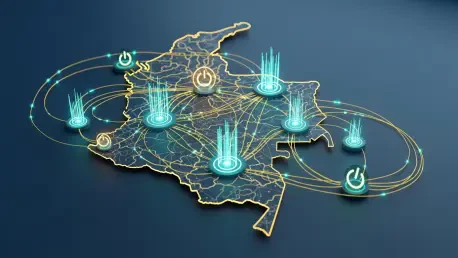

The sudden, violent shifting of the earth near San Jose del Palmar on August 10 sent shockwaves through Colombia that fundamentally tested the resilience of its telecommunications infrastructure. While the 7.4 magnitude earthquake caused immediate structural damage to buildings in Bogota and Cali, the subsequent collapse of digital connectivity created a secondary crisis that isolated millions of citizens during a period of extreme vulnerability. Families found themselves unable to verify the safety of loved ones, and emergency responders struggled to coordinate efforts as signal bars vanished from mobile devices across the region. This systemic failure was not merely an unfortunate coincidence but rather the result of a predictable yet devastating convergence of physical hardware destruction and an unprecedented surge in network demand. As the nation begins to recover from the physical debris, the focus has shifted toward understanding why a modern network, designed for high-speed connectivity, proved so fragile when the ground moved.
Physical Infrastructure Destruction: The Breaking Point of Hardware
The primary catalyst for the widespread communication blackout involved the direct physical compromise of the hardware that forms the backbone of Colombia’s wireless and broadband services. Intense seismic vibrations caused significant damage to cell towers and directional antennas, particularly in mountainous regions where soil instability led to site tilting or complete structural collapse. Furthermore, the shifting tectonic plates and subsequent landslides severed vital underground fiber-optic cables, which serve as the high-capacity backhaul links connecting regional hubs to the national core network. When these physical lines are cut, entire sectors of the country are effectively decapitated from the internet, regardless of whether the local cell towers remain standing. Compounding this issue was the immediate failure of the commercial power grid, which forced telecommunications sites to rely on localized backup systems that were never intended for long-term autonomous operation.
Beyond the tangible destruction of equipment, the networks were effectively paralyzed by a phenomenon known as mass congestion, which occurs when the volume of connection attempts exceeds technical limits. Immediately following the initial tremors, millions of users simultaneously attempted to initiate voice calls, creating a traffic spike that traditional switching systems were incapable of processing. Unlike digital data packets that can be broken down and reassembled, traditional voice communication requires a dedicated and continuous circuit-like path between two points in the network. When every available radio frequency channel is occupied, the system begins to drop new requests, resulting in the “call failed” messages that became a hallmark of the disaster. This bottleneck was exacerbated by the loss of specific cell sites, which forced the remaining operational towers to handle redirected traffic, quickly leading to a total saturation of the surviving infrastructure in major urban centers.
Comparative Resilience: Assessing Digital and Analog Performance
The recent crisis underscored a significant performance gap between legacy voice services and modern data-based communication protocols during high-stress events. While cellular voice lines were almost instantly overwhelmed, text-based services such as SMS and internet messaging platforms like WhatsApp demonstrated a higher level of survivability. This resilience is largely due to the “store-and-forward” nature of data transmissions, which allows messages to be placed in a digital queue when the network is busy. Rather than requiring an immediate and uninterrupted connection, these small packets of information wait for a fraction of a second of available bandwidth to slip through the congestion. This fundamental difference in how information is packaged and sent meant that while voice communication was nearly impossible, many citizens were still able to send short text updates, providing a critical lifeline that bypassed the blocked voice circuits and enabled limited coordination during the quake.
In the immediate aftermath of the earthquake, the telecommunications industry responded by deploying specialized emergency hardware to restore connectivity in the most severely impacted zones. Major national carriers, including Claro and Tigo, utilized “Cells on Wheels,” which are mobile base stations equipped with their own power sources and satellite backhaul capabilities. These units allowed technicians to bypass severed fiber-optic lines by establishing direct links to orbiting satellites, providing a baseline of connectivity for search and rescue teams. Furthermore, these companies prioritized the restoration of power to strategic switching centers to prevent a total blackout of the core network. This tactical response mirrors global strategies used in recent disasters, such as the 2024 Hurricane Helene, where hybrid solutions involving terrestrial and satellite technology were essential for bridging the gap between infrastructure failure and the eventual restoration of the commercial power grid across the nation.
Strategic Reforms: Implementing Robust Post-Disaster Protocols
To mitigate the impact of future seismic events, emergency management agencies have begun advocating for a shift in how the public interacts with mobile technology during the “golden hour” following a disaster. One of the most effective strategies involves the widespread adoption of “data-first” communication habits, where users are encouraged to rely on short text messages rather than high-bandwidth voice or video calls. Public awareness campaigns now emphasize the importance of using Wi-Fi calling features whenever local internet remains active, as this offloads traffic from the strained cellular towers to fixed-line fiber networks. By minimizing non-essential data usage, such as streaming or social media uploads, the public can collectively preserve the remaining bandwidth for critical emergency transmissions. These behavioral changes are essential because even the most advanced hardware has a finite capacity that can be preserved through disciplined and coordinated community usage.
The failures observed during the earthquake served as a profound catalyst for a comprehensive overhaul of Colombia’s telecommunications security standards and emergency protocols. Authorities and private operators collaborated to identify the most vulnerable nodes in the fiber network, leading to the installation of redundant pathways that bypassed geologically unstable areas. The industry successfully integrated more advanced battery technology and solar-powered backups at remote cell sites, ensuring that hardware remained functional even when the national grid fluctuated. Moreover, the implementation of nationwide roaming agreements allowed users to automatically switch to any available network during an emergency, regardless of their primary service provider. These proactive steps moved beyond simple repairs and instead focused on building a decentralized infrastructure capable of absorbing massive shocks. By prioritizing structural hardening and public education, the nation effectively transitioned toward a more resilient digital environment.