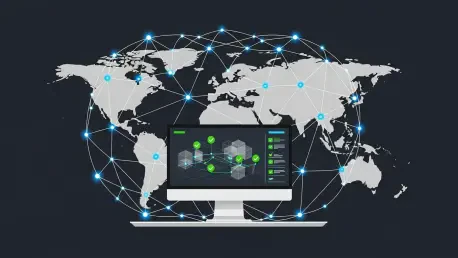

The fundamental transition from reactive troubleshooting to mathematical certainty marks a pivotal era where enterprise networks are finally shedding the volatility of manual configuration errors. Digital Twin Networking creates a high-fidelity mathematical replica of a physical environment, providing a virtual sandbox that mirrors the complexities of live traffic. By utilizing these models, organizations can move beyond the guesswork inherent in traditional administration, substituting intuition with verifiable data. This technology does not merely visualize the network; it creates a dynamic environment where every packet path and protocol interaction is accounted for before implementation.
Historically, network modeling was limited to basic data plane observations, but the latest evolution encompasses the sophisticated logic of the control plane. This transition allows for the simulation of multi-vendor environments where different operating systems must interact seamlessly. In the current technological landscape, achieving this level of visibility is essential for maintaining the reliability of global infrastructures. As enterprise demands grow, the digital twin serves as a critical bridge between human intent and technical execution.
Foundations and Core Principles of Digital Twin Networking
Digital Twin Networking operates on the principle of mathematical verification, transforming abstract network configurations into a concrete, searchable model. By replicating the entire state of a physical network, the technology allows engineers to query the infrastructure as if it were a database. This capability is vital for identifying hidden dependencies that often lead to cascading failures during routine updates. Instead of relying on static documentation that quickly becomes obsolete, the digital twin provides a living, breathing representation of the current state.
The evolution of this field has seen a shift toward comprehensive control plane simulation, which is necessary for managing the diverse hardware found in modern data centers. While early models focused on simple packet forwarding, modern twins replicate the decision-making processes of routers and switches. This depth of analysis is what enables “risk-free” experimentation, as the twin can predict how a change in one corner of the network might impact a firewall rule thousands of miles away.
Technical Components and Advanced Modeling Capabilities
Integration of Data and Control Plane Analysis
Deep technical analysis reveals that modern digital twins must account for more than just physical connections; they must model the complex logic of routing protocols and device operating systems. By analyzing the interaction between Access Control Lists (ACLs), firewalls, and NAT configurations, the technology ensures that end-to-end connectivity remains intact. This holistic view is what differentiates a true digital twin from a simple network map, as it understands the “why” behind packet movement rather than just the “where.”
Moreover, the ability to model the control plane allows for the detection of logical loops and unreachable segments that traditional monitoring tools might miss. When a configuration change is proposed, the digital twin calculates the resulting state of all routing tables across the infrastructure. This predictive capability is essential for ensuring that security postures are maintained, even as the underlying network architecture shifts to meet new business demands.
Production-Scale Simulation and Validation
The transition to production-scale simulation represents a departure from the limitations of physical lab environments, which are often too small to capture the nuances of a massive enterprise. Digital twins use mathematically grounded models to replicate tens of thousands of devices simultaneously, providing a level of scale that was previously impossible. This allows for parallel simulations where multiple “what-if” scenarios can be tested against the live network state without any risk of disruption.
By treating the network as code, engineers can apply the same rigorous validation standards used in software development, such as unit testing and continuous integration. These simulations outperform physical labs by providing instant feedback on the validity of a change. Consequently, the time required to move a configuration from the design phase to deployment is significantly reduced, as the model provides a definitive “yes” or “no” regarding the safety of the operation.
Innovations in Autonomous Networking and AI Integration
The rise of predictive capabilities, specifically through tools like Forward Predict, is empowering the next generation of Agentic AI. These systems use the digital twin as a training ground, allowing AI agents to vet their own decisions and refine their logic at machine speed. By integrating Model Context Protocol (MCP) servers and robust REST APIs, organizations are creating a feedback loop where the AI can predict an outcome, verify its accuracy, and then execute the change.
This shift toward autonomous loops is fundamentally changing how human engineers interact with infrastructure. Instead of spending hours on manual verification, staff can focus on high-level strategy while the AI handles the granular details of configuration management. The integration of these advanced models ensures that AI-driven decisions are grounded in mathematical reality, reducing the risk of “hallucinations” that can occur in less structured environments.
Real-World Applications and Strategic Deployment
In large-scale enterprise environments, the deployment of digital twins has effectively eliminated the uncertainty that once plagued manual configuration changes. Organizations are now integrating these simulations with IT service management platforms like ServiceNow to create automated, evidence-based approval workflows. If the digital twin confirms that a change meets all compliance and connectivity requirements, the approval process can be triggered automatically, bypassing the delays of manual oversight.
Beyond routine changes, these models are increasingly used for reactive troubleshooting and proactive security hardening. When an outage occurs, the digital twin can be used to “rewind” the network state to the moment of failure, allowing for a precise root-cause analysis. Proactively, the system can simulate various cyber-attack scenarios to identify vulnerabilities before they can be exploited by malicious actors.
Challenges and Technical Hurdles in Adoption
Despite the clear benefits, maintaining high-fidelity models across diverse, multi-vendor hardware remains a significant technical hurdle. Each manufacturer has unique implementation details for standard protocols, and the digital twin must account for these variations to remain accurate. Furthermore, as software-defined architectures continue to evolve, the underlying models must be updated constantly to reflect the latest changes in network logic.
There is also a notable cultural obstacle regarding the trust placed in autonomous, AI-driven simulations. Many veteran network engineers are hesitant to hand over control to a system they perceive as a “black box.” Overcoming this skepticism requires a demonstrable track-record of success and a clear understanding of the mathematical principles that govern the twin’s predictions. Efforts are also underway to simplify these implementations, making the technology accessible to smaller operations that lack the resources of a global enterprise.
Future Outlook for Self-Healing Infrastructures
The progression toward fully self-healing networks is becoming a tangible reality as digital twins move toward continuous compliance monitoring. In the near future, predictive analytics will likely preemptively resolve bottlenecks and performance issues before they impact the end-user. This proactive stance marks a departure from the traditional “break-fix” mentality, ushering in an era of unprecedented uptime and operational efficiency.
Long-term, the impact of digital twin technology will be measured by its ability to reduce human error—the leading cause of network downtime. As these systems become more integrated and autonomous, they will serve as the fundamental pillar of digital transformation efforts. The acceleration of network delivery and the hardening of security protocols will be the primary drivers of adoption, eventually making the digital twin a standard requirement for any modern infrastructure.
Summary and Final Assessment
The review of Digital Twin Networking revealed a technology that successfully transitioned from a specialized visibility tool into a cornerstone of autonomous operations. It proved that mathematical modeling can provide the certainty required to manage the massive complexity of modern enterprise environments. By bridging the gap between human intent and machine execution, the digital twin established itself as an essential component for any organization seeking to minimize downtime and maximize agility.
In the final assessment, the implementation of these high-fidelity models represented a significant leap forward for the industry. The systems demonstrated a unique ability to validate changes at scale, effectively ending the era of “trial and error” in the data center. As AI continues to integrate more deeply with these mathematical replicas, the potential for truly self-healing infrastructures moved from a theoretical possibility to a practical necessity.