
The rhythmic hum of a grocery store’s industrial freezer usually signifies a seamless operation, yet for many European retailers, that sound has recently become a harbinger of digital chaos and physical destruction. While shoppers move through the aisles oblivious to the invisible threads of connectivity, a silent heatwave has been rippling through frozen departments from France to Estonia. This is not the result of a power grid failure or a mechanical breakdown but a coordinated exploitation of the very sensors designed to ensure efficiency. The vulnerability of the European retail sector has shifted from the theft of credit card numbers to the remote manipulation of industrial hardware, proving that the modern supermarket is now a front line in the theater of cyber-physical warfare.
The sudden realization that a thermostat can be weaponized has sent shockwaves through boardrooms from Paris to Tallinn. As retail chains increasingly depend on automated climate control and smart monitoring to reduce their carbon footprints, they have inadvertently opened a back door for digital saboteurs. The threat has moved beyond the encryption of data; it now involves the literal melting of inventory and the ignition of electrical fires. This new reality forces a total re-evaluation of what it means to be a secure merchant in an age where every appliance is a potential entry point for disaster.
The Silent Heatwave: Chaos in the Frozen Aisle
When a supermarket refrigeration system fails, the immediate concern is usually a mechanical glitch or a localized power outage. However, a recent wave of incidents across the European continent has revealed a much more sinister cause involving deliberate digital sabotage. Retailers have watched helplessly as their industrial cooling units were remotely manipulated to trigger massive food spoilage and, in several extreme cases, electrical fires within the units themselves. This demonstrated that the greatest threat to a grocery chain might no longer be a simple data breach, but a hijacked thermostat capable of causing physical ruin.
The financial impact of these disruptions extends far beyond the loss of the products themselves. The destruction of hardware often requires the complete replacement of specialized industrial components, leading to weeks of downtime for specific store sections. Moreover, the reputational damage caused by visible safety hazards, such as smoke in the aisles or the mass disposal of perishables, creates a lingering distrust among consumers. For these retailers, the boundary between a cyber incident and a traditional building emergency has dissolved entirely, leaving managers to grapple with an invisible arsonist who can strike from thousands of miles away.
The Convergence: Cold Storage and Cybercrime
The retail sector has undergone a quiet technological revolution, connecting everything from HVAC systems to floor cleaners to the internet for remote monitoring. While this smart infrastructure offers significant gains in energy efficiency and maintenance costs, it has simultaneously created a massive, unmapped attack surface. The recent crisis involving major chains like Carrefour and Ahold Delhaize highlights a dangerous disconnect in corporate strategy. While headquarters are focused on protecting customer credit card data and loyalty program information, the industrial control systems managing physical assets remain largely exposed.
This vulnerability is no longer a theoretical concern for cybersecurity researchers. National agencies now struggle to bridge the gap between digital security and physical facility management as the complexity of these networks grows. Many organizations failed to realize that every sensor added to a refrigeration rack is a potential computer that can be instructed to malfunction. By treating these systems as simple appliances rather than critical network nodes, retailers have left the keys to their physical safety in a digital lock that is often poorly protected and frequently monitored by unvetted third parties.
Analyzing the Structural Weaknesses: Systemic Failure in Retail
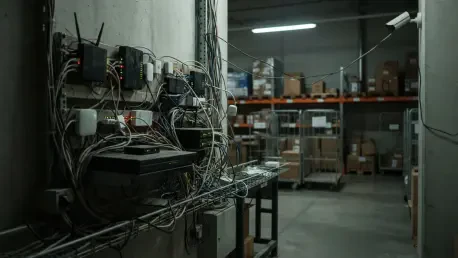
The vulnerability of European retailers is not a single point of failure but a collection of systemic issues that have coalesced into a perfect storm for attackers. A primary driver of this weakness is the visibility gap caused by the widespread outsourcing of facility equipment maintenance. Most retailers outsource the management of refrigeration and climate control to third-party vendors who prioritize uptime over security. These contractors often install dedicated internet circuits that bypass the retailer’s corporate IT network entirely, creating a black box scenario where critical infrastructure is managed without any centralized security protocol or oversight.
Attackers are not necessarily using sophisticated malware to disrupt these operations; instead, they are identifying refrigeration controllers with public IP addresses and using remote access to abuse legitimate system functions. By triggering defrost cycles or altering temperature thresholds far beyond safe limits, hackers cause physical hardware damage using the machine’s own programming against it. This method is particularly effective because it often looks like a legitimate maintenance command to the automated monitoring systems, delaying the human intervention necessary to prevent a catastrophic failure.
Furthermore, the burden of legacy hardware complicates the security landscape for even the most well-funded chains. Many industrial IoT devices currently in use were designed decades ago, long before cybersecurity was a primary design requirement. These systems often reach their end-of-life status mechanically but remain in operation because they are expensive to replace and difficult to integrate into modern security frameworks. These zombie systems cannot be patched against modern threats, forcing retailers to choose between multi-million dollar equipment overhauls or leaving their critical infrastructure wide open to exploitation from 2026 to 2028.
Expert Perspectives: The Watershed Moment for OT
Cybersecurity analysts view these attacks as a fundamental shift in the threat landscape, where the boundary between digital bits and physical atoms has dissolved completely. A significant barrier to securing these systems is not just technical, but legal and contractual. Service Level Agreements often require constant data feeds for warranties to remain valid, which puts store managers in a difficult position. When the French Computer Emergency Response Team advised retailers to disconnect vulnerable systems, many hesitated, fearing that cutting the internet connection would void multi-million dollar insurance policies or maintenance contracts.
Security professionals also warn that the vulnerability of Building Management Systems extends far beyond the grocery aisle and into the heart of corporate data infrastructure. If an attacker can compromise the cooling system of a data center, they can force servers to overheat and trigger automatic shutdowns without ever touching the actual server software. This means that a vulnerability in a simple air conditioning unit can effectively take down an entire corporate network. The realization that facility security is inseparable from IT security has forced a massive shift in how executives prioritize their defense budgets toward more holistic protection.
Practical Frameworks: Hardening Retail Infrastructure
To mitigate these risks effectively, European retailers must transition from viewing facility equipment as dumb assets to treating them as critical network nodes. The first step in securing industrial IoT involves removing direct access from the open internet by auditing every facility to identify equipment with a public IP address. These connections were terminated by the most proactive companies and re-established only through secure Virtual Private Networks. Implementing strict IP filtering ensured that only verified service providers could access the hardware, providing a secondary layer of defense that prevented unauthorized remote commands from reaching the plant floor.
Organizations also recognized the need to move away from total reliance on third-party black box management. This involved updating vendor contracts to include mandatory security standards and ensuring that IT teams had full visibility into all connected devices on the property. Manufacturers began integrating hardware fail-safes—independent physical limits that prevent a system from reaching dangerous temperatures even if a digital command is compromised. The industry finally accepted that security for HVAC, refrigeration, and lighting had to be moved from the facility budget to the cybersecurity budget to ensure uniform protection.
The path toward resilience required a total transformation in how the retail sector approached its physical environment. The companies that successfully weathered the storm implemented integrated monitoring that flagged unusual temperature fluctuations as security incidents rather than just mechanical errors. They also pioneered training programs for on-site staff to recognize the physical signs of a cyberattack before irreversible damage occurred. By acknowledging the interconnectedness of their digital and physical worlds, these retailers ensured that the silent heatwave of the past became a catalyst for a more secure and robust future for the entire European market.