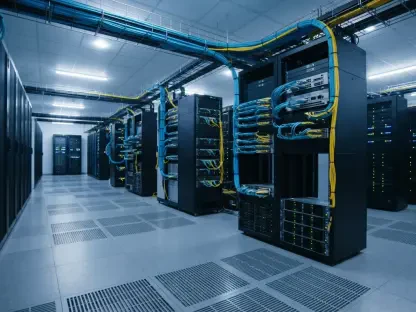

The emergence of decentralized workforces and cloud computing has effectively dissolved the traditional enterprise perimeter, making hardware-centric security models obsolete. For decades, corporate infrastructure functioned like basic plumbing, designed primarily to connect stationary employees in physical offices to a centralized data center. This legacy model, built on rigid hardware and fixed boundaries, is increasingly becoming an obstacle to growth. As businesses embrace decentralized work and cloud-first strategies, they are finding that the old hub-and-spoke architecture cannot keep pace with the demands of a digital-first economy. This evolution is driven by the realization that the traditional enterprise perimeter has effectively collapsed. In the past, security and connectivity were managed within the four walls of a corporate building, but today’s workforce is distributed across home offices, client sites, and various mobile endpoints. Traffic no longer flows in a predictable path toward a single center.
Software-Defined Intelligence: The Maturation of SD-WAN and SASE
A cornerstone of this modernization effort is the widespread adoption of Software-Defined Wide Area Networking, or SD-WAN. No longer considered an experimental technology, SD-WAN has become the industry standard for managing the complexity of modern data traffic. By decoupling network control from physical hardware, it allows for a high degree of application awareness. This intelligence enables the network to distinguish between different types of data, ensuring that mission-critical tasks, such as high-definition video conferencing, receive priority over non-urgent background updates based on real-time conditions. This policy-driven approach eliminates the inefficiencies of traditional routing protocols, which often treated all data packets with the same level of urgency. Consequently, organizations achieved greater operational efficiency by dynamically allocating bandwidth where it was most needed at any given second, ensuring a seamless user experience for remote workers across the globe.
Beyond mere traffic management, the shift toward modern networking involves a fundamental convergence of connectivity and security through the Secure Access Service Edge framework. In a world where the office can be anywhere, security can no longer be a secondary feature bolted onto a physical location. SASE integrates security functions directly into the network fabric, moving protections like zero-trust access closer to the user. This ensures that a consistent and rigorous security posture is maintained for every device, regardless of where it connects, without sacrificing the speed or performance of the user experience. By merging these previously siloed functions, organizations reduced the latency typically caused by backhauling traffic to a central firewall. This architectural shift allowed security to follow the user and the application, rather than forcing the user to return to a central point for validation, which streamlined global operations and improved organizational agility in a complex market.
Hybrid Connectivity: Integrating 5G and Preparing for AI
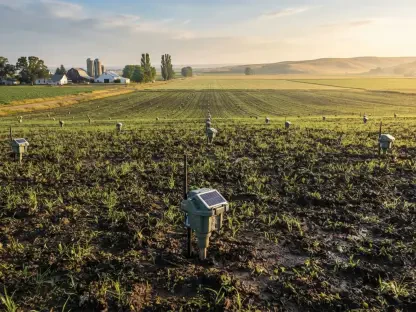
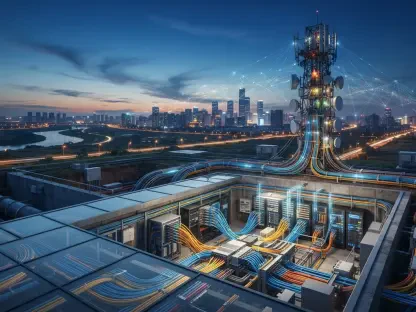
The arrival of 5G technology has introduced a new layer of flexibility to enterprise connectivity, shifting cellular data from a consumer convenience to a legitimate business tool. 5G serves as a vital component of a hybrid access model, offering high-speed redundancy and rapid deployment capabilities for remote or temporary sites. Rather than viewing 5G as a luxury, IT leaders are now utilizing it to solve specific logistical challenges, such as geographic isolation or the need for resilient failover options in areas where traditional fixed-line infrastructure is unreliable. The ability to deploy a high-bandwidth connection in a matter of hours rather than weeks transformed how retail pop-ups, construction sites, and emergency services operated. This transition demonstrated that fixed-line dependencies were no longer a limiting factor for expansion. As a result, businesses leveraged 5G to maintain continuous uptime, effectively mitigating the risks associated with physical cable cuts or regional outages.
As organizations look toward the current technological landscape, they must also account for the looming AI surge, which is expected to place unprecedented strain on existing network resources. Industry projections suggest that the rise of agentic artificial intelligence could increase network traffic by nearly nine times over the next decade. These workloads require extremely low latency and massive burst capacity that legacy systems simply cannot provide. Consequently, building a modern network is not just about meeting current needs; it is about creating the necessary headroom to support the next generation of AI-driven innovation. Proactive enterprises began optimizing their backbone infrastructure to handle the massive data ingestion required for large language models and real-time inferencing. This preparation ensured that when AI tools became deeply integrated into daily workflows, the underlying network was already capable of supporting the increased throughput without degrading essential services.
Strategic Implementation: Building a Resilient Network Foundation
The transition to a modern network does not require a disruptive rip-and-replace approach; instead, most experts recommend a staged evolution. This process begins with a thorough assessment to identify bottlenecks, such as outdated VPNs or end-of-life hardware, that create the most significant risks. By prioritizing the deployment of SD-WAN or SASE in high-impact areas first, organizations can achieve an immediate return on investment while gradually weaving a more sophisticated security and connectivity fabric into their overall operations. This methodical strategy allowed businesses to modernize their infrastructure without interrupting daily productivity or straining IT budgets. It focused on replacing the weakest links in the chain first, ensuring that every hardware upgrade or software license purchase aligned with the broader goal of a unified, cloud-ready architecture. This phased rollout provided the flexibility to adapt to changing market conditions while steadily reducing the total cost of ownership.
Ultimately, a future-ready architecture was defined by its adaptability and visibility rather than just raw speed. Modern networks utilized automation to replace manual configurations, allowing the system to self-correct and route traffic based on business priorities. This policy-driven management, combined with the end-to-end telemetry provided by modern tools, gave IT teams the visibility needed to identify and mitigate threats in real time. By treating the network as a fluid, software-driven ecosystem, businesses ensured their infrastructure remained a catalyst for innovation rather than a barrier to success. Organizations that successfully transitioned prioritized deep observability and automated responses to network fluctuations. They moved away from reactive troubleshooting toward a predictive model that anticipated failures before they occurred. These steps established a resilient foundation that supported rapid scaling and the seamless integration of emerging technologies, securing a competitive advantage.