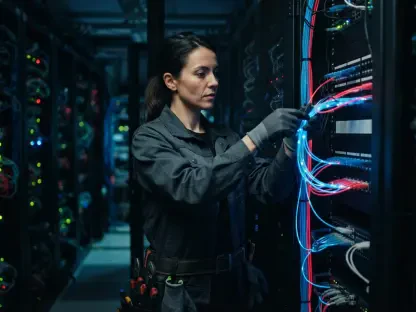

The silent hum of specialized cooling fans and the rhythmic blinking of server status lights, once the ultimate symbols of corporate technological prowess, have increasingly become the auditory and visual markers of operational inefficiency in a cloud-dominated world. For decades, the ownership of a private data center was a non-negotiable badge of enterprise maturity, signifying that an organization possessed the capital and technical sophistication to manage its own digital destiny. However, the operational landscape has shifted so dramatically that these physical footprints are now frequently viewed as anchor-like liabilities rather than strategic assets. As Chief Information Officers survey their aging infrastructure, the conversation has moved from how to expand these facilities to how to systematically dismantle them without disrupting the vital services they provide. This transition represents more than a simple change in hosting preferences; it is a fundamental realignment of corporate priorities toward agility, security, and financial fluidity. The process of decommissioning is no longer an afterthought of the IT lifecycle but a high-stakes strategic operation that requires the same level of executive oversight as a major acquisition or a global product launch.
Modern enterprises are finding that the complexity of maintaining on-premises hardware distracts from the core mission of driving innovation and customer value. While digital transformation initiatives typically focus on the “new”—the adoption of artificial intelligence, machine learning, and serverless architectures—the “old” often remains as a drag on progress, consuming a disproportionate share of the IT budget through maintenance contracts, electricity costs, and specialized labor. The realization that private infrastructure has become unwieldy is a primary driver behind the surge in decommissioning projects. By the end of this decade, it is anticipated that the volume of enterprise data centers being shuttered will significantly outpace the construction of new private builds. This trend is not merely about cost-cutting; it is about reclaiming the bandwidth of the most talented technical professionals in the organization. When an IT department is freed from the burden of managing power redundancies and physical security for a server room, those resources can be redirected toward developing proprietary software or optimizing data analytics that provide a true competitive advantage in an increasingly crowded global market.
The Widening Gap: Private Limitations and Hyperscale Reality
The primary catalyst for the strategic shift away from private facilities is the insurmountable gap between the capabilities of an individual enterprise and those of global hyperscale cloud providers. These cloud giants operate at a scale that allows them to invest billions into specialized hardware, advanced cooling technology, and military-grade physical security that no single corporation could reasonably justify for its own needs. For a legacy organization that has grown through decades of acquisitions, the internal infrastructure often resembles a patchwork quilt of different generations and brands of hardware. This heterogeneity creates a massive management burden, as IT teams must maintain expertise in a dozen different systems that do not always communicate effectively. In contrast, the cloud offers a homogenized, highly optimized environment where resources can be provisioned in seconds. Moving away from the “infrastructure game” allows a company to stop worrying about hardware obsolescence and start focusing on the software-driven capabilities that define modern business success.
A significant portion of the infrastructure being decommissioned today consists of what experts call “inadvertent data centers.” These are facilities that were never formally designed as robust hubs of computing power but instead grew organically from a single server rack in a closet into a labyrinth of repurposed rooms filled with mismatched hardware and undocumented dependencies. Over time, these accidental facilities become a black box of operational risk, where the original architects have often moved on, leaving behind a digital legacy that no one fully understands. Decommissioning such an environment is an investigative challenge that requires a deep audit of every workload and connection. Organizations must categorize their applications to decide which should be migrated to the cloud as-is, which should be entirely retired, and which require a complete cloud-native rewrite. This discovery phase is the most critical part of the strategic exit, as it often reveals hidden interdependencies where a seemingly minor system in an obscure server room is actually a vital link in a global supply chain or financial reporting process.
Strategic Execution: Navigating Technical and Physical Deconstruction
Executing a data center decommissioning project is frequently likened to performing surgery on a patient who must remain active and productive throughout the entire procedure. The risks are substantial, as a single misstep in the sequence of shutting down servers or rerouting traffic can lead to catastrophic data loss or extended periods of downtime that damage the brand’s reputation. One of the most significant strategic decisions involves the “modernization vs. migration” dilemma. While it is tempting to use a move as an opportunity to upgrade every application, seasoned project managers often advise against layering too many changes at once. In many high-stakes exits, the priority is to execute a clean departure from the physical facility first, using a “lift and shift” approach for existing workloads. Once the physical lease is terminated and the hardware risks are eliminated, the organization can then focus on optimizing its applications in a cloud-native environment without the ticking clock of a facility shutdown looming over the technical team.
The technical bottlenecks encountered during the migration phase often revolve around the physical limitations of moving massive amounts of data. Even with high-speed fiber connections, transferring tens or hundreds of terabytes of information over the internet can take a prohibitive amount of time and saturate the network, preventing other business functions from operating effectively. To circumvent this, organizations frequently turn to specialized physical migration tools—ruggedized, high-capacity storage devices that are filled with data on-site and then physically couriered to the cloud provider’s intake facility. Beyond the digital migration, the physical deconstruction of the site presents its own set of industrial challenges. A comprehensive decommissioning project does not end when the last server rack is empty; it only concludes when the building is restored to its original state. This involves the specialized removal of heavy industrial equipment, including diesel-powered backup generators, massive cooling units, and fire suppression systems that may contain regulated chemicals. Ensuring that these assets are disposed of in an environmentally responsible and legally compliant manner is a critical component of the overall risk management strategy.
Financial Dynamics and the Evolving Security Landscape
The transition from a data center model to a cloud environment represents a fundamental shift in how an organization handles its finances, moving from a capital expenditure (CapEx) model to a variable operating expense (OpEx) model. While the long-term benefit is the avoidance of the “hardware refresh cycle”—the multi-million dollar expense every few years to replace aging servers—the initial shift can be financially volatile. Many organizations experience a period of “cloud shock” when their first monthly bills arrive, often due to unforeseen costs like data egress fees or the accidental over-provisioning of resources. Successfully managing this transition requires a strategic approach to cost optimization where the finance and IT teams work closely together to monitor and adjust usage in real-time. Despite these initial hurdles, the flexibility of a variable cost model allows the business to scale its expenses exactly in line with its needs, a level of financial agility that is impossible to achieve when locked into the fixed capacity of a physical building.
In addition to the financial shifts, the move toward decommissioning is being accelerated by a changing perception of digital security. For a long time, there was a persistent belief that having servers physically present in a company-owned building was inherently more secure because it offered a tangible sense of control. However, modern security data has largely debunked this myth, showing that on-premises environments are often more vulnerable to both sophisticated cyberattacks and physical breaches than the facilities managed by specialized cloud providers. By decommissioning private sites, an organization can implement a “single pane of glass” security policy that is applied consistently across the entire enterprise, regardless of geography. This centralized management allows for much faster responses to emerging threats and ensures that security patches are applied universally. By outsourcing the physical and foundational security of the infrastructure to hyperscalers, the internal security team can focus on higher-level threats, such as protecting the integrity of the data itself and managing identity and access control for a global workforce.
Cultural Realignment and the Future of IT Talent
While the technical and financial aspects of decommissioning a data center are substantial, the human and cultural elements often prove to be the most challenging to manage. For many long-tenured IT professionals, the physical hardware they have maintained for years represents a significant part of their professional identity and institutional knowledge. Dismantling these systems can create a sense of anxiety about job security and the relevance of their skills in a cloud-only world. To address this, forward-thinking leadership must be clear and unwavering in their strategic vision, communicating that the exit from the physical data center is an opportunity for professional growth rather than a reduction in force. By framing the decommissioning as a transition toward a “Cloud Center of Excellence,” organizations can incentivize their staff to pursue new certifications and learn the skills required to manage sophisticated cloud architectures. This investment in human capital not only ensures a smoother migration process but also helps the company attract and retain high-tier technical talent who are eager to work with modern, scalable technologies.
The final phase of a strategic decommissioning project involves the painstaking work of identifying and resolving “shadow” processes that have developed outside the view of the central IT department. Over decades, different business units or regional offices may have created informal workflows and workarounds that depend on the specific quirks of legacy hardware or the proximity of a local server. If these unofficial processes are not identified and audited during the migration, the decommissioning of a facility can lead to unexpected outages in obscure but necessary business functions. Engaging with stakeholders across the entire organization—from plant managers to marketing executives—is essential to ensure that every digital dependency is accounted for. This holistic approach ensures that the organization does not just move its data but also modernizes its culture and operations. By uncovering and documenting these hidden processes, the company gains a much clearer understanding of its own internal logic, paving the way for a more integrated and transparent digital future where the IT department acts as a strategic partner to every branch of the business.
Executing the Final Transition and Looking Ahead
The successful completion of a data center decommissioning project serves as a transformative milestone that redefined the operational capacity of the modern enterprise. By systematically extracting the organization from the constraints of physical hardware, leaders successfully redirected significant amounts of capital and human energy toward activities that drive market share and innovation. The final stages of these projects often involved a rigorous post-mortem analysis where the lessons learned from the migration were documented to inform future digital strategies. Organizations found that the process of shutting down their last server room acted as a catalyst for a broader organizational cleanup, forcing a level of documentation and procedural discipline that had been lacking during the years of organic, unplanned growth. The removal of the last piece of industrial equipment from the site symbolized more than just a real estate transaction; it marked the beginning of a era where the company was no longer defined by its physical infrastructure but by its ability to process information with speed and precision.
Reflecting on the successful execution of these strategies, the most effective organizations were those that treated decommissioning not as a technical task but as a comprehensive business evolution. They prioritized the development of their internal talent, ensuring that the people who once managed physical racks became the architects of a new, global cloud strategy. This shift in focus proved to be a decisive advantage in a competitive market where the ability to deploy new services in minutes rather than months became the standard for success. Moving forward, the focus for leadership remains on maintaining the agility gained during the decommissioning process by resisting the urge to let new forms of technical debt accumulate. By staying committed to a cloud-native philosophy and a culture of continuous optimization, organizations ensured that their digital infrastructure remained a flexible, powerful engine for growth. The journey from the basement server room to the global cloud was a difficult and often dangerous path, but it was the necessary step for any company that intended to remain relevant in the digital age.