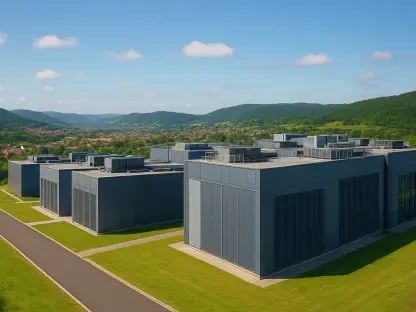

The transition to closed-loop cooling systems is becoming a necessary standard for data centers operating in Wyoming’s naturally arid environment. This shift marks a pivotal moment for a state that has long relied on its rugged geography to anchor a traditional energy economy. As massive server farms begin to dot the High Plains, the sheer physical footprint of these hyperscale facilities—some sprawling across more than 1,000 acres—has forced a statewide conversation about the limits of expansion. Governor Mark Gordon has navigated this landscape by advocating for a model where Wyoming remains an attractive tech hub without sacrificing the very resources that define it. The challenge lies in harmonizing the rapid demands of the ongoing artificial intelligence boom with the environmental stewardship required to keep the state’s ecosystems intact. As tech giants seek vast tracts of land and reliable power, Wyoming is asserting its right to dictate terms, ensuring that the digital gold rush provides more than just a temporary economic surge for its local residents.
Economic Growth: The Reality of Local Employment
The primary argument in favor of these massive facilities centers on the substantial property tax revenue they provide, which can be life-changing for rural counties operating on thin margins. In low-population areas where the tax base is often limited to agriculture or small-scale retail, the arrival of a multi-billion-dollar tech project can inject millions into local coffers. These funds support essential public services like schools, libraries, and roads, offering a financial boost that few other industries can match without significant environmental degradation. However, a significant point of contention remains the job reality of the tech sector, which often fails to match the long-term employment expectations of industrial communities. While the initial construction phase creates a flurry of activity, the finished centers require very few permanent staff members to operate. This discrepancy forces state leaders to weigh the benefit of a sudden tax windfall against the lack of sustained, long-term industrial employment for the local workforce.
This economic dichotomy requires a nuanced approach to state planning, as the influx of capital must be balanced against the infrastructure needs of a transient construction population. For many rural Wyoming communities, the prospect of funding modern school facilities and emergency services through tech-sector taxes is an opportunity that cannot be ignored. Yet, the realization that these hyperscale campuses will not provide hundreds of middle-class jobs for local residents necessitates a strategy that focuses on broad community development rather than just job counts. State officials are increasingly looking at how these tax revenues can be reinvested into local business incubators or vocational training programs to ensure that the economic benefits reach beyond the data center’s fence line. By treating the data center industry as a specialized revenue generator rather than a traditional labor-intensive manufacturer, Wyoming can better prepare its citizens for a future where technology supports the public good without necessarily serving as a primary employer.
Environmental Stewardship: Water Rights and Reclamation
In an arid state like Wyoming, the high water consumption required for cooling massive data center server arrays is a major concern for residents and conservationists alike. Traditional cooling methods can use millions of gallons of water annually, potentially straining local supplies and threatening the interests of the agricultural sector. To address this, there is a growing push for advanced systems that recycle water rather than letting it evaporate, similar to the radiator-style setups utilized in Microsoft’s Cheyenne operations. By mandating these more efficient technologies through state-level environmental standards, Wyoming aims to protect its water security while still hosting the energy-intensive hardware required by the modern digital economy. These technological mandates serve as a blueprint for other western states, proving that regulatory pressure can drive innovation in resource management. This approach ensures that the state remains a viable host for the tech industry without compromising its foundational agricultural heritage.
Drawing on its long history with the mining and oil industries, Wyoming is also moving toward requiring data centers to adhere to strict land reclamation standards to prevent long-term environmental blight. This includes the use of reclamation bonds, which are funds set aside to ensure that if a facility becomes obsolete or a company goes bankrupt, the buildings are dismantled and the land is restored to its natural state. By treating data centers like any other extractive industry, the state ensures that the prairie is not eventually littered with ghost buildings, maintaining the environmental integrity of the landscape for future generations. This policy reflects a deep-seated Wyoming value: that those who profit from the land have a responsibility to leave it as they found it. This regulatory foresight protects the state’s scenic vistas and ensures that the rapid pace of technological change does not leave a legacy of crumbling concrete and abandoned steel. Such measures provide a safeguard against the boom-and-bust cycles that have historically characterized resource-rich regions.
Infrastructure Protection: Grid Stability and Public Trust
The massive electrical draw of hyperscale campuses presents a risk to the stability of the regional power grid, particularly as the demand for AI processing increases. Critics fear that without proper regulation, ordinary citizens and small businesses could see their utility bills rise to pay for the massive infrastructure upgrades needed by multi-billion-dollar tech corporations. The emerging consensus suggests that data centers should not be given a blank check, but should instead be encouraged to develop their own dedicated power sources or directly fund the necessary grid enhancements. This approach ensures that the energy demands of high-level computing do not come at the expense of the average Wyoming ratepayer. Furthermore, residents are increasingly vocal about quality of life issues such as noise and light pollution, as well as the lack of transparency often found in negotiations involving non-disclosure agreements. Addressing these concerns is essential for maintaining the public trust required to sustain a long-term partnership with the technology sector.
The state’s approach to hyperscale development successfully integrated high-tech infrastructure into its traditional economy by applying the same logic used for mineral extraction. By prioritizing water efficiency and energy independence, Wyoming established a framework that allowed for modernization while protecting its most vulnerable resources and residents. It was essential for local governments to remain firm on reclamation standards, ensuring that the technological gains of today did not become the environmental liabilities of tomorrow. Monitoring the rollout of these facilities from 2026 to 2028 remained a priority to ensure that every developer complied with the new mandates. Furthermore, the integration of on-site energy production emerged as a vital solution for maintaining grid stability, suggesting that future projects should prioritize self-sustaining power models. These proactive steps ensured that the digital expansion served the public interest, providing a sustainable model for growth that prioritized long-term stability.