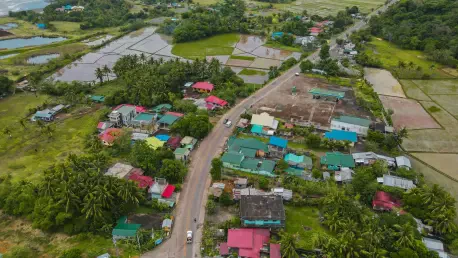

The move toward digital civic infrastructure in Magsaysay signals a future where high-speed connectivity is treated as a foundational utility for banking, education, and public health. This transition began in earnest with the deployment of World Mobile’s SuperWiFi network in the Municipality of General Luna on Siargao Island, targeting the deep-seated connectivity issues inherent to the Philippine archipelago. For years, the geographic fragmentation of Surigao del Norte has presented a formidable barrier to traditional mobile network operators, leaving many communities in a state of digital isolation. By pivoting toward a decentralized architecture that utilizes high-capacity fiber backhaul, this initiative seeks to provide a permanent solution to the erratic and often non-existent service found in rural regions. This project represents a fundamental shift in telecommunications, moving away from centralized corporate models to prioritize community-driven infrastructure development.
High-Speed Infrastructure: Bridging the Digital Gap
The deployment of SuperWiFi disrupts the long-standing compromise of rural internet, which has historically been characterized by sluggish speeds and congested backhaul. By utilizing robust fiber-optic backbones, the network delivers speeds reaching 300 Mbps, effectively bringing urban-grade performance to regions previously designated as cellular dead zones. The placement of AirNodes in high-traffic public areas like markets and religious centers ensures that the signal follows actual human movement rather than being restricted by arbitrary property boundaries. This technical approach bypasses the physical obstructions and distance limitations that typically hinder standard wireless signals in tropical environments. Consequently, the infrastructure provides a stable foundation for modern digital activities that were once impossible in remote areas, such as high-definition video streaming and professional collaboration, regardless of the challenging island geography and environmental hurdles.
In addition to technical superiority, the financial framework of the network serves as a direct challenge to the pricing strategies of established Philippine telecommunications giants. By offering data at rates approximately 80 percent lower than entry-level packages from legacy providers, the service significantly lowers the barrier to entry for the average citizen. A “no-contract, no-credit-check” philosophy ensures that even the most economically vulnerable households can access the digital world through affordable options like the seven-day WiFi pass priced at just ₱10. Furthermore, specialized fiber tiers such as the Frontier Core e110 and e1650 Max cater to heavy users and local enterprises requiring dedicated bandwidth. This tiered structure removes the bureaucratic hurdles and high upfront costs that have traditionally excluded low-income segments from fixed-line internet, fostering an inclusive digital economy where connectivity is no longer a luxury for the wealthy elite.
Community Integration: The eSari-Sari Model
Central to the sustainability of this rollout is the eSari-Sari program, a unique distribution model that integrates local micro-businesses into the telecommunications supply chain. By allowing sari-sari store owners and small entrepreneurs to host network hardware on their premises, World Mobile shifts the economic benefits of connectivity from distant corporate headquarters directly into the hands of the community. These local hosts earn a share of the revenue generated by the data passes sold through their nodes, creating a circular economy where the capital spent on internet access remains within the local ecosystem. This participatory approach transforms the network into a community-owned asset rather than an external imposition, incentivizing residents to protect and promote the infrastructure. As these small businesses see increased foot traffic from tourists and locals seeking reliable WiFi, the initiative effectively catalyzes micro-economic growth and digital adoption at the grass roots.
Beyond immediate financial gains, the decentralized nature of the hardware provides a level of geographic resilience that is critical for the disaster-prone regions of the Philippines. By spreading the network across numerous community-hosted nodes rather than relying on a single link to the mainland, the infrastructure is better equipped to withstand localized damage from typhoons. This stability is essential for the long-term socio-economic health of island communities, as it ensures that students can consistently complete online coursework without traveling long distances to find a signal. Moreover, the reliable uptime enables the widespread adoption of digital payment systems such as GCash and Maya, which are increasingly used for both daily commerce and purchasing network access. This integration of fintech and connectivity fosters a digitally literate population capable of participating in the global economy from the most remote reaches of the Philippine nation.
National Expansion: Future of Civic Infrastructure
The successful activation in General Luna and Dapa serves as a rigorous proof of concept for a nationwide rollout encompassing 2,140 locations across the archipelago. Having demonstrated that a decentralized, fiber-backed model can thrive in the fragmented environment of Surigao del Norte, the project is now scaling into the Caraga Region and northern Mindanao, specifically targeting Butuan City and Cagayan de Oro. This expansion is bolstered by the eLGU Hex initiative, a collaborative program with local government units designed to integrate digital infrastructure directly into public services. By partnering with local political franchises, the network aims to streamline government operations and provide a reliable platform for telehealth services in rural clinics. This strategic growth moves the needle from simple consumer internet access toward a comprehensive digital ecosystem that supports every facet of civic life, ensuring that rural provinces are no longer digitally marginalized.
Looking ahead, the focus must shift toward sustaining this momentum through continued public-private partnerships and the expansion of digital literacy programs for rural residents. Local governments should prioritize the integration of these high-speed networks into their disaster response and public health strategies to maximize the utility of the hardware. For the private sector, the success of the eSari-Sari model established a blueprint for decentralized infrastructure that could be replicated in other sectors, such as renewable energy or localized logistics. As the rollout continued to mature, stakeholders recognized that bridging the digital divide required more than just physical cables; it demanded a fundamental reorganization of economic incentives to empower the end-user. By treating connectivity as a foundational utility rather than a commodity, the initiative laid the groundwork for a future where every Filipino, regardless of their location, possessed the digital tools to succeed.