
The modern farm has transformed into a high-tech laboratory where the traditional scent of tilled earth now mixes with the invisible hum of localized edge computing and neural network decision-making. This shift represents more than just a convenience; it is a fundamental survival strategy for an industry squeezed by labor scarcity and razor-thin margins. By reviewing the current integration of Artificial Intelligence and robotics, it becomes clear that the sector is moving toward a state of hyper-precision where every plant is treated as an individual data point rather than a mere fraction of a field. This review explores the technical evolution, performance metrics, and real-world impact of these systems, providing a thorough understanding of how technology ensures a more resilient food future.
The Technological Evolution of Modern Farming
The transition from manual, broad-spectrum farming to high-precision, data-driven agriculture has been fueled by a desperate need to overcome structural inefficiencies. In the past, agricultural success was largely a matter of brute force, requiring massive applications of water, fertilizer, and human labor to ensure a viable harvest. However, the modern paradigm leverages computer vision and robotic autonomy to replace these wasteful practices with targeted interventions. This shift allows for the management of sprawling acreage with the level of detail once reserved for a small garden, effectively scaling intimacy with the land through digital oversight.
Integrating Artificial Intelligence into the daily workflow of a farm addresses the chronic labor shortages that have plagued rural communities. By automating repetitive and physically demanding tasks, these technologies allow the existing workforce to focus on higher-level system management rather than manual cultivation. This change represents a broader landscape of food security where the objective is to produce more with fewer resources, ensuring that land management remains sustainable even as global demand reaches unprecedented levels. Consequently, the farm has become a site of intense technological innovation, where the synergy of software and machinery defines the boundary of modern productivity.
Core Pillars of Smart Agricultural Systems
Machine Learning and Computer Vision for Precision Management
The ability of neural networks to differentiate between crops and weeds in real-time is the defining technical achievement of modern precision agriculture. These systems utilize high-resolution cameras to capture images of the field, which are then processed by onboard AI models to identify specific botanical signatures. By training on libraries that contain hundreds of millions of images, these machines can distinguish a healthy corn stalk from an intrusive weed with sub-millimeter precision. This allows for the implementation of “spot-spraying” techniques, where herbicides are applied only to the weed itself, drastically reducing the total chemical volume introduced into the environment.
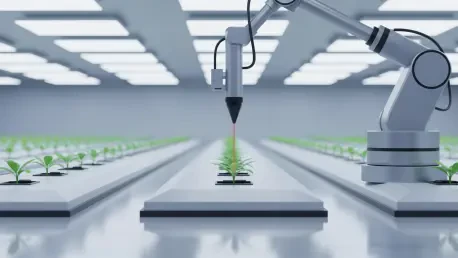
Performance metrics in this area are staggering, with some laser weeding systems capable of neutralizing thousands of weeds per minute without any chemical input at all. This technical significance cannot be overstated, as it moves the industry away from the environmental and economic burden of broad-spectrum applications. The machine learning models become more accurate with every acre covered, creating a localized intelligence that adapts to the specific weed varieties and soil conditions of an individual farm. This high-resolution management ensures that resources are allocated only where they are strictly necessary, optimizing the growth environment for every plant.
Autonomous Propulsion and Navigation Systems
The development of self-driving tractor technology has revolutionized field operations by enabling 24-hour production cycles without the need for constant human supervision. These machines utilize a sophisticated suite of high-precision GPS, Lidar, and ultrasonic sensors to navigate complex environments and detect obstacles in their path. Unlike traditional GPS guidance, which merely assists a human driver, full autonomy allows the tractor to execute entire production cycles for staple crops like corn and soybeans independently. This operational safety is maintained through onboard GPUs that process sensor data in milliseconds, allowing the machine to stop or reroute if it encounters an unexpected object or person.
The impact of autonomous propulsion on farm management is profound, as it doubles the productive hours available during the critical windows of planting and harvesting. By removing the limitations of human fatigue, these systems ensure that crops are put into the ground or removed from the field at the ideal moment, maximizing yield and quality. Moreover, the data collected during these autonomous passes provides a foundational layer for future management decisions, creating a unified record of every operation performed on a specific plot. This technical overview confirms that autonomy is not just about replacing the driver; it is about creating a more reliable and consistent agricultural engine.
Emerging Trends in Connectivity and Edge Computing
A significant shift is occurring in how agricultural data is processed, moving away from slow cloud-based dependencies and toward powerful onboard edge computing. This transition is driven by the reality of rural connectivity, which is often insufficient for the real-time demands of high-speed robotic operations. By utilizing localized GPUs, agricultural robots can make immediate decisions regarding obstacle avoidance and weed identification without waiting for a signal from a remote server. However, the data is still eventually uploaded to cloud storage, where it serves as a massive repository for refining machine learning models across entire fleets.
The rise of collaborative robots, or “cobots,” represents another trend toward human-machine synergy in the harvesting of specialty crops. These autonomous carts follow human workers through orchards or vineyards, carrying harvested goods and streamlining the logistics of the field. This integration of data sequences informs every stage of the agricultural process, from the initial planting to the final harvest. By bridging the gap between manual labor and full automation, these systems provide a flexible solution for high-value crops that still require a human touch for delicate handling.
Real-World Applications in Crop and Livestock Management
In the realm of large-scale grain farming, technologies like “See and Spray” have already demonstrated the potential for massive chemical reduction. Case studies from wheat and onion operations show that targeted spraying can reduce herbicide use by nearly half, significantly lowering the overhead costs for the farmer while protecting soil health. The synthesis of these applications creates a compelling return on investment, as the savings on inputs often offset the cost of the technology within a few seasons. This economic reality is the primary driver for adoption among traditional farmers who are looking to modernize their operations.
Beyond the fields, computer vision is making significant inroads into livestock management, particularly in the dairy industry. Deep learning cameras are now used to monitor cow health by scoring locomotion and body condition automatically as the animals move through the barn. This proactive approach allows farmers to identify early signs of illness or injury that might be missed by the human eye, preventing loss in milk production and improving overall animal welfare. By providing objective, data-driven health scores, these systems remove the guesswork from livestock management and ensure that every animal receives the attention it needs.
Strategic Obstacles and Economic Barriers to Adoption
Despite the technical triumphs, the deployment of AI in agriculture faces substantial hurdles related to hardware durability in the harsh outdoor environment. The combination of extreme temperatures, dust, and constant mechanical vibration can be punishing for sensitive electronics and high-precision sensors. Furthermore, rural connectivity limitations continue to hinder the seamless integration of global data models into local operations, requiring sophisticated edge computing solutions that add to the complexity of the hardware. These technical challenges must be overcome to ensure that autonomous systems are as reliable as the mechanical tractors they are designed to replace.
Economic challenges also remain a significant barrier, as the high initial capital investment required for autonomous systems can be daunting for smaller operations. Farmers require a clear, step-by-step path to a return on investment before committing to such a radical shift in their business model. Additionally, the regulatory landscape for fully autonomous heavy machinery is still evolving, with safety considerations and liability issues presenting a complex puzzle for both manufacturers and operators. Navigating these legal and economic barriers is essential for the widespread adoption of smart agricultural systems across the global farming sector.
Future Horizons and the Trajectory Toward 2030
As we approach the end of the decade, the trajectory of agricultural technology points toward a future of fully autonomous, “hands-free” production cycles. We can expect breakthroughs in chemical-free farming techniques, such as the use of electricity or high-energy lasers to manage pests and weeds, which will further minimize the environmental footprint of large-scale agriculture. The potential for autonomous biological monitoring will allow for the real-time detection of nutrient deficiencies and soil health issues, enabling a level of hyper-localized management that was previously impossible.
The long-term impact of these technologies will be a more resilient global food supply chain that is better equipped to handle the challenges of climate change and resource scarcity. Hyper-localized data will allow for a more nuanced understanding of the environment, leading to better land stewardship and more predictable crop yields. This shift will likely redefine the role of the farmer as a data analyst and system orchestrator, moving the industry further into the digital age. The synergy of robotics and data-driven precision ensures that the agricultural sector can meet the needs of a growing population while maintaining the health of the planet.
Concluding Analysis on the Agricultural Transformation
The review of AI and robotics in the agricultural sector demonstrated that the technology moved beyond mere novelty and became a critical necessity for modern food production. The synthesis of computer vision and autonomous propulsion provided a robust solution to the persistent labor shortages and rising operational costs that had plagued the industry. Significant gains in chemical reduction and yield optimization were observed across diverse sectors, proving that high-precision interventions justified the transition from traditional methods. The findings indicated that the primary value of these systems lay in their ability to provide objective, data-driven insights that allowed for more efficient resource allocation and better animal welfare.
While the economic barriers to entry remained a significant challenge for some, the evidence showed that the productivity gains offered a clear path to long-term profitability. The development of edge computing solved many of the connectivity issues inherent in rural environments, ensuring that autonomous fleets operated safely and effectively. Ultimately, the integration of these smart systems established a new benchmark for sustainability and efficiency in the global food supply chain. Future efforts focused on refining hardware durability and streamlining regulatory frameworks to ensure that the benefits of agricultural automation reached all levels of the industry. The transformation was not just about the machinery itself but about the creation of a more resilient and precise agricultural future.