
The seamless convergence of hardware flexibility and centralized cloud control has rewritten the blueprint for modern enterprise connectivity across the global landscape. The networking industry recently underwent a massive transition from rigid, hardware-centric on-premises management to agile, software-defined cloud architectures. Historically, the most advanced network management features were exclusive to large enterprises with massive IT budgets, which often left small and medium-sized businesses to struggle with difficult and manual configurations. Zyxel Networks became a pivotal force by democratizing these high-level technologies and moving essential control functions to a streamlined, centralized cloud interface.
This segment of the industry now emphasizes a blend of hardware adaptability and unified management. As more organizations migrate their sensitive operations to the digital space, the regulatory focus has intensified regarding data sovereignty and cloud security standards. Modern vendors are no longer just selling devices; they are providing comprehensive ecosystems that allow businesses of all sizes to maintain enterprise-level performance without traditional overhead costs.
Dynamics Influencing Modern Network Infrastructure
The move toward remote-first deployment models has become the primary trend driving the industry today, effectively eliminating the need for expensive on-site manual labor. Organizations increasingly demand solutions that offer immediate visibility and control from any location, leading to a shift in how infrastructure is prioritized. Rather than being tied to proprietary hardware lock-ins, modern companies favor flexible management models like NebulaFlex, which provide the freedom to switch between standalone and cloud-managed modes.
Consumer behavior has also shifted as technical complexity becomes a barrier to growth. Organizations now prioritize intuitive interfaces and centralized visibility over complex command-line configurations. This shift has forced the market to adapt, favoring platforms that offer a unified view of the entire network stack. The result is a more competitive environment where ease of use and rapid deployment are as valuable as raw hardware performance.
Emerging Technologies and the Shift to Remote-First Management
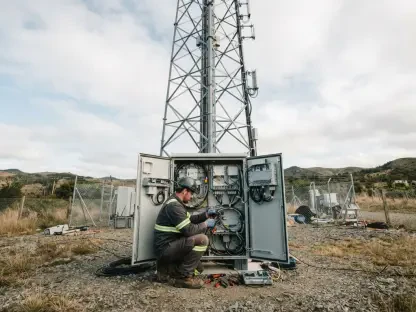
Advanced technologies like Zero-Touch Provisioning have redefined the initial onboarding process for networking hardware. By allowing devices to be configured automatically upon connecting to the internet, companies can now deploy complex systems across dispersed global locations without sending a technician to each site. This integrated hardware ecosystem ensures that access points, switches, and security gateways work in harmony from the moment they are unboxed.
This evolution toward remote management has fundamentally changed the role of the IT professional. Instead of focusing on basic maintenance and troubleshooting at a single location, administrators can now manage thousands of devices across different continents. The ability to push firmware updates, adjust security policies, and monitor traffic patterns remotely has made global scaling a reality for even the smallest organizations.
Market Growth Projections and Global Performance Indicators
The cloud-managed networking market continues to demonstrate robust growth, with platform adoption reaching millions of connected devices globally. Performance indicators suggest a decisive transition from one-off hardware purchases to long-term subscription models, which reflects a steady increase in recurring revenue for the technology sector. Projections for the period from 2026 to 2028 suggest that the small and medium-sized business segment will continue to lead this expansion.
As cloud accessibility lowers the financial and technical barriers to entry, more businesses are expected to upgrade their legacy systems to cloud-native solutions. This trend is bolstered by the increasing availability of affordable, high-performance hardware that includes cloud management at no additional cost. For investors and market analysts, the focus remains on rising adoption rates in emerging markets where digital transformation is accelerating at an unprecedented pace.
Overcoming Complexity and Operational Barriers
The networking industry has long faced significant obstacles, including high deployment costs and a chronic shortage of specialized IT labor. Traditional networking often required hours of on-site manual configuration for every new device, which created a massive bottleneck for businesses looking to scale quickly. To address these systemic challenges, unified platforms have successfully integrated management across different hardware layers.
By utilizing a holistic approach, businesses can now manage their entire infrastructure through a single pane of glass, reducing the need for an extensive on-site IT team. This integration streamlines the strategy for maintaining network health and ensures that security patches are applied uniformly across the entire organization. The reduction in operational overhead has allowed companies to redirect their resources toward innovation rather than just keeping the lights on.
Navigating Security Standards and Regulatory Compliance
The transition to cloud-managed networking has naturally intensified the focus on cybersecurity regulations and strict data protection laws. As management data moves to the cloud, vendors must adhere to rigorous encryption and privacy standards, such as GDPR and SOC2, to protect sensitive user information. Compliance is no longer treated as a mere legal requirement but has become a core competitive advantage in a market wary of data breaches.
Businesses now demand secure cloud environments that offer more than just basic connectivity. They require platforms that integrate automated threat response and synchronized security across all network layers. This demand has led to the development of advanced security gateways that can identify and block threats in real-time, sharing that information across every connected device to create a collective defense mechanism.
The Future of Networking Through AI and Automation
The next frontier of cloud networking lies in the deep integration of artificial intelligence and machine learning to create self-sustaining infrastructures. Future growth will be fueled by innovations such as self-healing networks that can automatically reroute traffic or adjust settings when a failure is detected. AI-driven diagnostics will further simplify the management process by providing predictive maintenance alerts before a problem impacts the end-user.
Natural language processing is also set to transform how administrators interact with their networks, allowing for simplified troubleshooting through conversational interfaces. These technologies will transform networks from reactive systems into proactive assets capable of optimizing performance in real-time. As global economic conditions demand higher efficiency, automation will serve as the primary disruptor in how organizations manage their digital footprints.
Summarizing the Impact of Unified Cloud Management
The evolution of networking over the past decade established a successful balance between enterprise-grade power and the simplicity required by modern businesses. By lowering entry barriers and enabling service providers to build recurring revenue streams, platforms like Nebula fundamentally altered the business of IT. The shift toward automation and intelligent security ensured that cloud networking remained a critical driver of global digital transformation.
Organizations that adopted these unified frameworks achieved greater scalability and a significant reduction in manual complexity. Future strategies required a focus on end-to-end integration rather than isolated hardware upgrades to maintain a competitive edge. This transformation empowered managed service providers to offer more sophisticated security and networking services to a broader range of clients. Ultimately, the industry moved toward a model where connectivity became a seamless, background utility that supported rapid business growth without traditional technical friction.