
When a neural network averages information across dissimilar neighbors in a shopping cart, it often obscures the very data points required for accurate classification. This phenomenon occurs because traditional Graph Neural Networks typically operate under the principle of homophily, which is the assumption that connected entities in a network possess similar characteristics. In many modern computational environments, this assumption is fundamentally flawed, as real-world connections frequently link highly disparate entities. For instance, an e-commerce transaction might group a high-end electronics item with a generic household cleaning product. When a model attempts to smooth the features of these dissimilar neighbors through standard message-passing mechanisms, it inadvertently erases the nuances that define the individual components. This loss of distinctiveness leads to poor classification performance, often making the complex neural network less effective than a simple model that ignores the network structure altogether. To address these inconsistencies, researchers from the University of Notre Dame, the University of Connecticut, and Amazon GenAI have introduced a groundbreaking approach that leverages the messy nature of data rather than trying to force it into a homogeneous mold, fundamentally changing how we understand network architecture in 2026.
Group Dynamics: Transitioning Toward Sophisticated Hypergraph Frameworks
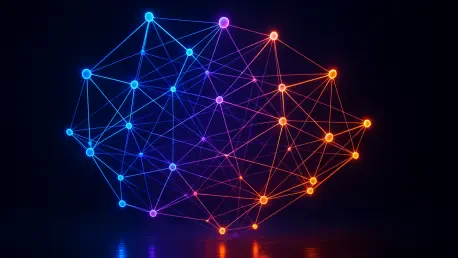
The shift from traditional graph models to hypergraphs represents a critical leap in capturing the true complexity of interconnected systems. While standard graphs are limited to pairwise connections, hypergraphs employ hyperedges that can link any number of nodes simultaneously. This structure is significantly more adept at modeling real-world group dynamics, such as the various products bundled into a single retail transaction or the collaborative efforts of several scientists on a research paper. In these scenarios, the relationships are not just between pairs, but among a collective. However, the inherent difficulty with hypergraphs lies in their tendency toward heterophily, where the members of a single hyperedge may not share any obvious semantic traits. For example, a bipartisan legislative bill might be co-sponsored by politicians from opposite ends of the ideological spectrum. Standard graph-based AI models often struggle to process these heterogeneous groups because their internal logic is designed to minimize the distance between connected nodes. When the nodes are fundamentally different, this drive toward similarity results in over-smoothing, a state where the AI can no longer tell the difference between the entities it is supposed to be categorizing accurately.
Building upon previous successes in supervised learning, the research team sought to overcome the primary limitation of their earlier model, BHyGNN. The original iteration relied on a selective propagation strategy that utilized a Variational Broadcast Autoencoder Network to decide when a node should share or receive information. While this successfully mitigated some of the issues associated with messy data, it required a significant amount of human-labeled training data to function effectively. In the fast-moving technological landscape of 2026, where data is generated at an unprecedented scale, relying on manual labels is often a bottleneck that prevents the timely deployment of AI solutions across various sectors. The transition to BHyGNN+ addressed this by moving toward a self-supervised framework, which allows the model to learn the fundamental structure of a network without any external guidance. This shift is critical for high-stakes applications like tracking the evolution of illicit drug trafficking rings or organizing rapidly expanding catalogs where new categories emerge daily. By eliminating the need for expensive or inaccessible labels, BHyGNN+ provides a more scalable and autonomous way to interpret the complex group dynamics that define modern digital interactions.
Mathematical Symmetry: The Role of Hypergraph Duality
The core innovation that distinguishes BHyGNN+ from its predecessors is the application of hypergraph duality, a concept that functions as a sophisticated mathematical mirror. In a standard hypergraph, nodes represent individual entities and hyperedges represent the groups that connect them. Through the process of duality, the roles of these components are swapped: the hyperedges from the original view become the nodes in the dual view, and the original nodes become the edges that link them. This transformation is entirely lossless, ensuring that no structural data is discarded during the reorganization. It essentially allows the AI to observe the same dataset from two distinct but mathematically related perspectives simultaneously. By analyzing the data through this dual lens, the model can identify hidden symmetries and pathways that are invisible in a single, node-centric view. This approach is particularly effective for dealing with heterophily because while nodes in a messy network may appear disconnected or random, their dual representations often exhibit a much higher degree of structural consistency. The mirror trick effectively reorganizes chaotic information into a format that the neural network can process with far greater precision.
The researchers demonstrated that the original hypergraph and its dual version are isospectral, meaning they share the same non-zero eigenvalues in their normalized walk operators. This mathematical proof is significant because it confirms that both views, despite their different appearances, encode the exact same complex structural information. In practical terms, this allows the AI to capture complementary pathways through the data that traditional models simply miss. For example, in a network of political co-sponsorship, the node-centric view might focus on the individual politicians, while the dual view focuses on the bills themselves. By looking at how bills are connected through shared sponsors, the model gains a different kind of insight into political alignment than it would by looking only at individual legislator profiles. This dual-view encoding ensures that the model remains robust even when the primary network structure is characterized by high levels of heterophily. By aggregating information across these dual neighbors, the model generates a stable learning signal even when the original network lacks homophily. This mathematical bound is tightest precisely when the shared nodes carry diverse labels, which is the exact scenario where other AI models typically fail to provide reliable results.
Autonomous Training: Contrastive Learning and Selective Propagation
BHyGNN+ utilizes this duality to power a self-supervised contrastive learning objective, which is designed to identify patterns without human intervention. The process begins with stochastic augmentations, where the system creates slightly corrupted versions of both the original hypergraph and its dual counterpart. These augmentations might involve masking certain attributes, removing specific members from a hyperedge, or dropping nodes and edges entirely. These variations force the AI to identify the most essential and resilient features of the network structure rather than relying on superficial patterns. Both the original and the dual views are then fed through a shared hypergraph encoder. The primary goal of the training process is to maximize the similarity between the representations of the original view and its dual view. This is achieved through a specialized loss function that employs cosine similarity to measure how well the model has captured the underlying structure. Because the model is comparing a structure against its own mathematical dual, it can learn effectively from the raw data itself, removing the need for pre-existing knowledge or human-verified examples to guide the learning process.
A major advantage of this dual-view contrastive approach is that it eliminates the need for negative samples. Most existing self-supervised methods require the model to compare a positive pair of similar items against many negative pairs of dissimilar items to prevent the model from taking shortcuts. Generating high-quality negative samples is often a computationally expensive and complex task that can introduce its own set of biases into the learning process. By contrasting a structure against its own dual, BHyGNN+ avoids these costs while maintaining a high level of representational accuracy. The system ensures that the model does not suffer from representation collapse, a common failure in unsupervised learning where the AI assigns the same mathematical value to every data point. By focusing on the inherent symmetry of the hypergraph, the model naturally maintains a diverse set of representations. This makes it particularly effective for analyzing complex datasets where the relationships between items are constantly changing, as the model can adapt its understanding of the network structure in real-time without requiring a new set of human-generated labels or a library of negative examples for comparison.
Performance Benchmarks: Validating Accuracy in Messy Environments
To validate the effectiveness of BHyGNN+, the research team conducted an extensive evaluation against 13 baseline models using 11 diverse datasets. these datasets covered a wide spectrum of real-world scenarios, ranging from political networks in the United States Senate and House of Representatives to e-commerce patterns found in Walmart purchase histories. They also included academic citation networks like PubMed and more specialized datasets used to identify roles within drug trafficking rings on social media platforms. In every category, BHyGNN+ consistently outperformed both supervised and self-supervised state-of-the-art methods. Notably, it exceeded the performance of models specifically designed to handle heterophily, such as ED-HNN. The results were statistically significant, demonstrating that the mirror trick provided a clear advantage in accuracy and reliability across multiple domains. Even in academic citation chains where the data is relatively structured, the dual-view approach allowed the model to identify subtle connections between research papers that standard models overlooked, leading to more precise categorization and a better understanding of how different fields of study overlap.
One of the most impressive findings was the model’s performance in low-label scenarios. In tests where only ten percent of the data was labeled for the final task, BHyGNN+ significantly outperformed its supervised predecessor. This success indicated that the self-supervised pre-training phase allowed the model to capture a much deeper and more nuanced understanding of the network structure than could be achieved through manual annotation alone. The model also proved to be remarkably stable across a wide range of mathematical settings. Whether the hidden dimensions of the mathematical vectors were set to 64 or 1024, the performance remained consistent. Furthermore, the researchers found that the model automatically allocated more representational capacity to heterophilic datasets. This suggests that the AI is capable of recognizing when a structure is more complex and requires a more detailed encoding, allowing it to adapt its processing power to meet the specific needs of the data it is analyzing. This adaptability is a key factor in why BHyGNN+ remains effective across such a broad variety of messy and disorganized real-world networks.
Future Trajectory: Scaling Resilience in Global Networks
The development of BHyGNN+ established a new standard for how researchers approached the problem of unstructured and unlabeled data within complex networks. By shifting the focus from simple node-level classification to a more holistic, dual-view structural understanding, the model provided a blueprint for future AI systems that must operate in high-noise environments. Organizations looking to implement these findings started by identifying their own messy datasets, such as supply chain logs or intricate financial transactions, where traditional modeling had previously failed. The move toward self-supervised learning reduced the reliance on manual annotation, which had long been a primary bottleneck in deploying machine learning at scale across global industries. Moving forward, the strategy involved integrating these dual-perspective encoders into real-time monitoring systems for cybersecurity and fraud detection, where the ability to see through the mirror allowed for the identification of sophisticated patterns that were previously hidden by the chaotic nature of the network.
Engineers and data scientists prioritized the adoption of hypergraph structures over traditional graphs when dealing with multi-way interactions, ensuring that the inherent complexity of the data was preserved rather than smoothed away during the analysis phase. This shift in perspective proved that mathematical symmetry could be transformed into a practical tool for building more resilient and autonomous intelligence systems. The researchers identified several avenues for expanding this work, including the development of specialized data augmentation techniques designed for even more extreme versions of heterophilic structures. By focusing on the underlying geometry of relationships rather than just the surface-level characteristics of individual points, the project offered a clear path toward AI that can navigate the messy reality of human interaction and economic exchange. These advancements suggested that the next generation of neural networks would no longer fear disorganized data, but would instead treat it as a rich source of structural information that could be unlocked through the simple but effective application of hypergraph duality.