
The integration of sophisticated voice-controlled assistants and automated climate control systems has increasingly become a standard feature of modern Middle Eastern living, yet the invisible threads connecting these digital devices often weave a complex web of vulnerability. Research indicates that over fifty percent of smart home users in the Middle East manage their ecosystems with a modest collection of one to three connected devices. This finding emerges from a critical study titled “Cybersecurity risk assessment of smart home IoT ecosystems in the MENA region,” which seeks to address the historical lack of academic focus on the Middle East and North Africa. While vast amounts of data have been gathered regarding Internet of Things adoption in North American and European markets, the unique behaviors of Arabic-speaking users remained largely unexplored until recently. This research provides a granular look at how domestic environments are evolving in the region, focusing on the specific security behaviors and technical preferences that define this population today.
Research Foundations and Cultural Paradigms
Regional Landscapes: Understanding Participant Profiles
The quantitative framework used in this extensive research gathered insights from 164 valid participants across twelve distinct countries, creating a representative cross-section of the diverse regional landscape. A heavy geographic concentration was observed in Saudi Arabia, which accounted for approximately 67 percent of the sample size, followed by significant contributions from Egypt and Tunisia. Other participating nations included Kuwait, Qatar, Bahrain, Oman, Iraq, and Algeria, as well as members of the Arab diaspora currently residing in the United Kingdom and Australia. This wide-reaching survey was deployed via professional platforms to ensure a high standard of data integrity and participant engagement. By focusing on these specific locations, researchers were able to identify commonalities in how technology is perceived and used across the Arab world. The inclusion of diverse economic and social backgrounds allowed for a more comprehensive understanding of the localized digital infrastructure and challenges.
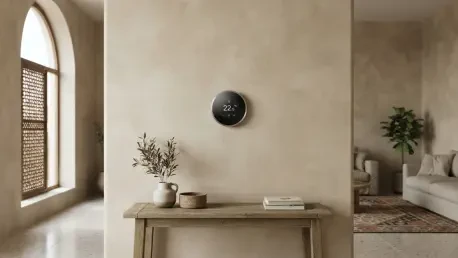
The demographic profile of the respondents revealed a remarkably young and tech-literate cohort, with more than half of the participants aged between 18 and 24. Interestingly, a staggering 127 out of the 164 individuals reported working directly with Internet of Things technology in a professional capacity, suggesting a high baseline for technical awareness within the sample. Despite this familiarity, the typical household ecosystem remained relatively modest, centered primarily on essential smart appliances and security cameras. Smart thermostats were also prominently featured in many homes, while lighting systems and smart speakers were slightly less prevalent, each being used by roughly 28 percent of the group. This indicates that even among experts, the adoption of smart technology is often driven by utility and security rather than a desire for a fully automated residence. The data suggests that as of 2026, the focus has shifted toward high-impact devices that provide clear functional benefits for the modern household.
Cultural Paradigms: The Influence of Religious Privacy
In the Middle East and North Africa, the prioritization of digital privacy over the acquisition of new hardware has emerged as a defining characteristic of consumer technology usage. Approximately 55 percent of users indicated a strong preference for enhancing the security of their existing devices rather than upgrading to newer, more feature-rich models. This reflects a significant departure from the “throwaway” tech culture often seen in other global markets, suggesting a more conscientious and maintenance-oriented approach to digital safety. Users demonstrated a keen awareness that simply purchasing the latest gadget does not inherently provide a more secure environment. Instead, the focus has remained on the longevity and protection of current assets. This mindset is particularly evident in how consumers interact with security cameras and smart appliances, where the goal is to create a stable and protected domestic sphere. The preference for software-based security improvements highlights a pragmatic shift in regional consumer values.
This emphasis on privacy is not merely a technical preference but is deeply rooted in the cultural and religious fabric of Arab societies, where the sanctity of personal privacy is a foundational value. Trust serves as a critical element within these communities, and religious principles significantly reinforce the importance of maintaining a private domestic life. When surveyed about their primary motivations for implementing security measures, over half of the respondents cited data privacy as their top concern, surpassing worries about unauthorized hardware access or external hacking attempts. The cultural imperative to protect the home from outside intrusion extends naturally into the digital realm, making privacy-preserving technologies a high priority for the average user. Consequently, technology providers who wish to succeed in this region must align their products with these values by offering robust, transparent privacy controls. Understanding these cultural nuances is essential for developing security solutions that resonate with the specific needs of the MENA population.
Technical Protection and Knowledge Implementation
Defensive Deployment: Software Satisfaction and Network Risk
Evaluating user discipline regarding authentication and maintenance reveals a distinct bifurcation in how digital defenses are managed across the region. While half of the participants demonstrated strong security hygiene by using two-factor authentication and unique passwords, a concerning portion of the population remained either unaware of these tools or inconsistent in their application. For instance, roughly 26 percent of users did not use two-factor authentication at all, and a significant 21 percent admitted to being completely unfamiliar with the concept. This disparity suggests that even in a relatively tech-literate sample, basic security education remains a substantial hurdle for comprehensive protection. Furthermore, password discipline followed a similar pattern of inconsistency, with a large segment only prioritizing unique credentials occasionally. This lack of uniform practice highlights the need for automated security features that reduce the burden on the user, ensuring that protection is maintained regardless of individual technical diligence.
Connectivity preferences and network selection further illustrate the pragmatic approach users take toward managing potential digital risks in their environments. Approximately 60 percent of respondents managed their smart home devices through a combination of home Wi-Fi and mobile data networks, such as 4G and 5G. While corporate networks were generally perceived as providing the highest level of security, they were rarely used for personal device management due to strict workplace policies and boundary concerns. In contrast, public networks were correctly identified by the vast majority of the population as the least secure environment for handling sensitive IoT data. This awareness indicates a sophisticated understanding of the vulnerabilities inherent in shared digital spaces. However, despite this knowledge, users often found themselves balancing convenience with safety when accessing their systems remotely. The reliance on mobile networks for IoT management suggests a demand for security tools that remain effective across varying network types and levels of inherent encryption.
Strategic Advancements: Support Systems and Technical Innovation
The research highlighted a vocal and consistent demand for better consumer support systems, with users expressing a clear desire for comprehensive security information rather than just improved hardware. Over 55 percent of respondents specifically requested detailed guides and security checklists to help them navigate the increasingly complex landscape of home automation. This indicates that while the awareness of digital risk is high, there is a persistent lack of specific technical knowledge required to implement effective personal defenses. Other desired resources included professional assessments and community support groups, which would allow users to share best practices and receive expert validation of their security setups. Currently, fewer than 25 percent of participants reported being very satisfied with their existing security tools, pointing to a major market gap for products that are both robust and user-friendly. Addressing this knowledge gap through accessible educational materials is crucial for empowering users to take control of their own digital safety.
To address the physical constraints of contemporary devices, the analysis favored advanced architectural shifts such as edge computing and blockchain technology. Edge computing enhanced privacy by processing sensitive data closer to the source, thereby reducing the risks associated with centralized cloud storage. Meanwhile, blockchain protocols provided an immutable record for authentication, making it significantly harder for unauthorized parties to tamper with system integrity. Although these implementations introduced certain trade-offs regarding latency and energy consumption, they represented a sophisticated layer of protection. Stakeholders eventually recognized that securing the smart home required a multi-layered strategy that harmonized technical innovation with local cultural values. By combining user-oriented habits with organizational technologies like network segmentation, developers successfully mitigated many inherent risks. This approach emphasized the creation of adaptive architectures that ensured automation did not compromise the fundamental right to personal privacy.