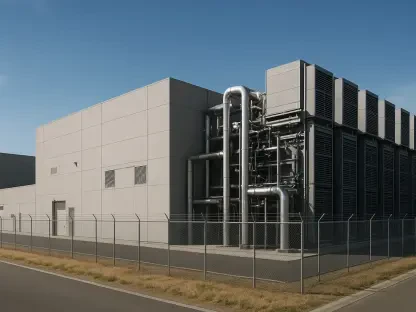

The emergence of the AI RAN Alliance signals a global shift toward building 6G technologies with artificial intelligence as a foundational, built-in component. This evolution marks a departure from the era of static digital interfaces and moves toward a reality where autonomous machines interact seamlessly with the physical world. Physical AI represents a paradigm shift where drones, robotic systems, and industrial automation no longer rely on distant data centers but instead draw power from the very infrastructure they use to communicate. In 2026, the convergence of telecommunications and high-performance computing is no longer a theoretical concept but a practical necessity for the safe operation of mobile autonomous agents. By embedding powerful GPU units directly into wireless base stations, the industry is effectively decentralizing intelligence, ensuring that robots can perform complex tasks without being weighed down by massive on-board processors or the energy-intensive demands of high-level local computation.
Overcoming Latency: Hardware Constraints and Edge Solutions
Maintaining safety and efficiency in dynamic urban environments requires autonomous devices to process immense amounts of visual and sensory data in milliseconds. While traditional cloud computing provided massive scale, the inherent physical distance between a robot and a data center often introduced significant latency, which remains a deal-breaker for real-time navigation. By utilizing AI Radio Access Networks, robots can offload data-heavy tasks to a nearby base station that returns movement commands almost instantly. This edge-based computing model also democratizes the robotics industry by lowering the barriers to entry for smaller firms that cannot afford proprietary high-speed infrastructure. Developing high-performance autonomous hardware is expensive, but a standardized AI RAN allows these companies to utilize shared network intelligence as a vital utility. Consequently, engineers can design lighter, more energy-efficient machines that operate longer while accessing top-tier cognitive resources.
While individual machine intelligence is critical, the true potential of Physical AI lies in the coordination of large-scale robotic fleets. In environments like logistics warehouses or metropolitan delivery zones, a collective intelligence is required to manage complex traffic patterns and task allocations. The AI-powered base station serves as the central hub for this coordination, acting as a macro-brain that observes the entire operational theater simultaneously. Practical verifications have proven that this network-centric approach is viable, with researchers successfully demonstrating seamless handoffs where devices maintain stable AI connections while moving between network environments. This autonomy in network selection ensures that the robot’s brain is always accessible, providing the service continuity necessary for machines navigating unpredictable cityscapes. By processing data from hundreds of agents at once, the system optimizes fleet efficiency and safety far beyond localized sensor capabilities.
Strategic Alliances: Geopolitical Standards and Industrial Integration
The transition toward software-defined, GPU-based networks is also a calculated move within the broader landscape of global technological competition. For decades, the telecommunications hardware market was dominated by established giants in Europe and China, leaving other regions to rely on proprietary equipment for their critical infrastructure. In response, a strategic pivot toward AI RAN and open-source platforms like NVIDIA’s “Aerial” is allowing the United States and its allies to leapfrog traditional hardware constraints. By emphasizing software virtualization and general-purpose GPU computing, these nations are redefining the foundational standards of the upcoming 6G era. This approach leverages existing dominance in AI development and semiconductor manufacturing to create a more flexible, software-centric network architecture. This shift not only reduces dependence on specific hardware vendors but also allows for rapid updates, ensuring the network evolves as fast as AI software does.
Despite the rapid pace of development, the path to mass-market commercialization is currently hindered by the fragmentation of various industrial sectors. At present, robotics manufacturers, AI model developers, and telecommunications carriers frequently operate in separate silos, which can lead to inefficiencies and compatibility issues during deployment. For Physical AI to realize its full transformative potential, the industry must move toward a unified ecosystem where hardware, software, and connectivity are designed to function as a single unit. Global alliances are currently working to bridge these gaps by establishing common protocols and testing environments that facilitate cross-industry collaboration. This integration is vital for creating a plug-and-play environment where an autonomous system can be deployed onto a network with the same ease that a smartphone connects to cellular data. Overcoming these silos will be the defining challenge for the remainder of the decade as stakeholders unite.
Integrated Intelligence: Future Frameworks for Autonomous Systems
The successful verification of AI RAN architectures confirmed that the future of robotics was intrinsically linked to the evolution of network-based computing. Industry leaders proved that offloading the thinking process to GPU-powered base stations solved the dual problems of battery life and latency that had long plagued small-scale autonomous systems. These advancements established a clear precedent for the decommissioning of heavy on-board chips in favor of streamlined, network-connected hardware. This transition allowed for the birth of a more agile robotics industry, where mechanical design was no longer secondary to the requirements of housing cooling systems and large batteries for AI processing. By shifting the computational burden to the edge, the sector achieved a level of efficiency that was previously considered unattainable. Stakeholders recognized that the base station was no longer a passive observer of data but had become an active participant in the physical movement.
The industry recognized that the next logical step involved the creation of standardized interfaces to allow robots from different manufacturers to share the same AI RAN resources seamlessly. This realization led to the proposed development of international governance frameworks aimed at managing the safety implications of centralized AI control in public zones. Telecommunications providers understood that their business models needed to shift toward offering inference-as-a-service as a core product rather than focusing solely on raw bandwidth. The strategic decision to invest in localized GPU-dense infrastructure became a priority for metropolitan areas seeking to integrate autonomous systems into daily urban life. As stakeholders looked toward the horizon beyond 2027, the focus moved from merely proving the technology to ensuring its long-term security. The integration of physical intelligence into the network fabric stood as the most critical achievement of the era, determining the ultimate success of the transition.