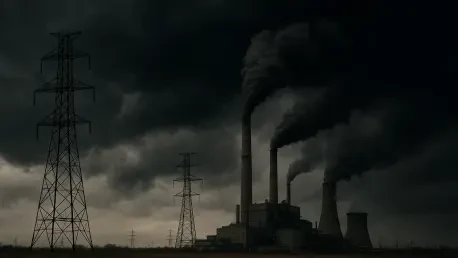

The Environmental Protection Agency has begun framing these industrial control system intrusions as public health crises rather than traditional data privacy breaches. This shift in perspective underscores a harrowing reality in 2026 where the digital and physical worlds have collided with potentially lethal consequences. As Iranian cyber operations become more aggressive, the focus has moved beyond the simple theft of intellectual property or the disruption of government websites. Today, the Islamic Revolutionary Guard Corps and its various specialized units are actively probing the mechanical heart of American life, targeting the very systems that ensure the flow of clean water, the stability of the power grid, and the reliability of emergency communications. This evolution represents a strategic maturation of Tehran’s asymmetric warfare capabilities, allowing them to exert significant geopolitical pressure while remaining in a gray zone that complicates traditional military responses. By focusing on operational technology rather than just information technology, these actors have found a way to threaten the physical safety of millions of Americans from thousands of miles away.
The Evolution of the Tactical Landscape
The broader strategy driving these incursions has shifted from opportunistic experimentation to a disciplined, multi-year campaign of infrastructure mapping and exploitation. In the early stages of this conflict, many security analysts viewed Iranian efforts as secondary to the sophisticated persistent threats posed by larger state actors. However, by mid-2026, it became clear that the persistence and specific focus of the CyberAv3ngers persona represented a tier-one threat to domestic stability. This group has moved through the high-value sectors of the American economy with alarming speed, testing the defenses of water treatment plants, telecommunications hubs, and healthcare facilities. The objective is rarely immediate or total destruction; instead, it is about the quiet establishment of persistence within critical systems. This allows the Iranian state to maintain a “fail-safe” mechanism for retaliation, ensuring that any escalation in conventional diplomatic or military spheres can be met with a disruptive response in the American heartland.
Strategic Warnings: Analysis of Federal Advisory AA26-097A
In April 2026, the federal government reached a tipping point in its assessment of these threats, leading to the release of Joint Federal Advisory AA26-097A. This document was a collaborative effort between the Cybersecurity and Infrastructure Security Agency, the Federal Bureau of Investigation, and the National Security Agency, signaling the high level of concern within the intelligence community. The advisory moved the conversation away from hypothetical scenarios and toward a catalog of confirmed, successful exploitations. It detailed how Iranian-affiliated actors had successfully compromised programmable logic controllers across various vital sectors, demonstrating an ability to interact with the core hardware that governs physical machinery. This was not merely about viewing data; it was about the unauthorized interaction with project files and the actual manipulation of the logic that tells a pump to stop or a valve to open. The issuance of this warning served as a clarion call to the private sector that the era of passive monitoring was over and that active, aggressive defense was now a baseline requirement.
Building on the technical revelations of the advisory, the government highlighted the specific ways in which these intrusions result in tangible operational disruption and financial damage. The manipulation of Human-Machine Interfaces and SCADA displays is a particularly insidious tactic, as it can hide the true state of a system from its human operators. By presenting false data to a plant manager, an attacker can mask a dangerous physical state, such as an overflow or a chemical imbalance in a water supply. The advisory noted that these interactions often led to emergency manual shutdowns, which not only cost utilities millions in lost productivity and repair costs but also put a massive strain on local emergency services. The transition of the Environmental Protection Agency toward treating these as public health emergencies reflects this reality. When a cyberattack can potentially change the acidity of a city’s drinking water or shut down the cooling system for a regional hospital, it is no longer a matter of digital security but a direct threat to the lives of the citizenry.
Case Study: The 2023 Municipal Water Authority Breach
To appreciate the gravity of the current situation in 2026, it is necessary to examine the foundational events that set this campaign in motion. In late 2023, the CyberAv3ngers persona gained international notoriety after a successful breach of the Municipal Water Authority of Aliquippa, Pennsylvania. While the physical damage in that specific instance was limited, the psychological impact was enormous. The attackers targeted a Unitronics Vision-series controller, which was a common piece of equipment in small-scale utilities. By gaining remote access, they were able to display a political message on the controller’s screen, effectively telling the local population that their most basic needs were at the mercy of a foreign power. This incident forced the utility to move to manual operations for an extended period, proving that even a small, municipal authority in a rural area could be caught in the crosshairs of a global geopolitical struggle. It was a proof-of-concept for the IRGC, demonstrating that the “soft underbelly” of American infrastructure was incredibly easy to pierce.
Following the Aliquippa breach and subsequent similar incidents throughout 2024 and 2025, the United States government took aggressive steps to identify and punish those responsible. In early 2024, the Treasury Department’s Office of Foreign Assets Control moved to sanction Hamid Reza Lashgarian and several other high-ranking officials within the IRGC’s Cyber-Electronic Command. These sanctions were significant because they formally and publicly linked the CyberAv3ngers brand to the formal military structure of the Iranian state. By stripping away the facade of independent hacktivism, the United States signaled that it would hold the Iranian government directly accountable for the actions of these groups. Despite these financial penalties and the resulting diplomatic friction, the activity did not diminish. Instead, the campaign evolved, becoming more covert and shifting its focus toward more complex American-made systems. This persistence showed that the strategic value of the cyber campaign outweighed the costs of international sanctions in the eyes of the leadership in Tehran.
Strategic Shifts and Technical Methodology
The technical approach utilized by Iranian state actors has undergone a notable transformation as of 2026, moving away from symbolic targets toward more integrated American infrastructure. Initially, the focus was on equipment with clear political associations, such as Israeli-made technology, which provided a convenient narrative for their operations. However, as the campaign matured, the scope broadened to include the primary vendors used by major United States utilities. This shift indicates a more professionalized intelligence-gathering operation, where the goal is not just to make a political statement but to achieve a deep, functional understanding of how the American power and water grids operate. By studying the specific hardware and software that underpins these systems, the Iranian cyber units have built a comprehensive exploit library that targets the vulnerabilities inherent in the way modern industrial systems are designed and deployed across North America.
Industrial Targeting: The Shift to Rockwell Automation Systems
A major development in the 2026 campaign has been the strategic shift from targeting niche hardware to compromising mainstream industrial equipment produced by Rockwell Automation. Specifically, the Allen-Bradley line of controllers, which has a massive footprint in the United States, has become a primary focus of Iranian probing. This change is significant because it represents an escalation from low-hanging fruit to the core components used by large-scale energy and telecommunications providers. The move toward Allen-Bradley systems suggests that Iranian actors have invested significant resources into reverse-engineering American industrial protocols and identifying specific vulnerabilities in the project files used to program these devices. By moving away from purely political targets and toward the most common American brands, the IRGC is demonstrating its intent to establish a presence in the most critical parts of the domestic infrastructure, potentially allowing for more widespread and coordinated disruptions in the event of a conflict.
The technical methodology for these attacks remains deceptively simple but highly effective, focusing on the exploitation of internet-exposed devices. Rather than relying on complex, zero-day malware that could be easily detected by sophisticated security software, these actors often use the legitimate features of the industrial equipment against itself. They scan the public internet for controllers that are connected directly to the web without the protection of a firewall or a virtual private network. Once a target is identified, the attackers frequently gain access by using factory-default passwords or exploiting unpatched vulnerabilities in remote-access protocols. Once inside the system, they can modify setpoints, clear system logs to hide their tracks, and change the operational logic of the device. This “living off the land” approach makes the intrusions difficult to distinguish from legitimate maintenance activity, allowing the attackers to remain inside a network for months or even years before they are discovered.
Systemic Risks: Vulnerabilities in Municipal Utilities
A central finding of recent federal assessments is the persistent vulnerability of small-scale municipal water and wastewater systems across the country. These entities are often described as the “softest” targets in the national infrastructure landscape due to a combination of aging technology and severe resource constraints. Unlike major energy corporations that can afford dedicated security operations centers, many small towns rely on a handful of technicians to manage their entire utility network. These technicians often lack specialized training in cybersecurity and may not even be aware that their industrial controllers are visible to the public internet. Furthermore, many of the programmable logic controllers in these facilities were installed decades ago, long before the threat of cyber warfare was a serious consideration. These legacy systems lack modern security features like encryption or multi-factor authentication, making them incredibly easy for a state-sponsored actor to compromise.
The demand for operational efficiency has inadvertently created a massive security gap in these decentralized systems. To save on labor and travel costs, many small utilities have connected their equipment to the internet so that a single operator can monitor multiple remote sites from a laptop or a smartphone. While this connectivity allows for streamlined operations and faster response times to physical issues like pipe bursts, it also provides an open door for Iranian cyber units. Without the protection of a robust VPN or a properly configured firewall, these remote-access ports are easily found by automated scanners used by the IRGC. The sheer number of these small, under-protected facilities makes the task of securing the entire national network a logistical nightmare. This decentralization is a fundamental weakness that the Iranian campaign has exploited with great success, as a disruption in a hundred small towns can create the same level of national anxiety as a single attack on a major city.
Market Impact and Strategic Outlook
The persistent threat from Iranian cyber operations has fundamentally altered the economic landscape for critical infrastructure operators in 2026. Beyond the immediate costs of incident response and equipment repair, there is now a long-term shift in how utilities manage risk and allocate their budgets. The constant threat of disruption has moved cybersecurity from a back-office IT concern to a primary board-level priority for even the smallest municipal authorities. This has led to a surge in demand for specialized services, as insurance companies, government regulators, and private investors all demand higher standards of digital hygiene. The economic ripples of this campaign are being felt across the vendor ecosystem, as the fear of being targeted by a state actor drives a rush toward new, more secure technologies and more rigorous auditing processes. This shift is not just about protection; it is about the fundamental survivability of the organizations that keep the country running.
Economic Shifts: The Transformation of Cyber Insurance
The insurance industry has been one of the first sectors to react to the growing Iranian threat, fundamentally changing the way it evaluates and covers operational technology risks. By 2026, many major cyber insurers began viewing internet-exposed industrial controllers as an uninsurable risk, similar to how they might view a warehouse without fire sprinklers. Underwriters now frequently require documented proof that all SCADA and PLC systems are either air-gapped from the public internet or protected behind a multi-factor authentication-enabled VPN before they will even consider binding a policy. This pressure from the insurance market has done more to drive security improvements in some sectors than government regulations ever did, as many utilities simply cannot operate without the financial protection of a liability policy. The cost of coverage has also skyrocketed, with premiums for infrastructure operators increasing significantly as insurers account for the possibility of state-sponsored physical damage.
Simultaneously, the persistent threat has fueled a massive expansion in the market for operational technology security solutions. There is now a multi-billion dollar industry focused specifically on asset inventory, threat detection, and incident response for industrial control systems. Companies are increasingly investing in tools that can automatically map every connected device on their network, identifying forgotten controllers that might have been left exposed by a contractor years ago. This surge in spending has led to a wave of innovation, with new vendors offering specialized firewalls and intrusion detection systems designed to understand the unique protocols used by industrial hardware. While this has been a boon for the technology sector, it has also created a significant financial burden for taxpayers and utility customers, as the costs of these necessary security upgrades are inevitably passed down to the public. The “market impact” of the Iranian campaign is thus a permanent increase in the cost of providing basic services to the American people.
Strategic Resilience: Future Considerations for Defense
As the current landscape of 2026 proves, the Iranian cyber threat is not a temporary nuisance but a permanent feature of modern geopolitics. The strategy of “signaling without escalation” has allowed Tehran to maintain a constant presence within American systems, creating a sense of vulnerability that they can exploit during diplomatic negotiations. By maintaining the capability to disrupt water or power at a moment’s notice, they have established a credible digital deterrent that operates independently of their conventional military strength. The use of hacktivist personas like CyberAv3ngers provides just enough ambiguity to complicate the process of international attribution, making it difficult for the United States to justify a kinetic military response to a purely digital provocation. This strategy has proven highly effective at keeping the American security apparatus on the defensive, forcing a reactive posture that is both exhausting and expensive to maintain.
To counter this persistent threat, the strategic mandates for infrastructure operators have become clear and uncompromising. Every utility, regardless of its size or budget, had to move toward a model of zero-trust architecture where no device is trusted by default. Strategic recommendations issued throughout the year emphasized that any controller accessible via a public IP address was an immediate liability that needed to be secured behind a robust firewall and encrypted remote access. Operators were also required to perform manual audits to ensure that factory-default credentials were removed from every field device, as these remained the most common entry point for Iranian actors. By late 2026, the industry had moved toward a more proactive stance, where monitoring for unauthorized changes to project files was treated with the same urgency as a physical emergency. These steps, while difficult and costly, represented the necessary price for maintaining national resilience in an era where the lines between the digital world and physical reality had effectively disappeared.