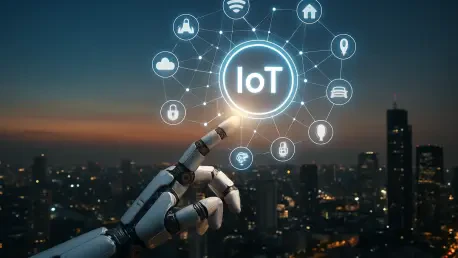

The traditional vision of the Internet of Things as a network of passive sensors is rapidly fading as Physical AI introduces a new era of machines that interact dynamically with their surroundings. Instead of merely collecting data and transmitting it to a central cloud server for analysis, contemporary devices are being designed to perceive, reason, and act within their physical environments with a high degree of autonomy. This shift marks a departure from the simple connectivity of previous years toward a model where intelligence is deeply embedded in the physical form of the machine. Industry leaders now recognize that the ultimate value of IoT lies in creating functional participants that can solve real-world problems in real-time. Whether it is a robotic arm in a manufacturing plant or an autonomous delivery vehicle on a city street, the focus has moved toward making these systems truly intelligent. This evolution is not just a software update; it is a fundamental reimagining of how hardware and intelligence coexist.
The Engineering Challenge: Navigating System Integration
Achieving the goals of Physical AI requires a move away from isolated components toward a system of systems approach that integrates diverse technologies into a single architecture. Modern hardware stacks must harmonize LiDAR, AI accelerators, and advanced power electronics to ensure that data flows seamlessly across the entire platform. Because any bottleneck in the data pipeline can lead to system failure, engineers have begun to treat AI as a foundational element of the hardware itself rather than an optional software feature. This integration is essential for managing the high-bandwidth requirements of modern sensors that generate gigabytes of data every second. By optimizing the silicon specifically for neural network processing, manufacturers are able to achieve the responsiveness needed for autonomous navigation. This holistic design philosophy ensures that the mechanical and digital components operate in perfect synchrony, allowing for complex maneuvers in unpredictable environments.
Transitioning to this new model requires overcoming significant engineering obstacles that go beyond standard software development, particularly regarding latency and real-time execution. Creating a machine that can mirror human movements or navigate a busy warehouse involves a complex orchestration of sensors and motor controls that must respond within milliseconds. These systems are forced to process information locally to avoid the delays often associated with remote cloud processing, which could be the difference between a smooth operation and a collision. Developers are now focusing on solving difficult problems related to the synchronization of actuators, ensuring that physical actions are perfectly timed with digital decisions. This level of precision requires a deep understanding of both mechanical physics and computational logic. As these machines become more integrated into our daily infrastructure, the ability to execute tasks with zero latency has become the primary benchmark for success.
Localized Intelligence: Balancing Power and Reliability
One of the most persistent challenges in the current technological landscape is maintaining high performance without quickly draining the battery of a mobile device. Moving AI processing from the cloud to the edge—performing calculations directly on the device’s chip—offers a way to improve speed and reduce power consumption by as much as ten times. This localized approach is particularly beneficial for devices that must operate in remote areas where high-speed connectivity is unavailable or unreliable. Furthermore, edge intelligence addresses growing concerns regarding data privacy, as sensitive information can be processed and stored on the device rather than being sent to a remote server. This ensures that personal or proprietary data remains within a secure local perimeter, reducing the attack surface for potential cyber threats. By prioritizing on-device intelligence, companies are building more resilient and energy-efficient systems that can function independently for extended periods.
As autonomous devices take on more active roles in high-stakes settings like hospitals and industrial plants, the reliability of their underlying software becomes a critical matter of safety. The industry is increasingly favoring microkernel architectures that isolate different system functions to prevent a single software glitch from causing a total system crash. This design ensures that even if a secondary feature like a display driver or a non-essential sensor fails, the core robotic or mechanical functions remain operational and safe for human interaction. Such isolation is vital in environments where a momentary loss of control could lead to significant physical harm or infrastructure damage. Engineers are now implementing strict redundancy protocols that allow these machines to fail gracefully, maintaining a baseline of safety even during partial system failures. This focus on structural integrity ensures that Physical AI can be trusted to operate alongside humans in even the most demanding conditions.
Long-Term Security: Managing the Device Lifecycle
Cybersecurity became a lifelong obligation for manufacturers as new regulatory frameworks held companies legally responsible for the security of their devices throughout their operational lifespans. The era of releasing hardware and ignoring future vulnerabilities ended as governments mandated continuous support and protection for autonomous systems. To meet these long-term requirements, organizations built robust infrastructures for over-the-air firmware updates that allowed for rapid patching of emerging threats. This transition transformed the traditional hardware sales model into a service-oriented one, where maintaining the digital integrity of a machine was just as important as the initial build quality. Companies that successfully adapted to this change invested heavily in secure communication channels to ensure that updates were delivered safely and without interruption. This historical pivot was necessary to maintain public trust in the growing network of intelligent devices.
Organizations that led in the next phase of development prioritized the implementation of hardware-rooted security measures and standardized communication protocols. They established dedicated teams to monitor the threat landscape and deployed automated response systems to mitigate vulnerabilities as they appeared in the field. These leaders recognized that treating security as a dynamic, ongoing process provided a competitive advantage in an increasingly regulated market. They also integrated advanced diagnostic tools that allowed for predictive maintenance, ensuring that hardware issues were addressed before they compromised system safety. By adopting a proactive stance toward device health and digital defense, these companies ensured that their intelligent systems remained dependable assets for years to come. Looking forward, the industry understood that providing autonomous service required a commitment to long-term reliability and constant adaptation to new technological challenges.