
The rapid expansion of the global internet of things ecosystem has reached a critical inflection point where reliability and cost-efficiency are no longer optional features but fundamental requirements for scalability. As billions of devices now operate across diverse geographic regions, the focus of semiconductor companies and module manufacturers has shifted toward creating hardware that can withstand the test of time while maintaining extreme power efficiency. Trasna, in a strategic collaboration with Qualcomm Technologies, has introduced the R7 series cellular IoT modules to address these specific industrial demands. Powered by the Qualcomm E51 chipset, the LEXI-R7 and SARA-R7 modules represent a significant advancement in the Low Power Wide Area Network sector. These components are specifically engineered to provide a stable, long-term hardware path for businesses that require dependable LTE-M and NB-IoT connectivity for high-density deployments in modern environments. This release emphasizes a commitment to providing the necessary tools for massive IoT growth.
Market Context: Driving Hardware Versatility
Global Connection Trends: Adapting to the One Billion Milestone
The timing of this product launch coincides with a significant shift in the telecommunications landscape, as active NB-IoT and LTE-M connections recently surpassed the one-billion mark globally. This massive growth underscores the urgent need for standardized, future-proof technologies that ensure long-term device longevity across essential sectors like smart metering and industrial automation. By focusing on these established standards, the collaboration helps to drive global interoperability for the next generation of massive IoT deployments. Organizations are increasingly looking for ways to streamline their operations, and having access to hardware that supports these high-volume connection standards is essential for maintaining a competitive edge. This shift toward standardized connectivity ensures that devices remain functional as networks evolve, reducing the risk of premature hardware obsolescence and providing a more predictable return on investment for large-scale projects across multiple international markets.
Engineering Compact Designs: Efficiency in Form and Function
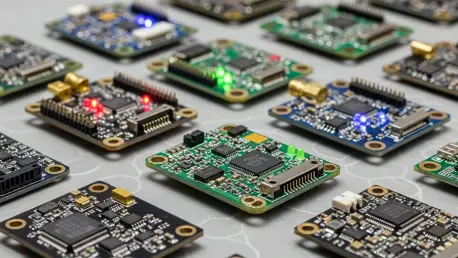
To meet various design needs, the R7 series comes in two distinct form factors that prioritize space efficiency and ease of integration for engineers and product designers. The LEXI-R7 stands out as one of the smallest shielded modules available, making it ideal for compact wearables and small-scale sensors, while the SARA-R7 offers a familiar footprint for manufacturers looking to upgrade existing designs without reworking their circuit boards. Notably, both models feature an ultra-slim 2 mm profile, which is significantly thinner than the current industry average, allowing for sleeker and more integrated device designs. This focus on physical dimensions is crucial for modern applications where internal space is at a premium. By providing a choice between these two form factors, Trasna enables developers to select the most appropriate hardware for their specific application, whether they are building a ruggedized industrial monitor or a discreet medical wearable, all while maintaining the same high level of performance.
Technological Evolution: Next-Generation Standards and Connectivity
Operational Flexibility: Implementing Remote SIM Provisioning
A standout feature of the R7 series is its integration of the SGP.32 standard, which facilitates advanced Remote SIM Provisioning for a more flexible connectivity management experience. This technology enables a “Bring Your Own Connectivity” model, allowing businesses to switch carrier profiles over the air without needing to physically replace SIM cards in the field. By supporting compliant eSIMs, the hardware ensures that deployed devices remain flexible and compatible with evolving global network standards throughout the entire lifecycle of the device. This capability is particularly valuable for companies with assets that move across borders or for those operating in regions where network coverage may shift over time. Reducing the logistical burden of manual SIM swaps not only lowers operational costs but also significantly decreases the environmental impact associated with maintaining large fleets of connected devices. This approach empowers organizations to maintain total control over their connectivity costs and provider relationships for years.
Strategic Roadmaps: Bridging the Gap to 5G Connectivity
Beyond current 4G capabilities, the R7 series is designed to serve as a strategic bridge toward 5G connectivity through a carefully planned hardware roadmap. The development path includes the future introduction of 3GPP Release 18 eRedCap modules, which will maintain physical compatibility with the current R7 form factors. This design philosophy allows developers to build products today with the confidence that they can transition to high-performance 5G solutions in the future with minimal hardware friction or board redesigns. Through its partnership with Qualcomm, Trasna acts as a comprehensive provider that simplifies the complex IoT ecosystem by combining hardware, software, and management services into a unified solution. This “one-stop-shop” approach is intended to help partners reduce their time-to-market and streamline deployment logistics. With product samples expected in mid-2026 and full-scale production following shortly after, the R7 series is poised to become a foundational component of the global cellular IoT landscape.
Implementation Strategies: Navigating Next Steps for IoT Deployment
As the demand for hyper-connectivity continued to rise, the introduction of the R7 series offered a pragmatic solution for many organizations facing complex deployment challenges. To maximize the benefits of this technology, industry leaders prioritized the integration of eSIM capabilities to ensure long-term carrier flexibility. They also conducted thorough compatibility tests with existing infrastructure to verify that the ultra-slim form factors aligned with their manufacturing requirements. By adopting a forward-looking hardware strategy, businesses successfully avoided the pitfalls of vendor lock-in and prepared their fleets for the transition to 5G eRedCap standards. Stakeholders invested in scalable management platforms that could leverage the remote provisioning features of these modules to streamline international logistics. This proactive approach allowed firms to maintain a lean operational model while expanding their footprint. Moving forward, developers focused on utilizing the compact LEXI-R7 design to explore new use cases where space was previously a limitation.