
The exponential growth of high-performance computing has pushed traditional power distribution systems to a breaking point where conventional delivery methods can no longer handle the extreme energy demands of modern processors. This critical bottleneck has necessitated a shift from lateral power delivery to the more integrated vStrata architecture. By leveraging a silicon-centric approach, this technology seeks to address the widening gap between power supply and processor consumption, especially within the context of the current global artificial intelligence expansion.
Evolution and Core Principles of vStrata
The transition from legacy lateral power delivery to a vertical approach marks a fundamental change in how energy moves across a motherboard. Traditional systems rely on power traveling across the surface of a circuit board, which introduces significant electrical resistance and wasted energy. In contrast, the vStrata technology brings conversion components as close to the silicon as physically possible, essentially stacking the power system directly beneath the load.
By minimizing the physical distance electricity must travel, the core principle of this architecture focuses on reducing the current paths that lead to voltage drops. This innovation arrived at a crucial moment for the industry, as the surge in generative modeling and large-scale data processing has created an unprecedented energy crisis. As processors require more current at lower voltages, the efficiency of the delivery network has become just as vital as the performance of the chips themselves.
Technical Innovations and Key Features
Power Interposer Technology: The Silicon Foundation
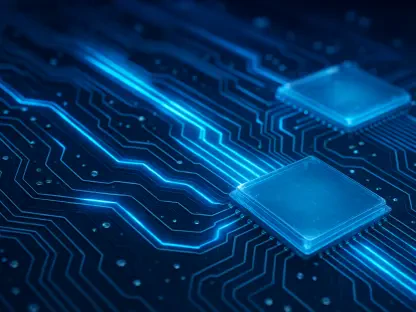
The cornerstone of the vStrata platform is its proprietary Power Interposer Technology, or PIT. This silicon-based interposer replaces standard organic substrates, serving as a highly conductive bridge that supports ultra-dense power conversion. Because silicon allows for much finer traces and lower electrical resistance, it enables a level of precision that traditional materials simply cannot match, ensuring that energy transfer remains stable even under peak loads.
Vertical Power Delivery Architecture: Eliminating Bottlenecks
Vertical Power Delivery, or VPD, fundamentally reconfigures the distribution network by removing the lateral constraints of conventional boards. Instead of electricity fighting through congested horizontal layers, it moves vertically through the interposer directly into the processor package. This direct path eliminates the common bottlenecks that plague high-performance hardware, allowing for a much more streamlined and efficient flow of power that supports higher clock speeds and greater stability.
Integrated Thermal Management: Direct Cooling
Thermal management is no longer a secondary consideration but is integrated directly into the silicon substrate of the vStrata modules. This design allows the substrate itself to function as a primary heat spreader, moving thermal energy away from sensitive components more effectively than external sinks alone. Such high-density heat management is essential for maintaining the integrity of the power delivery system, particularly when hardware is pushed to its absolute limits in dense server environments.
Emerging Trends in Power Density and Efficiency
The industry has seen a clear shift from standard 90% efficiency toward a more impressive 96% point-of-load efficiency. This 6% improvement sounds incremental, but it actually represents a massive 60% reduction in total power loss within the delivery chain. Such high-efficiency modules are transforming hardware design by allowing engineers to pack more processing power into the same physical footprint without overwhelming the existing electrical infrastructure of the facility.
Furthermore, this efficiency leap supports the trend of air-cooling preservation. Many hyperscale facilities have been able to delay the transition to expensive and complex liquid-cooling systems because the vStrata architecture generates significantly less waste heat. This trend toward deep integration between power modules and silicon processors ensures that next-generation GPUs can operate at their full potential without being throttled by thermal or electrical overhead.
Real-World Applications and Sector Impact
AI and Hyperscale Data Centers
In the high-stakes environment of AI development, vStrata has become a vital component for managing massive GPU clusters. These environments face extreme energy demands that would melt or stall traditional power delivery setups. By implementing vertical integration, data centers can maintain a higher density of computing power per rack, which is essential for training the massive neural networks that define the modern technological landscape.
Sustainable Infrastructure and Resource Conservation
Sustainability has moved from a corporate talking point to a technical requirement, and vStrata contributes significantly to these goals. By reducing power waste, facilities consume less electricity and require far less water for cooling purposes. This conservation of resources provides a clear path for companies to meet global sustainability targets while still expanding their digital capabilities, proving that high-performance computing does not have to come at the cost of environmental responsibility.
Strategic Challenges and Adoption Barriers
However, the path to universal adoption is not without its hurdles, primarily due to the lack of industry-standard footprints for server power supplies. Because vStrata is so deeply integrated into the silicon architecture, it is not a solution that can be easily retrofitted into older server chassis. Instead, it requires a complete rethink of hardware design, forcing a commitment from manufacturers to adopt new layouts for their upcoming product cycles.
This limitation means that success depends on heavy collaboration with major server vendors and hyperscalers. While the technology offers clear benefits, the transition involves a complex ecosystem shift. Companies must weigh the long-term efficiency gains against the immediate costs of redesigning their hardware stacks, which has led to a slower, more strategic rollout rather than an overnight industry takeover.
The Future of Vertical Power Integration
The roadmap for this technology looks promising as engineering samples of the LSC0580 module began shipping earlier this year. This module was designed to set a new benchmark for silicon-integrated power, potentially pushing the boundaries of what is possible in terms of power density. Future breakthroughs are expected to involve even deeper integration, where the power delivery and the processor are manufactured as a single, monolithic entity to further reduce energy loss.
Such advancements will likely have a ripple effect across the entire semiconductor industry. As vertical power becomes the standard, the global energy grid will benefit from the reduced strain of data center operations. The long-term impact points toward a future where power integration is no longer a separate component but a core feature of high-performance silicon design.
Comprehensive Assessment of vStrata
The overall evaluation of the vStrata architecture demonstrated that its 60% reduction in power loss was a transformative achievement for the industry. This technology successfully addressed the dual challenges of heat management and energy efficiency that had previously limited the growth of hyperscale computing. The move toward silicon-based vertical delivery proved to be more than a technical upgrade; it was a necessary evolution for the age of artificial intelligence.
In the end, the platform established a new standard for how power should be managed in high-density environments. While the barriers to retrofitting remained a challenge, the adoption of vStrata in new hardware designs provided a clear solution for the next generation of data centers. The architecture not only improved performance but also offered a sustainable roadmap for the future of global energy consumption in the computing sector.