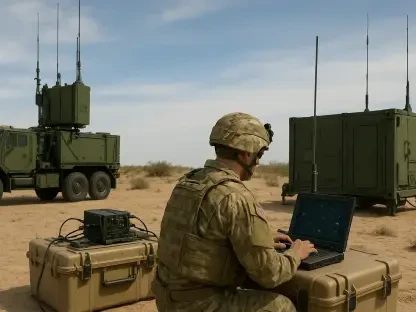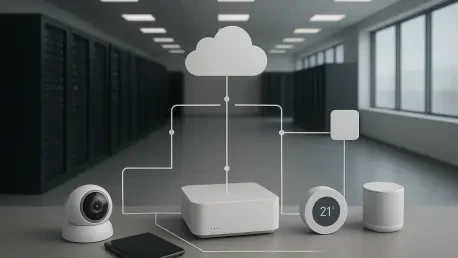

In industrial environments where latency represents a safety risk, the ability to maintain local operations during network outages is a critical requirement of a resilient system architecture. As the technology landscape continues to shift from static, self-contained hardware units toward complex, interconnected ecosystems, the traditional linear design process has become increasingly obsolete. Historically, engineers could select a microcontroller and an operating system in isolation, treating the software as a final layer added to a finished physical product. However, in the current industrial environment, this approach fails to account for the dynamic demands of constant connectivity and real-time data processing. The transition to the Internet of Things has transformed simple machines into nodes within a global network, requiring a fundamental reassessment of how individual components interact. Without a cohesive strategy that encompasses the entire system lifecycle, technical debt accumulates rapidly, leading to performance bottlenecks that are often impossible to rectify once a product reaches the field.
The Risks: Fragmented IoT Design
Breaking the Silo: Overcoming Organizational Isolation
The primary obstacle preventing modern industrial projects from reaching their full potential lies in the persistent existence of organizational silos where hardware, software, connectivity, and security are treated as unrelated workstreams. In many established enterprises, these specialized departments operate with divergent priorities, often selecting tools and protocols that solve immediate local problems but create friction when integrated into the broader system. For instance, a hardware team might choose a chipset based on cost or power efficiency without fully considering the long-term software support requirements or the security protocols necessary for cloud synchronization. This lack of cross-functional alignment creates hidden dependencies that only become visible during the final stages of integration. When these disparate parts are finally unified, the resulting infrastructure often suffers from inefficient data flows and unpredictable latencies that compromise the integrity of the entire platform.
Scaling Barriers: Addressing the Compounding Cost of Failure
As these fragmented deployments move from small-scale testing into full production, the minor misalignments in design begin to compound, frequently leading to catastrophic scaling failures. The architectural fragmentation inherent in these systems acts as a barrier to extracting genuine business value from raw data, as the focus shifts from optimization to constant troubleshooting. Because the most critical failures often occur within the technical gaps between components rather than within the components themselves, diagnosing the root cause becomes an arduous task for engineering teams. A system designed without a holistic perspective lacks the inherent flexibility to adapt to changing network conditions or evolving security threats, making it a liability rather than an asset. By the time a deployment reaches thousands of units, the cost of remediating these architectural flaws grows exponentially, often forcing organizations to abandon promising initiatives because the operational overhead becomes unsustainable.
Strategic Convergence: A Unified Approach to Computation
Real-Time Precision: Balancing Edge Performance With Cloud Intelligence
The ongoing debate regarding the superiority of edge computing versus cloud analytics is increasingly viewed as a false dichotomy by industry leaders who recognize that modern systems require a sophisticated hybrid approach. A unified architecture does not prioritize one over the other; instead, it focuses on the strategic distribution of logic across the entire network fabric to optimize performance and cost. Decisions about where data should be processed—whether locally at the sensor level or centrally in a remote data center—are foundational choices that define the operational envelope of the system. For example, a robotic assembly line requires immediate local processing to manage high-speed motor controls, whereas the optimization of that same assembly line across a global network of factories requires the massive storage and computational power of the cloud. Implementing such a balanced model necessitates a deep understanding of data transit costs, latency requirements, and the specific needs of the end-user.
Fleet Intelligence: Synchronizing Local Autonomy and Global Insights
Successful deployments utilize edge systems to maintain business continuity and safety during periods of intermittent connectivity, ensuring that critical local processes remain functional regardless of external network status. This local autonomy provides a safety net for industrial operations where even a few milliseconds of jitter could lead to equipment damage or personnel injury. Simultaneously, the cloud serves as the central intelligence hub for the entire fleet, enabling the aggregation of historical data for deep learning and the orchestration of complex software updates. A holistic architecture manages these two distinct temporalities—the immediate now at the edge and the historical entirety in the cloud—through a seamless synchronization layer. This ensures that the local edge devices are always informed by the latest global insights while the cloud remains grounded in real-time operational data. By integrating these layers into a single cohesive framework, companies can build systems that are both highly responsive and strategic.
Sustaining Value: Strategic Drivers for System Integrity
Data Integrity: Preparing Systems for AI and Global Evolution
The integration of artificial intelligence into industrial workflows serves as a rigorous stress test that invariably reveals the structural weaknesses of an existing IoT architecture. While many executives perceive AI as a standalone software upgrade, its practical effectiveness is entirely dependent on the quality, structure, and contextual integrity of the data provided by the underlying hardware. In a fragmented architecture, data streams often lack the chronological precision or standardized formatting required for sophisticated machine learning models to generate accurate predictions. AI does not necessarily invent new problems within a system, but it significantly amplifies the consequences of poor initial design by producing unreliable outputs from inconsistent data. To leverage AI successfully from 2026 to 2028, organizations must ensure that their architectural foundation supports high-fidelity data acquisition and standardized metadata labeling across all connected devices, turning raw information into a structured asset.
Proactive Evolution: Transitioning from Components to Systems
To mitigate the risks associated with rapid technological shifts, organizations must transition from a component-centric mindset to a system-driven philosophy that prioritizes the entire lifecycle of the product. This means that every selection, from a specific sensor interface to an API protocol, must be evaluated based on how it contributes to the overall stability and longevity of the ecosystem. Because these critical decisions are often made during the early prototyping phases, failing to align various technical layers early on can lead to catastrophic failures during the mass deployment stage. For industrial systems designed to operate for decades, this level of strategic foresight is no longer a luxury but a fundamental requirement for market survival. A holistic approach demands that developers anticipate future requirements, such as the need for increased bandwidth or more advanced encryption, ensuring that the hardware remains capable of supporting software innovations that have not yet been developed.
Fleet Resilience: Automating Hardware Lifecycle Management
Managing the continuous flow of data alongside the physical lifecycle of hardware components represents a strategic challenge that directly influences the long-term profitability and resilience of an IoT network. Devices deployed in industrial settings are rarely static products; they are dynamic entities that require constant maintenance, ranging from security patches to performance optimizations over many years. If these operational requirements are not embedded into the core architecture from the beginning, the sheer effort of managing a growing fleet of thousands of devices becomes an insurmountable burden. Organizations often find themselves trapped in a cycle of manual updates and reactive fixes that drain resources and introduce new vulnerabilities. By building automated lifecycle management tools into the architectural DNA, developers can ensure that the system remains healthy and up-to-date without requiring constant human intervention, thereby reducing the total cost of ownership and extending the usable life of hardware.
Secure Foundations: Integrating Root Trust and Encryption
Security in the modern era cannot be treated as a secondary layer or a peripheral feature added after the system is built; it must be an intrinsic property of the holistic architecture itself. A robust security posture begins with a hardware-based root of trust that establishes a verifiable identity for every device in the network, ensuring that only authorized hardware can communicate with the cloud. This foundation allows for the implementation of end-to-end encryption and secure boot processes that protect the system from the moment power is applied. When security is integrated into the architecture from day one, it creates a consistent defensive perimeter that scales naturally as the fleet grows. This approach eliminates the common vulnerabilities associated with mismatched security protocols between different vendors and provides a clear audit trail for compliance and safety regulations. Ultimately, a system-wide security strategy ensures that protection remains resilient against evolving cyber threats.
Sustainable Growth: Strategic Imperatives for Resilient Ecosystems
The shift toward holistic architecture required a fundamental change in how industrial organizations approached the development of connected systems. Leaders successfully transitioned away from isolated component selection toward a unified design philosophy that prioritized long-term resilience and cross-functional integration. By establishing a robust hardware root of trust and implementing automated lifecycle management from the earliest stages, these organizations reduced operational overhead and eliminated the high costs associated with retroactive security fixes. The focus moved toward creating standardized data pipelines that supported the deployment of advanced artificial intelligence, ensuring that every edge device contributed meaningful insights to the central cloud repository. Future initiatives should focus on further decentralizing intelligence while maintaining strict governance. Professionals who embraced this methodology provided their enterprises with a foundation that remained adaptable through 2028.