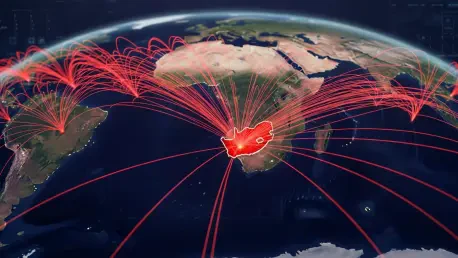

The digital landscape across South Africa has undergone a seismic shift recently as the nation solidifies its position as the primary gateway for technology and telecommunications for the entire African continent. While this rapid modernization has brought about unprecedented economic opportunities and enhanced global connectivity, it has simultaneously painted a massive target on the country’s back for sophisticated cybercriminals. Distributed Denial of Service (DDoS) attacks have surged in frequency and complexity, evolving from mere annoyances into strategic tools for financial extortion and political destabilization. Security experts note that the country’s advanced banking infrastructure and growing reliance on cloud services provide a lucrative playground for those looking to disrupt critical operations. As organizations scramble to keep pace with these evolving threats, the gap between technological adoption and robust cybersecurity measures remains a significant concern for the region’s long-term stability.
Technological Infrastructure: The Intersection of Connectivity and Vulnerability
Infrastructure Evolution: Strengthening the Digital Backbone
The acceleration of high-speed fiber adoption and the widespread deployment of 5G networks have transformed South Africa into a highly connected society, yet this evolution has significantly expanded the potential attack surface for malicious actors. Thousands of insecure Internet of Things (IoT) devices, ranging from smart home appliances to industrial sensors, are being connected to the grid daily, often without adequate security protocols. These vulnerable endpoints are frequently hijacked by global botnets to orchestrate massive traffic floods that can overwhelm even the most robust local networks. Furthermore, the concentration of massive data centers in Gauteng and the Western Cape creates centralized points of failure, especially as planned capacity expansions from 2026 to 2028 aim to double regional bandwidth. This structural reliance on a few key hubs makes the nation particularly susceptible to large-scale disruptions that leverage the very infrastructure designed to propel growth.
Financial Centrality: The Risk of Connectivity
South Africa’s status as the financial heartbeat of the continent makes its banking and fintech sectors primary targets for economically motivated DDoS campaigns that often serve as smokescreens for more sinister activities. Cybercriminal syndicates frequently deploy high-volume traffic bursts to distract IT security teams while they attempt to breach internal databases or execute unauthorized fund transfers. The high density of financial transactions and the move toward real-time payment systems mean that even a few minutes of downtime can result in millions of rands in lost revenue and severe reputational damage. Unlike other regions where attacks might be sporadic, the onslaught against South African financial institutions is characterized by its persistence and the use of multi-vector techniques. This relentless pressure forces banks to invest heavily in expensive mitigation hardware, yet the scale of modern volumetric attacks continues to challenge the limits of traditional defense strategies.
Geopolitical Drivers: The Evolution of Digital Conflict
Political Hacktivism: Using Traffic as a Social Weapon
Beyond pure financial gain, the geopolitical climate in the region has given rise to a new wave of politically motivated hacktivism that utilizes DDoS attacks as a primary form of digital protest and intimidation. Recent social unrest and contentious political cycles have seen an increase in coordinated efforts to take down government portals and state-owned enterprise websites to voice grievances or disrupt public services. These attacks are not always domestic in origin; global hacktivist groups often take sides in local issues, using their vast international botnets to influence public discourse or retaliate against specific policy decisions. The historical lack of stringent cybercrime legislation in the region created a permissive environment where these actors could operate with relative impunity. This trend highlights the intersection of physical world tensions and digital warfare, where the stability of online services is tied to the social fabric of the nation.
Strategic Resilience: Lessons From Recent Disruptions
The resolution of the recent surge in localized cyber activity necessitated a paradigm shift in how regional enterprises approached their defensive postures and cooperative strategies. Organizations moved beyond reactive patching to embrace proactive, AI-driven traffic scrubbing services that could filter out malicious requests in real-time without degrading user experience. This transition required a significant investment in both human capital and specialized software, but the results demonstrated that a unified front was the only effective way to mitigate the risks of high-volume disruptions. By integrating decentralized security protocols and fostering transparency between sectors, the industry laid the groundwork for a more resilient digital economy. The focus shifted toward long-term sustainability and the development of local talent to manage these complex systems independently. Ultimately, the lessons learned from these challenges shaped a more robust framework for securing critical digital infrastructure.