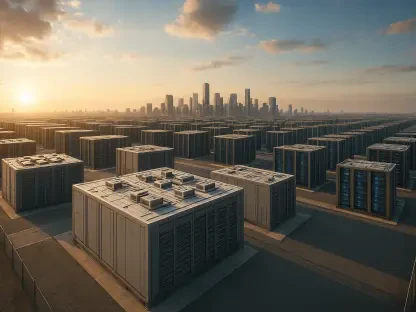

The relentless acceleration of artificial intelligence has moved beyond the digital realm and is now physically restructuring the very veins and arteries of the American electrical grid. This artificial intelligence revolution is precipitating a profound and structural transformation of the United States electrical supply chain, shifting the data center sector from a secondary consumer of electrical components to the dominant force in the market. Findings from industry experts indicate that this surge represents a nationwide rewiring of how power infrastructure is designed, procured, and deployed. As hyperscale developers, led by tech giants such as Microsoft, Amazon, and Google, accelerate construction to meet escalating demand, the electrical equipment market is projected to skyrocket. The United States data center electrical equipment market is anticipated to expand from approximately $20 billion in 2026 to a staggering $65 billion by 2030, underpinned by a massive scaling of capacity from 24 gigawatts to 100 gigawatts.
The Unprecedented Surge in Data Center Power Demand
The expansion of computational power has reached a scale where the physical limitations of the grid are now the primary constraint on technological progress. This shift is moving the data center sector from a secondary consumer of electrical components to the dominant force in the market. According to recent findings from industry experts, this surge is a nationwide rewiring of how power infrastructure is designed, procured, and deployed. As hyperscale developers accelerate construction to meet AI demand, the electrical equipment market is projected to skyrocket. This transformation is not merely a matter of quantity but of fundamental priority, as the supply chain reorganizes itself to serve massive clusters that require more energy than entire mid-sized cities.
Furthermore, the concentration of power demand in specific geographic hubs has forced a reconsideration of grid architecture. The traditional model of centralized generation and distributed consumption is being challenged by the need for massive, localized power injections. This scaling of capacity from 24 gigawatts to 100 gigawatts by 2030 requires a level of coordination between private developers and public utilities that has rarely been seen in the history of the American energy sector. The speed of this transition has caught many stakeholders by surprise, necessitating a rapid pivot toward more aggressive procurement and deployment strategies to prevent a complete stall in digital innovation.
Historical Context and the Shift from Utility Stability
For decades, the electrical equipment market was a stable, utility-driven sector characterized by predictable growth and established procurement cycles. Historically, data centers accounted for only a single-digit share of the total demand for electrical infrastructure, functioning as a niche sub-sector within the broader commercial market. However, this landscape has shifted rapidly, with data centers now projected to claim nearly 40% of the total US demand for electrical equipment by the end of the decade. This transition matters because it has disrupted the long-standing equilibrium of the supply chain, creating a high-stakes competition for essential components like transformers, switchgear, and power distribution units.
Understanding this shift is vital for grasping why traditional procurement strategies are no longer sufficient in the current era of rapid digital expansion. In the past, utilities held the primary relationship with equipment manufacturers, often operating on multi-year planning horizons that allowed for steady production. The entry of hyperscale tech companies into this market has introduced a new level of volatility and capital intensity. These firms operate on much shorter timelines and possess the financial resources to outbid traditional utilities, effectively shifting the balance of power in the procurement landscape and forcing manufacturers to prioritize high-margin, high-volume data center orders over traditional grid maintenance needs.
Critical Bottlenecks and Component Shortages
The Growing Crisis in Transformer Lead Times
A critical aspect of the current supply chain strain is the unprecedented demand for transformers, which serve as the essential interface between the high-voltage grid and the digital world. Annual demand is expected to exceed 9,000 units by 2030, representing a significant increase from current levels. These components are vital for stepping down high-voltage utility power to levels usable by sensitive AI hardware. However, this spike in demand coincides with a tightening of supply, leading to dramatic increases in lead times that threaten the viability of even the best-funded projects.
Substation transformer lead times are currently projected to surpass 160 weeks by the late 2020s, a delay that acts as a primary build limiter for the industry. These delays stall projects even after permitting and financing are secured, highlighting a significant gap between the speed of software innovation and the reality of industrial manufacturing. For many developers, the inability to source a single transformer can result in a multi-year delay for a multi-billion-dollar facility. This bottleneck has forced a re-evaluation of inventory management, with some firms choosing to stockpile equipment in regional warehouses long before a specific site has even been cleared for construction.
The Disparity: Software Innovation vs. Physical Infrastructure
Another essential angle is the widening gap between the rapid pace of artificial intelligence software development and the slow deployment of physical infrastructure. While tech giants report record capital expenditures, they are hitting breaking points where power availability and cooling requirements cannot keep up with digital growth. Estimates suggest that data centers will be responsible for approximately 68% of all load growth in the United States through 2030. The bottleneck is most visible at the grid level, where the interconnection queue has become a major hurdle for developers trying to bring new capacity online.
In some territories, projects coming online currently have spent an average of eight years waiting for approval, making time to power the most critical metric for success in the industry. This disparity creates a friction point where the virtual world of AI algorithms, which can be updated in seconds, is held hostage by the physical world of steel, copper, and concrete. The regulatory and bureaucratic processes that govern grid connections were designed for an era of low growth and are proving inadequate for the current surge. This has led to a market where the value of a site is determined less by its proximity to fiber and more by its immediate access to high-capacity electrical substations.
Strategic Shifts: Global Procurement and Prefabrication
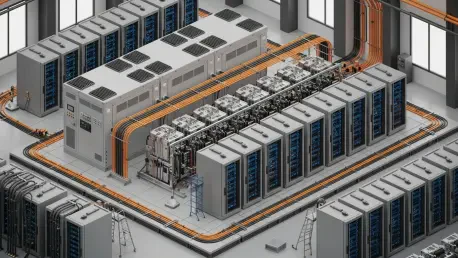
The complexities of the current market have forced a shift toward front-running the supply chain as a defensive maneuver. Large developers are leveraging massive capital reserves to secure equipment years in advance, often placing orders for uninterruptible power supplies before ground is broken on a site. Furthermore, the shortage of skilled labor and the extreme density of AI server racks—reaching 200 kW per rack—are driving a trend toward modular, prefabricated construction. This approach allows for a level of quality control and speed that is difficult to achieve with traditional on-site building methods.
By building electrical rooms in factory settings, developers can bypass local labor constraints and reduce the total time spent on-site. This evolution addresses misconceptions that traditional cooling and distribution methods can handle the heat generated by modern AI clusters, which now require specialized, high-density infrastructure. Modular designs also offer a degree of future-proofing, allowing operators to swap out components as technology evolves without necessitating a complete overhaul of the building. This shift represents a broader industrialization of the data center sector, moving it closer to a manufacturing model than a traditional real estate play.
Emerging Trends and the Future of Power Generation
Several emerging trends are shaping the future of the power landscape as the industry searches for ways to circumvent grid limitations. As grid capacity remains the ultimate limiting factor, some developers are exploring behind-the-meter generation, including on-site natural gas turbines and small modular nuclear reactors. These innovations aim to bypass the grid entirely, providing a dedicated and reliable power source for massive AI training clusters. While these solutions face their own equipment lead-time challenges, they offer a path toward energy independence for the largest consumers.
On the manufacturing side, major players are aggressively expanding their domestic footprints, committing hundreds of millions of dollars to increase production capacity through 2027 and beyond. This reshoring of the electrical supply chain is a direct response to the vulnerabilities exposed by recent global disruptions and the sheer volume of demand from the data center sector. Experts predict that increased automation and standardized equipment will eventually stabilize the market, but the immediate future will be defined by a race to secure reliable, high-capacity power sources. The emergence of green energy mandates is also complicating this picture, as developers must balance the need for massive amounts of power with the requirement to meet corporate sustainability goals.
Strategic Recommendations for a Volatile Market
The major takeaway from this analysis is that the AI boom has fundamentally altered the power landscape, creating a bifurcated market where capital-rich hyperscalers have a distinct advantage. To navigate this environment, businesses and professionals should prioritize long-term supply chain partnerships and consider modular construction to mitigate labor shortages. Relying on spot-market procurement is no longer a viable strategy for any project requiring significant electrical infrastructure. Instead, firms must integrate their supply chain and energy strategies directly into their core business planning.
For those looking to apply these insights, the best practice is to treat power infrastructure as a primary strategic asset rather than a secondary utility. Investing in energy-efficient designs and exploring alternative power generation can provide a competitive edge in a market where traditional grid access is increasingly restricted and delayed. Furthermore, companies should engage with local utilities and regulators much earlier in the development process to identify potential bottlenecks before they become project-ending obstacles. Flexibility and early capital commitment have become the two most important factors in successfully delivering new capacity in this supply-constrained environment.
Conclusion: Power as the Ultimate Currency
The analysis conducted throughout this study demonstrated that the AI boom transformed data centers from niche facilities into the primary drivers of national electrical infrastructure demand. This rewiring of the supply chain functioned as a reactive measure to a massive spike in demand, and it established a new reality where power infrastructure served as the ultimate currency of the technology sector. The findings indicated that the success of the digital era depended less on the development of new chips and more on the physical ability to build substations and expand grid capacity. As the market moved toward a $65 billion valuation, the coordination between technology developers and manufacturers became the most significant factor in determining the viability of digital ambitions.
To maintain momentum, the industry must now focus on diversifying its energy sources and advocating for significant regulatory reform regarding grid interconnections. Future considerations will likely involve the integration of artificial intelligence itself to manage grid loads more efficiently, creating a circular relationship where the technology helps solve the very power problems it created. Stakeholders should pursue aggressive investments in localized energy storage and advanced cooling technologies to reduce the overall burden on the public grid. Ultimately, the transition into a high-density, AI-driven economy required a foundational shift in how society values and deploys its electrical resources, a process that is only in its initial stages of maturation.