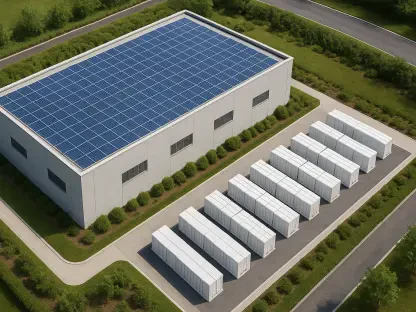

The rapid acceleration of generative artificial intelligence has fundamentally altered the physical landscape of the global technology sector by demanding a massive expansion of high-density data centers. While the conversation around the environmental footprint of these facilities typically centers on carbon emissions and the voracious appetite for electricity, a more silent and localized crisis is emerging through the sheer volume of freshwater required to keep these systems operational. Modern large language models require an astronomical number of calculations every second, which translates into immense heat that must be dissipated through sophisticated cooling systems. This invisible thirst is beginning to clash with global water security, as the discrepancy between reported corporate figures and the actual ecological impact becomes harder to ignore. To facilitate the training of neural networks with trillions of parameters, tech giants are investing billions of dollars into sprawling campuses that consume millions of gallons of water daily, often in arid regions or densely populated urban centers already struggling with drought conditions. As the scale of these infrastructure investments grows, the tech sector finds itself at a critical crossroads where the rapid digital progress of the current decade must be carefully weighed against the long-term preservation of essential natural resources.
The Thermodynamics: High-Performance Computing
The primary driver behind the massive water consumption in modern AI infrastructure is the extraordinary thermal energy generated by high-performance hardware. Unlike traditional cloud computing, which handles sporadic bursts of activity, AI training involves the continuous operation of thousands of specialized graphics processing units at peak capacity for weeks or months at a time. This sustained high-intensity workload produces a level of heat that would rapidly melt or destroy the sensitive silicon components if not managed by robust cooling systems. To maintain optimal operating temperatures, data center operators must deploy industrial-scale heat management technologies that effectively transfer thermal energy away from the server racks and out of the building. The efficiency of these systems is measured by power usage effectiveness, but this metric often fails to account for the physical mass of water that is lost to the environment during the cooling process. As the industry moves toward even more powerful chips with higher thermal design power, the cooling requirements are becoming increasingly difficult to satisfy through traditional air-based methods, leading to a greater reliance on water-intensive solutions.
To handle the extreme heat of modern AI clusters, many facilities utilize evaporative cooling towers, which represent one of the most significant sources of onsite water loss. In these systems, water is sprayed over a heat exchanger or through an airflow, where it absorbs heat from the facility and evaporates into the atmosphere. While this method is highly effective at lowering temperatures, it physically consumes the water, removing it from the local watershed rather than recycling it. Newer high-density setups are increasingly forced to move beyond air cooling toward more direct liquid cooling methods, where specialized coolant or water is circulated directly through plates attached to the processors. While these closed-loop systems are more efficient at capturing heat, they still require a secondary cooling loop to discharge that heat into the environment, often relying on massive mechanical chillers or external water-based cooling arrays. The transition to these advanced systems reflects a growing technical necessity, yet it also highlights the increasing complexity of balancing thermal management with the finite availability of regional water supplies.
Transparency Issues: Corporate Environmental Reporting
A critical challenge in assessing the environmental impact of artificial intelligence is the significant gap between direct and indirect water consumption. Direct water usage is the volume that a data center physically draws from a local utility or well for its onsite cooling and maintenance needs. However, this figure represents only a portion of the total water footprint, as it ignores the indirect consumption associated with electricity generation. Most power plants, particularly those relying on nuclear or coal-fired steam turbines, require vast amounts of water for cooling to produce the megawatts that keep data centers running. This indirect water cost is often several times larger than the direct operational usage, yet it is frequently excluded from corporate sustainability reports. By omitting this virtual water, the technology sector may be underestimating its total resource impact by a wide margin, leading to a skewed perception of the industry’s sustainability goals. Standardizing the reporting process to include both direct and indirect metrics is essential for a true accounting of how the AI boom affects global freshwater reserves, especially as the energy density of modern chips continues to climb.
Current corporate disclosure practices vary widely among the major players in the technology industry, creating a fragmented picture of global water health. While giants such as Google and Microsoft have historically provided detailed reports on their direct water consumption, they have been criticized for the lack of transparency regarding the water used by the power grids they rely on. In contrast, Meta has taken steps toward a more comprehensive reporting model by including indirect water usage in its environmental disclosures, providing a more holistic view of its actual footprint. This transparency is becoming a point of competitive differentiation and a requirement for regulatory compliance in various jurisdictions, as government bodies begin to mandate stricter ESG disclosures. Without a unified framework that mandates the disclosure of total water consumption—both on-site and through the power supply chain—policymakers and local communities remain in the dark about the long-term strain placed on their resources. The push for better data is not just about environmental advocacy; it is about ensuring that the growth of the digital economy does not come at the expense of the basic human right to clean water and regional ecological stability.
Strategic Risks: Geographic Constraints
As water stewardship moves to the forefront of the corporate agenda, institutional investors are beginning to treat resource efficiency as a primary strategic risk. A multi-billion dollar investment in a state-of-the-art AI facility can be rendered precarious if the local water supply becomes unreliable due to climate shifts or competing industrial demands. The financial implications of operational disruptions caused by water shortages are significant, affecting everything from server uptime to the long-term valuation of a company. Consequently, transparent water reporting and efficient management are no longer just components of a moral mandate; they are vital indicators of a firm’s operational resilience. Shareholders are increasingly demanding that companies conduct thorough site-specific water risk assessments before breaking ground on new projects. This shift in investor sentiment is forcing data center operators to reconsider their expansion strategies, moving away from a purely energy-centric approach to one that prioritizes regions with stable and sustainable water infrastructures.
The geographic placement of AI data centers often leads to friction with local communities, particularly in regions where water is already a contested and scarce resource. In the American West, for example, the entry of massive data facilities into areas struggling with prolonged drought has sparked intense public debate over whether silicon or soil should have priority. When local residents and agricultural interests see millions of gallons of water diverted to cool servers while they face strict usage restrictions, the “hidden” cost of AI becomes a localized political flashpoint. Similar tensions are rising in the Middle East and parts of Europe, where the push for digital sovereignty often clashes with the reality of finite natural resources. These conflicts are driving tech companies to invest in local water restoration projects and community outreach to mitigate their impact and secure their social license to operate. The long-term success of the AI industry may depend on its ability to transition from being a consumer of local resources to a partner in regional water management and conservation.
Innovative Solutions: The Path to Sustainability
To address the multifaceted challenges of water consumption, sustainability experts have advocated for a lifecycle approach that considers the environmental impact of the entire AI supply chain. This perspective goes beyond the daily operations of a data center to include the water used in the manufacturing of semiconductors, specialized cooling equipment, and the raw materials required for server infrastructure. While the transition to renewable energy sources like wind and solar has successfully reduced the carbon intensity of data centers, it does not provide a universal solution to the water problem, as some green energy technologies still require significant water for maintenance and production. A truly sustainable AI ecosystem requires a holistic strategy that integrates water-efficient manufacturing with advanced operational cooling techniques. By evaluating the total lifecycle impact, companies can identify the most effective points of intervention, whether that involves sourcing materials from regions with abundant water or redesigning hardware to function efficiently at higher ambient temperatures, thereby reducing the need for active cooling.
The industry responded to these mounting pressures by pioneering innovative cooling technologies that substantially reduced the reliance on freshwater sources. Engineers successfully implemented immersion cooling, which involved submerging entire server racks in specialized, non-conductive fluids that captured heat far more efficiently than air or water. This shift allowed for the creation of truly closed-loop systems that recycled the same cooling medium indefinitely, virtually eliminating the evaporation losses that had characterized previous generations of data centers. Furthermore, many operators established strategic partnerships with municipal governments to utilize treated greywater for industrial cooling, which preserved the local drinking water supply for residents and agricultural use. The deployment of AI-driven optimization algorithms also played a pivotal role, as these systems analyzed real-time environmental data to adjust airflow, fan speeds, and cooling cycles with surgical precision. These machine learning models identified inefficiencies that were invisible to human operators, resulting in a significant reduction in waste. These collective advancements demonstrated that the technology sector possessed the capability to align its rapid growth with a profound commitment to environmental stewardship. By integrating these strategies, the industry successfully transitioned toward a more transparent and sustainable operational model that respected the limitations of the natural world.