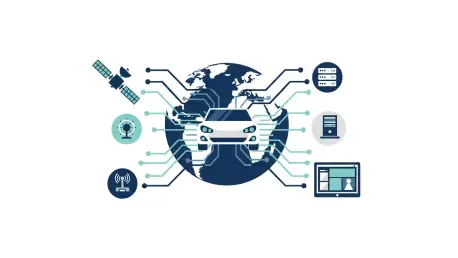

The modern vehicle has transitioned from a mechanical asset into a sophisticated software platform, yet the underlying telecommunications infrastructure often fails to keep pace with the decade-long operational life of a typical automobile. This friction creates a major challenge for manufacturers who must ensure that a car sold today remains connected and secure until its eventual decommissioning years from now. Soracom has introduced a specialized IoT suite designed specifically to bridge this gap, moving the industry beyond simple connectivity procurement toward a model of comprehensive lifecycle management. By decoupling the hardware from specific carrier constraints, this platform allows for a more resilient approach to global deployments. Instead of being locked into a single provider’s roadmap, automakers can now treat connectivity as a dynamic, software-defined resource that evolves alongside the vehicle’s software updates and changing regional regulations.
Bridging the Longevity Gap: Operational Agility in IoT
The core issue facing global automotive deployments is the discrepancy between the static nature of factory-installed hardware and the fluid environment of international cellular networks. While a chassis might be engineered to last for fifteen years, the specific roaming agreements and network technologies available at the time of manufacture can become obsolete or commercially unviable much sooner. Soracom’s approach centralizes control through an API-driven layer, allowing tier-one suppliers and manufacturers to manage the entire connectivity stack through a single pane of glass. This orchestration layer does not merely provide data; it offers a unified interface for telematics, infotainment systems, and safety-critical services. By establishing this level of control at the architectural level, companies can avoid the logistical nightmare of managing hundreds of disparate carrier contracts across different continents through a more streamlined, centralized dashboard.
This operational agility is particularly vital as the industry moves toward more data-intensive applications, such as high-definition mapping and autonomous driving features that require low-latency communication. Managing these requirements across a fleet of millions of vehicles necessitates a system that can adapt to local network conditions without requiring physical intervention. The suite facilitates this by providing a standardized management framework that works regardless of the underlying network provider, ensuring that safety-critical updates reach the vehicle without delay. Furthermore, the integration of sophisticated billing mechanisms allows for a more granular view of data consumption, which is essential for maintaining the economic health of large-scale IoT projects. By reducing the friction associated with switching providers, the platform empowers manufacturers to prioritize uptime and service quality for all users across their various global markets.
Implementing the Connectivity Hypervisor: The Technical Core
At the heart of this technological advancement lies the Connectivity Hypervisor, a specialized tool that leverages the latest GSMA SGP.32 standards for remote SIM provisioning. This innovation allows for the seamless downloading and switching of operator profiles over-the-air, effectively turning the eSIM into a programmable gateway rather than a fixed identity. In practical terms, this means a vehicle can cross international borders or enter new markets and automatically update its connectivity profile to favor the most efficient local carrier. The hypervisor acts as a management layer that abstracts the complexity of these transitions away from the vehicle’s primary operating system, ensuring that the telematics unit remains focused on its core functions. By utilizing standardized protocols, the system avoids the pitfalls of proprietary “lock-in” solutions that have historically limited the flexibility of manufacturers when planning long-term product lifecycles globally.
A critical feature of this system is the inclusion of a built-in fallback profile, which serves as a fail-safe during complex transitions between network providers. In the event that a new profile fails to activate or a specific network becomes unavailable, the vehicle can revert to a pre-defined connectivity path to maintain its link to the central management platform. This ensures that the vehicle is never “orphaned” or disconnected from essential services, a risk that has plagued earlier iterations of remote provisioning technology. The ability to manage these transitions at scale is what differentiates a professional-grade automotive solution from standard consumer-grade IoT offerings. It provides a level of robustness required for services like emergency calls or remote diagnostics, where a lost connection could have significant safety implications. By prioritizing continuous availability, the suite enables manufacturers to deploy vehicles with the confidence that they remain manageable.
Strategic Financial Management: Insights and Outcomes
The financial complexities of modern connected cars are often as challenging as the technical requirements, especially when multiple stakeholders share a single cellular link. Soracom addresses this by introducing “Split Billing” capabilities, which allow for the precise allocation of costs based on the type of data being transmitted. For instance, diagnostic data required by the manufacturer for maintenance and warranty purposes can be billed separately from the high-bandwidth streaming services utilized by passengers. This distinction is achieved through the use of multiple Access Point Names and deep packet analysis, which categorize traffic in real-time as it traverses the network. Such granularity allows manufacturers to offer diverse data plans directly to consumers without complicating the underlying telematics budget. It also enables more accurate cost-tracking for corporate fleets and car-sharing services where different users are responsible for expenses.
The introduction of this comprehensive management suite established a new benchmark for how the automotive industry approached long-term connectivity challenges. Manufacturers who prioritized these integrated lifecycle tools moved toward a more sustainable and flexible model of vehicle operation. To capitalize on these advancements, stakeholders identified the need to integrate these API-driven controls into the early stages of vehicle design. By doing so, they ensured that hardware remained compatible with evolving remote provisioning standards, effectively future-proofing their investments against network sunsets. The focus shifted toward building internal expertise in data orchestration and policy management, rather than simply negotiating bulk data rates. These steps allowed companies to transition from being traditional hardware producers to becoming providers of integrated mobility services. This strategic pivot underscored that managing a digital life was just as critical as physical engineering.