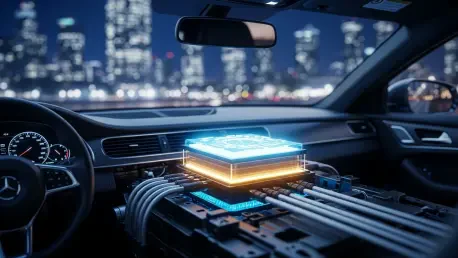

When a self-driving car encounters an unexpected obstacle at sixty miles per hour, the difference between a safe stop and a catastrophic collision is measured in the few milliseconds required to process sensor data and engage the braking system. In these high-stakes scenarios, the traditional model of sending data to a distant cloud server for processing is fundamentally incompatible with the laws of physics and the demands of passenger safety. As autonomous technology matures, the industry has undergone a radical shift from centralized architectures to decentralized edge computing, moving the primary intelligence of the vehicle directly into its onboard hardware or into the immediate roadside environment. This architectural evolution ensures that massive streams of data from high-resolution cameras, LiDAR, and radar are analyzed locally, providing the sub-millisecond response times necessary for navigating chaotic urban landscapes. By eliminating the reliance on remote data centers for critical operations, developers have unlocked a level of reliability and speed that was previously unattainable, setting a new standard for how intelligent transportation systems interact with the physical world in real-time. This shift represents more than just a technical upgrade; it is a fundamental reimagining of vehicle intelligence that prioritizes local autonomy to protect human lives while maintaining peak performance in complex environments.
The Imperative for Speed and Local Decision-Making
Eliminating the Latency Bottleneck: Speed as a Safety Requirement
The most significant advantage of integrating edge computing into the automotive sector is the drastic reduction in latency that it affords to safety-critical systems. In a cloud-heavy model, every piece of sensor data must travel across a cellular network to a remote server, be processed by an AI algorithm, and then return to the vehicle as a specific driving command. Even with modern high-speed networks, this “round-trip” journey introduces delays that can be deadly in high-speed environments where a car covers a significant distance in the blink of an eye. Edge computing effectively removes this latency bottleneck by performing intensive AI inference locally on high-performance silicon chips installed within the car. By keeping the computational workload at the source of the data, autonomous systems can achieve response times that are significantly faster than human reflexes. This ensures that the vehicle can act on new information the moment it is gathered, whether it is a child stepping into the street or a sudden lane change by a nearby truck. The removal of the network trip allows the driving logic to operate at the speed of the hardware itself, providing a safety margin that centralized systems simply cannot match.
Autonomous Sovereignty: Driving Without a Persistent Connection
Because the core driving logic resides at the edge, the vehicle operates with a high degree of autonomy that is no longer dependent on a stable or high-bandwidth internet connection. While the cloud remains a valuable tool for long-term data storage and training new machine learning models, it is the onboard “Edge AI” that manages the live, high-pressure driving environment. This architecture is particularly vital when navigating areas with poor connectivity, such as underground tunnels, remote rural stretches, or dense urban canyons where building interference can disrupt signals. In these scenarios, a vehicle relying on the cloud would face a dangerous “blind spot” in its decision-making capabilities, but an edge-enabled car continues to function with full awareness. This operational independence ensures that the vehicle’s safety features remain active and responsive regardless of external network conditions. By treating the vehicle as a self-contained computing node, manufacturers have created a fail-safe environment where the most critical tasks—navigation, obstacle avoidance, and emergency maneuvering—are never held hostage by the reliability of a service provider’s network or the availability of a distant server rack.
Sophisticated Sensing and Integrated Systems
Optimizing Sensor Fusion: Integrating Multi-Modal Data Streams
Advanced autonomous vehicles utilize multi-modal sensor fusion to build a comprehensive 360-degree model of their environment, combining data from cameras, LiDAR, and radar. This process involves merging diverse data streams—such as the high-resolution imagery from cameras and the precise depth information from LiDAR point clouds—into a single, coherent picture. Local processing at the edge is essential for this task because the volume of raw data generated by these sensors is staggering, often reaching several gigabytes per minute. Processing this information locally ensures that the spatial awareness of the vehicle remains sharp and synchronized. If this data were sent to the cloud, the sheer volume would saturate wireless networks, leading to dropped packets or outdated environmental models. By handling the fusion process onboard, the vehicle maintains a continuous and accurate understanding of its surroundings, allowing for precise object classification and path planning. This localized “spatial intelligence” is what enables vehicles to distinguish between a harmless plastic bag blowing across the road and a solid object that requires an immediate evasive maneuver, ensuring both safety and smooth operation.
Advanced Driver Assistance: Real-Time Mechanical Response
Advanced Driver Assistance Systems, commonly referred to as ADAS, serve as the primary engine for modern vehicle safety features like automatic emergency braking and lane-keeping assistance. These systems rely on a constant, high-speed loop of sensing and acting that must happen at a frequency far beyond human capability. By processing sensor inputs locally at the edge, the vehicle can trigger mechanical responses—such as applying the brakes or adjusting the steering rack—the moment a hazard is detected. This localized execution significantly reduces stopping distances and can prevent accidents that would otherwise be unavoidable. The tight integration between the edge processor and the vehicle’s mechanical actuators creates a seamless safety net that operates in the background of every trip. Furthermore, local processing allows these systems to adapt to specific driving conditions in real-time, such as adjusting braking force based on detected road moisture or tire traction. This level of granular, immediate control is only possible when the decision-making engine is physically located within the vehicle, allowing for a direct and instantaneous link between digital perception and physical action.
Connectivity and Practical Fleet Operations
Distributed Intelligence: The Power of Vehicle Communication
Vehicle-to-Everything communication, known as V2X, allows cars to interact with other vehicles, traffic lights, and smart road infrastructure to create a safer driving ecosystem. For these interactions to be effective, the data must be processed and acted upon immediately to coordinate movements at intersections or alert drivers to hazards around a blind corner. Edge computing allows vehicles to filter and prioritize these incoming signals locally, creating a cooperative and distributed intelligence network where every node contributes to the safety of the whole. This decentralized approach ensures that the road ecosystem functions smoothly without needing a central authority to validate every individual movement, which would introduce unnecessary delays. By processing V2X data at the edge, vehicles can participate in “platooning” or synchronized traffic flow, where cars communicate their acceleration and braking patterns to those behind them. This collective awareness reduces the likelihood of multi-vehicle pile-ups and improves overall traffic efficiency. The result is a road network that behaves like a single, coordinated organism, where the edge intelligence of each vehicle works in harmony with the surrounding infrastructure to eliminate human error.
Predictive Maintenance: Local Analysis for Fleet Longevity
From a commercial perspective, edge computing is revolutionizing fleet management through predictive maintenance and real-time health monitoring. Instead of sending raw sensor data over expensive and congested telecommunications networks for later analysis, onboard AI analyzes vehicle health in real-time to monitor engine temperatures, brake wear, and battery degradation. This allows operators to identify and address mechanical issues before they lead to a breakdown on the road, significantly reducing downtime and extending the operational lifespan of the fleet. This localized analysis keeps vehicles running at peak efficiency while minimizing the data burden on wireless networks, as only critical alerts and summaries are sent to the central management hub. For large-scale autonomous taxi or delivery fleets, this capability is essential for maintaining a high level of service reliability and safety. By identifying subtle patterns in vibration or thermal data that indicate an impending component failure, edge systems can automatically schedule a service appointment or reroute a vehicle to a maintenance depot. This proactive approach to vehicle health ensures that every car on the road meets the highest safety standards, preventing accidents caused by mechanical neglect or unforeseen equipment failure.
Strengthening Security and System Integrity
Privacy Benefits: Keeping Sensitive Data on the Move
Security and privacy are paramount concerns for autonomous transportation, and localized processing offers a significant advantage by keeping sensitive data within the vehicle’s internal network. In a cloud-centric model, video feeds of pedestrians, license plate numbers, and passenger location history are constantly in transit, making them more vulnerable to interception or unauthorized access. By processing this information on local hardware at the edge, the vehicle minimizes its “attack surface” and ensures that raw, identifiable data never has to leave the car. This architectural choice protects the privacy of both the passengers and the individuals in the surrounding environment, as only anonymized or high-level metadata is ever transmitted to external servers. Furthermore, keeping data local reduces the risk of massive data breaches that can occur when centralized databases are compromised. As privacy regulations become more stringent globally, the ability of edge computing to perform “privacy-by-design” data processing has become a major competitive advantage for automotive manufacturers. This ensures that the benefits of autonomous travel do not come at the cost of personal security, fostering greater public trust in the technology.
Cyber Resilience: Detecting Anomalies at the Network Edge
Edge computing enhances the cybersecurity of autonomous platforms through real-time anomaly detection and operational independence. Onboard AI can monitor internal system behavior and incoming network traffic for signs of tampering, spoofing, or unauthorized intrusion attempts. If an external signal—such as a rogue traffic alert or a falsified GPS coordinate—contradicts the vehicle’s internal sensor data, the edge processor can immediately flag the discrepancy and prioritize verified local information. This capability provides a critical layer of fail-safe resilience, ensuring that a cyberattack on a central server or a local infrastructure node cannot easily disable or misdirect a moving vehicle. Because the car possesses its own local intelligence, it can enter a “safe mode” and navigate to a secure stop even if its external communications are completely severed or compromised. This defensive posture is essential for protecting against the growing threat of sophisticated cyber-attacks targeting intelligent transportation. By treating every vehicle as an independent security enclave, the edge architecture prevents a single point of failure from cascading through the entire transport network, maintaining system integrity even in the face of active digital threats.
Navigating Constraints and Future Innovations
Engineering Obstacles: Overcoming Thermal and Power Demands
Transitioning to high-performance edge-based systems presents several engineering hurdles that manufacturers had to address to make autonomous vehicles a reality. Edge processors must be powerful enough to run complex deep-learning neural networks in parallel while remaining efficient enough to manage heat and power consumption within the car’s limited battery capacity. This is particularly challenging for electric vehicles, where every watt of energy used by the computer is a watt taken away from the car’s driving range. Furthermore, these high-tech components must be ruggedized to survive the intense vibrations, moisture, and extreme temperature fluctuations common in the automotive environment. Managing the thermal output of a supercomputer-class processor in a confined space like a vehicle trunk requires advanced liquid cooling systems and innovative chassis designs. Additionally, the logistical complexity of managing secure, over-the-air software updates across a massive mobile fleet remains a significant task for engineering teams. Overcoming these constraints required a close collaboration between silicon designers and automotive engineers, resulting in specialized automotive-grade chips that deliver trillions of operations per second while maintaining the durability required for years of daily use on the road.
The Symbiosis of 5G and Edge: Building the Intelligent Road
The relationship between high-speed 5G connectivity and edge computing is symbiotic, with both technologies working together to support the next generation of autonomous features. While 5G provides the high-bandwidth pipeline needed for vehicles to share environmental data and download map updates, the actual “thinking” and critical decision-making continue to happen at the edge. As these technologies integrated more deeply, vehicles moved toward a model of “embedded intelligence,” where the car and the nearby road infrastructure act as a single, distributed computing platform. This evolution enabled more sophisticated behaviors, such as autonomous intersection negotiation and more nuanced human-behavior prediction in crowded urban settings. Roadside edge units, often installed in smart streetlights or traffic signals, can process data from wide-angle cameras and share that perspective with nearby cars, effectively allowing a vehicle to “see” around buildings or through large trucks. This expanded field of view, processed at the edge, eliminates many of the traditional blind spots that lead to urban accidents. As this infrastructure expanded from 2026 to 2028, the focus remained on creating a seamless handoff between vehicle edge nodes and infrastructure edge nodes, ensuring that the safety net remains continuous and unbreakable across all driving environments.
Toward a Fully Integrated Intelligent Ecosystem
The transition to edge-centric architectures proved to be the pivotal factor in the successful deployment of safe autonomous transportation systems. As manufacturers moved away from centralized cloud models, they established a foundation of reliability that allowed vehicles to navigate the complexities of the physical world with unprecedented precision. The industry focused on the development of universal communication standards, which allowed vehicles from diverse brands to share their edge-processed insights effortlessly. Engineers also prioritized the optimization of energy-efficient hardware, ensuring that the high-performance computing required for safety did not compromise the range of electric fleets. Moving forward, the focus shifted toward the ethical use of the massive amounts of localized data generated at the edge, using it to improve city infrastructure and traffic management without infringing on individual privacy. Stakeholders recognized that the path to a zero-accident future depended on the intelligence built directly into the machines themselves rather than the networks that connected them. These early successes encouraged continued investment in local processing resilience, ensuring that autonomous platforms could withstand the unpredictable challenges of the open road for decades to come. Managers were urged to maintain a rigorous focus on hardware durability and software integrity to protect this new era of intelligent mobility.