
The modern data center has reached a critical bottleneck where the sheer volume of electricity lost during conversion could power entire cities if managed with greater precision. This review explores the fundamental transformation of digital infrastructure as it pivots away from century-old Alternating Current (AC) standards toward Direct Current (DC) native environments. As computational demands for artificial intelligence and hyperscale processing reach unprecedented levels, the industry is forced to reconsider the very physics of power delivery. The purpose of this analysis is to evaluate the technical merits, regulatory landscapes, and efficiency gains of DC distribution, providing a comprehensive view of why this shift is no longer optional for the next generation of global computing hubs.
Evolution and Fundamentals of DC Power Architectures
The transition from AC to DC distribution represents a return to the foundational roots of electrical engineering, but with a sophisticated modern twist. Historically, AC dominance was solidified by the ease of stepping voltages up and down for long-distance transmission, yet the modern data center floor is a concentrated environment where those advantages are becoming liabilities. In a traditional setup, power undergoes multiple transformations from the utility grid to the server silicon, losing energy as heat at every step. By moving the primary AC-to-DC conversion to the facility edge, operators can distribute power through a simplified DC architecture that mirrors the native requirements of the microchips themselves.
This shift is driven by the realization that every server, storage array, and networking switch ultimately operates on DC power. The historical context of maintaining AC throughout the building required complex power supply units in every piece of hardware, each adding to the total heat load and failure risk. A DC-ready environment centralizes this conversion process, using industrial-scale rectifiers to feed a streamlined distribution network. This methodology reduces the “energy tax” paid at every rack, allowing facilities to reclaim lost capacity and redirect it toward actual computational tasks rather than cooling and conversion losses.
Technological Pillars of Modern DC Distribution
Optimization of the Power Conversion Chain
One of the most compelling arguments for DC distribution lies in the drastic simplification of the conversion chain. In a standard AC-driven facility, power is converted to DC for battery storage in an uninterruptible power supply, then back to AC for distribution, and finally back to DC by the server’s power supply unit. Each of these redundant stages bleeds efficiency. By eliminating these intermediate steps, a DC-native architecture creates a direct path from the high-voltage entry point to the server rack. This streamlined approach minimizes the component count, which naturally increases the overall reliability of the power train.
The resulting energy savings are not merely incremental; they are transformative for the bottom line of hyperscale operations. When efficiency gains of even 3% to 5% are applied to a 500-megawatt campus, the recovered capacity is enough to power thousands of additional high-performance servers without expanding the utility footprint. This “found power” is becoming the primary metric for success in an era where grid constraints often limit the physical growth of data center clusters. Moreover, the reduction in heat generation from fewer conversion stages further lowers the energy required for cooling, creating a virtuous cycle of efficiency.
High-Voltage Rack Standards and the Mt. Diablo Initiative
The technical landscape of DC distribution is being defined by the Open Compute Project through frameworks like the Mt. Diablo initiative. This effort focuses on ±400 VDC distribution, a significant leap from the lower voltages used in earlier digital eras. By adopting higher voltages, engineers can deliver more power over thinner copper wiring, which significantly reduces the material costs and physical weight of the rack infrastructure. This technology borrows heavily from the electric vehicle sector, where high-voltage DC management has already undergone rigorous real-world stress testing and optimization for high-density environments.
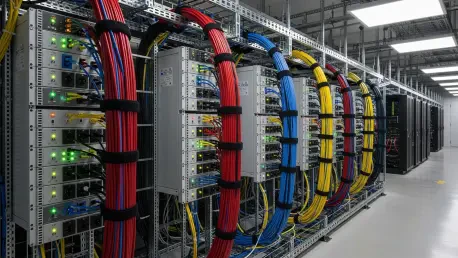
Implementing these standards allows for the seamless integration of massive power loads into a single rack. The simplified hardware layout eliminates the need for bulky AC-to-DC transformers within individual servers, freeing up valuable space for more processing cores or enhanced cooling mechanisms. This shift toward high-voltage standards is essential for supporting the power-hungry hardware required by modern workloads. By standardizing the physical and electrical interfaces, the industry is moving toward a modular “plug-and-play” ecosystem that reduces the complexity of deploying and maintaining global infrastructure.
Industry Trends and Collaborative Standardization
The strategic move toward DC power is being bolstered by a significant memorandum of understanding between the Current/OS Foundation and the Open Direct Current Alliance. This partnership is designed to harmonize commercial and industrial power standards, creating a unified framework that spans across different sectors. By aligning these standards, the organizations are ensuring that hardware developed for a warehouse in Europe is compatible with a data center in North America. This harmonization is critical for creating a stable supply chain and reducing the risks associated with proprietary, one-off power solutions that have plagued early DC experiments.
Beyond technical compatibility, there is a strategic push for Western autonomy in power standards. As international competitors develop their own DC ecosystems, the collaboration between Current/OS and the ODCA ensures that Western facilities remain at the forefront of safety and efficiency innovations. This unified front allows the industry to influence international regulatory bodies more effectively, ensuring that the next generation of electrical codes reflects the realities of modern digital infrastructure. The move toward a global standard simplifies the task for multinational corporations that must manage consistent operations across diverse geographic regions.
Real-World Applications and High-Density Workloads
Artificial Intelligence has served as the ultimate catalyst for the adoption of DC power distribution. Modern AI clusters, often powered by high-density Nvidia GPU arrays, require a level of power stability and intensity that pushes traditional AC systems to their breaking point. In hyperscale environments managed by companies like Meta and Microsoft, DC distribution is being deployed to handle the rapid power fluctuations inherent in large-scale machine learning training. These workloads demand instantaneous power delivery without the micro-latencies or harmonics sometimes associated with complex AC-to-DC switching at the rack level.
In the “white space” of the server floor, DC power manifests as a cleaner, more manageable energy source. Industrial settings have long utilized DC for heavy machinery, and the adaptation of these methods for servers has proven that the technology is ready for prime time. By providing a steady, high-voltage DC bus, facilities can support power densities that were previously considered impossible. This capability is vital for the future of edge computing as well, where compact, high-efficiency power systems are necessary to fit significant processing power into small, decentralized locations.
Technical Barriers and Regulatory Hurdles
Despite the clear benefits, the path to widespread DC adoption is hindered by a lack of established regulatory frameworks. The National Electrical Code and other international safety standards were written with AC in mind, leaving a gap in how high-voltage DC installations should be inspected and insured. Efforts are currently underway to update these codes, but the pace of regulatory change often lags behind the speed of technological innovation. This creates a hurdle for smaller operators who may not have the legal or engineering resources to navigate the complexities of non-standard installations.
Safety also remains a primary concern, as high-voltage DC presents unique challenges compared to AC. For instance, DC does not have a “zero-crossing” point, making electrical arcs much harder to extinguish. To address this, the industry is developing sophisticated semiconductor-based circuit breakers that can detect and interrupt faults in microseconds. While these components are more expensive than traditional mechanical breakers, they are essential for ensuring the safety of personnel and equipment. Overcoming these technical and regulatory obstacles requires a significant initial capital expenditure, which remains a barrier for facilities tied to legacy AC infrastructure.
Future Outlook and Market Trajectory
The trajectory for DC-native data centers suggests that the first fully integrated facilities will emerge in the late 2020s. As power semiconductor technology continues to advance, the efficiency of DC-to-DC conversion will only improve, further widening the gap between DC and traditional AC systems. These breakthroughs will likely be driven by wide-bandgap materials like Silicon Carbide and Gallium Nitride, which allow for higher switching frequencies and smaller form factors. The integration of these materials into the power chain will make DC systems even more attractive for space-constrained urban data centers.
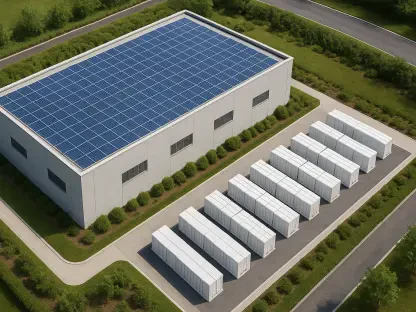
Long-term sustainability goals will also play a decisive role in the market’s direction. DC power is inherently more compatible with renewable energy sources like solar and wind, which generate DC electricity. By maintaining a DC-native environment, data centers can integrate on-site renewable generation and battery storage with minimal conversion losses. This alignment with global carbon reduction targets positions DC power not just as a technical upgrade, but as a core component of the industry’s environmental responsibility. The push for greener digital infrastructure will likely accelerate the retirement of aging AC systems in favor of more efficient DC alternatives.
Summary of the Technological Shift
The shift toward DC power distribution was characterized by a fundamental rethink of how energy moves through the digital ecosystem. Engineers successfully demonstrated that by simplifying the conversion chain and adopting high-voltage standards, they could achieve reliability levels that surpassed traditional AC architectures. The collaboration between international alliances provided the necessary standardization to move DC from a niche experimental phase into a viable commercial reality. This evolution was not just about saving money on electricity; it was about creating a power foundation capable of supporting the exponential growth of artificial intelligence and global data processing.
Ultimately, the industry recognized that the complexity of legacy power systems was a liability in a world of soaring energy demands. The transition to DC distribution proved to be a critical milestone in future-proofing digital infrastructure against the limits of the power grid. By the conclusion of the most recent development cycle, DC-native facilities were viewed as the gold standard for efficiency and sustainability. The move toward this architecture ensured that the data centers of tomorrow would have the electrical resilience required to sustain the next era of technological progress.