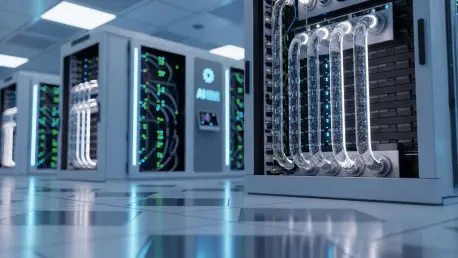

Digital ghosts require physical gallons, and the struggle to quench the thirst of artificial intelligence has turned water usage into the ultimate metric of operational viability in an increasingly parched global landscape. Data Center Water Efficiency represents a significant advancement in the sustainable infrastructure sector, moving beyond simple power metrics to address the physical reality of resource consumption. This review explores the evolution of cooling technology, its key features, performance metrics, and the impact it has had on various cloud and AI applications. The purpose of this review is to provide a thorough understanding of current efficiency standards, existing capabilities, and potential future developments in resource management.
The Efficiency Mandate: Understanding Water Usage Effectiveness in Modern Computing
The metric of Water Usage Effectiveness (WUE) has emerged as the defining standard for measuring how much water a data center consumes relative to its IT load. Historically, thermal management relied on cooling towers and mechanical chillers that evaporated massive volumes of water to reject heat generated by servers. This legacy approach became untenable as hyperscale facilities began consuming millions of gallons daily, leading to the current “disclosure arms race” among giants like Amazon, Microsoft, and Google. These providers now compete not just on processing speed, but on their ability to minimize their environmental footprint through transparency.
Water stewardship has transitioned from a corporate social responsibility report entry to a core component of climate-conscious technological expansion. As cloud services expand into more arid regions, the ability to operate with minimal water intake determines whether a provider receives local approval. This shift emphasizes that a data center is no longer an isolated box of silicon; it is an active participant in a regional ecosystem that must balance high-performance computing with the basic resource needs of the surrounding community. The historical reliance on water-heavy cooling is being replaced by a more nuanced understanding of thermal dynamics.
Resource Reduction: Primary Engineering Strategies for Cooling
Thermal Management: Advanced Air Cooling and Elevated Thresholds
Advanced air cooling has become the primary defense against excessive water consumption by leveraging the ambient environment to shed heat. Many modern facilities utilize free air cooling methods for the vast majority of their operational hours, drawing in outside air to regulate temperatures without any water evaporation. This strategy essentially turns the data center into a giant heat exchanger, where mechanical refrigeration only engages during the most extreme weather conditions. This significantly reduces the annual water consumption for cooling operations, especially in temperate climates where “free cooling” is available year-round.
Engineering teams have also pushed the technical boundaries by raising operating thermal thresholds to as high as 85 degrees Fahrenheit. Previously, data centers were kept at chilly temperatures, requiring constant mechanical cooling to maintain a narrow thermal range. By designing iterative server architectures that support higher heat tolerances, providers have minimized the frequency of mechanical cooling cycles. This engineering shift allows for a much wider window of water-free operation, proving that the most effective way to save water is to design hardware that simply does not need to stay as cold to function reliably.
Cooling Innovation: Precision Evaporative Systems and Hybrid Cooling
When ambient temperatures exceed the capacity of air cooling, precision evaporative systems serve as a targeted secondary measure. These hybrid systems use evaporative media only during temperature spikes, applying a fine mist of water to cooling pads to drop the intake air temperature by several degrees through natural evaporation. This precision ensures that water is treated as a strategic reserve rather than a constant requirement. The balance between Power Usage Effectiveness (PUE) and water conservation is delicate, as reducing water often requires slightly more electricity for fans, yet the industry is increasingly favoring water preservation in drought-prone areas.
The rise of high-density AI hardware and training clusters is accelerating the transition toward liquid cooling. Unlike traditional air-based systems, liquid cooling brings a coolant directly to the chip, allowing for more efficient heat removal from the hottest components. In the current 2026 to 2028 roadmap, hybrid systems that combine liquid-to-chip technology with closed-loop water cycles are becoming the standard for managing the intense thermal output of next-generation graphics processing units. This shift represents a move toward high-efficiency thermal transport that minimizes external water reliance.
Benchmarking Progress: Emerging Trends in Corporate Transparency
Corporate transparency has shifted from vague internal goals to public, high-stakes statistical benchmarking. Major industry players are now expected to provide granular data on their water consumption, allowing for a direct comparison of global average WUE. Amazon has set a high bar with a reported average of 0.12 liters per kilowatt-hour, while Microsoft and Meta have followed with their own aggressive reductions toward a zero-impact goal. In contrast, Google has faced scrutiny for higher averages, illustrating how different engineering philosophies and geographic footprints impact the bottom line of resource consumption.
Market shifts are increasingly influenced by the demand for “water-positive” operations, where companies commit to returning more water to the environment than they consume. Many of these sustainability commitments target 2030, but the pressure to show immediate progress is driving real-time changes in procurement. Enterprise cloud customers now weigh a provider’s WUE as heavily as price and uptime, recognizing that their own carbon and water footprints are tied to the infrastructure of their chosen cloud partner. This has created a new competitive differentiator based on resource efficiency.
Resource Stewardship: Industrial Applications and Community Focus
A significant transition is occurring in the source of cooling water, with large-scale infrastructure moving away from potable sources toward reclaimed wastewater. By utilizing treated effluent that is unsuitable for human consumption, data centers can satisfy their thermal demands without competing with local drinking water supplies. Currently, hundreds of facilities have pivoted to this model, treating wastewater as a valuable industrial asset rather than a waste product. This approach reduces the stress on municipal systems while maintaining the necessary cooling capacity for massive server farms.
Collaborative partnerships with local municipalities have become essential for building regional water infrastructure. Data center developers are often funding the construction of reclaimed water pipelines and treatment facilities that benefit both the technology hub and the local community. In water-scarce regions, this community-focused stewardship provides a “social license” to operate, turning a potential resource drain into a contributor to local water resilience. By investing in these regional systems, technology companies are ensuring their long-term viability in areas that might otherwise prohibit their expansion.
Operational Obstacles: Navigating Regulatory and Technical Hurdles
Despite technological gains, local moratoriums on data center construction present a significant challenge in water-scarce areas. Communities are increasingly resistant to the massive resource demands of new facilities, leading to legislative hurdles that can stall expansion for years. This regulatory environment forces engineers to find more creative ways to balance the cooling demands of generative AI with the reality of restricted resource availability. Often, this results in higher capital expenditures for more efficient cooling loops to bypass the need for continuous local water intake.
Technical limitations still exist, particularly regarding the standardization of indirect water consumption reporting. While direct usage at the site is easier to track, the water used by the power plants that supply electricity to the data center is harder to quantify. Market obstacles remain in creating a unified reporting framework that accounts for this “embedded” water, which is necessary for a truly holistic understanding of a facility’s impact on the global water cycle. Without these standards, the industry risks ignoring the largest portion of its water footprint, which occurs at the point of energy generation.
Future Outlook: Projections for Resilient Infrastructure
Looking ahead, the integration of closed-loop cooling systems offers a pathway to achieve near-zero evaporation. These systems recirculate a fixed volume of water or specialized coolant within a sealed environment, eliminating the need for constant makeup water from external sources. Breakthroughs in heat-resistant silicon are also anticipated, which could redefine cooling requirements by allowing processors to operate at even higher temperatures without loss of efficiency or longevity. This would fundamentally change the design of the data center from a cooled environment to a heat-tolerant one.
The long-term impact of mandatory regional water disclosures will likely reshape enterprise cloud and AI procurement. Governments are beginning to require detailed reporting on water stress levels in specific regions where data centers operate, forcing providers to be more strategic about where they build. Future resilient infrastructure will not only be measured by its uptime but by its ability to maintain operations during extreme droughts without impacting the surrounding community’s water security. This trend suggests that the most successful companies will be those that integrate their operations seamlessly with local environmental limits.
Sustainable Computing: A Comprehensive Assessment of Efficiency
The industry recognized that resource stewardship was the only sustainable path for the future of computing. Engineers prioritized closed-loop systems and heat-resistant components to decouple growth from water consumption. Stakeholders established that data centers had to exist as net-positive contributors to their local environments to avoid permanent moratoriums. Decision-makers implemented mandatory regional disclosures that transformed transparency from a marketing tool into a regulatory requirement for all enterprise cloud and AI procurement.
The transition toward reclaimed water and liquid cooling for AI hardware provided a clear roadmap for balancing high-performance needs with environmental constraints. Technological advancement no longer focused solely on processing speed but on the sophisticated management of thermal energy within a finite resource budget. These collective actions ensured that the infrastructure supporting the AI revolution was built on a foundation of ecological responsibility. The shift successfully redefined the data center as a vital piece of civic infrastructure that contributed to, rather than depleted, the regional water security of its host communities.