
The rapid expansion of global digital services has transformed quiet industrial zones into the pulsating nervous systems of the modern economy, often hidden behind nondescript concrete walls. While high-speed internet and cloud storage have become essential utilities for the average household, the physical infrastructure required to sustain these services remains largely invisible to the public eye until a new facility breaks ground in a local neighborhood. For many growing towns and mid-sized cities, the arrival of a data center introduces a complex set of questions regarding land use, resource consumption, and the long-term economic benefits for the community. By examining existing operations, such as those at the BGMU Data Center in Kentucky, local stakeholders can better understand how these facilities integrate with municipal utilities and what they contribute to the regional tech ecosystem. These sites serve as critical hubs for connectivity, but their success depends on a transparent relationship between the facility operators and the residents.
Categorizing Models and Utility Infrastructure
Co-location Facilities and Regional Connectivity
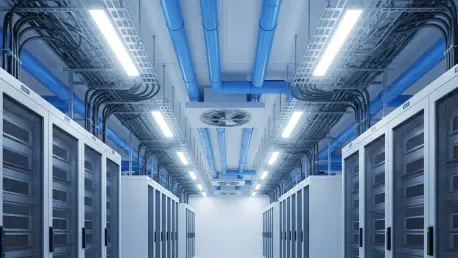
Understanding the distinction between different data center models is crucial for local governments when evaluating the potential impact of a proposed project on their specific region. A co-location facility allows multiple businesses to rent space for their own hardware, which can foster competition among internet providers and improve local connection speeds significantly. This model creates a diverse digital marketplace within a single building, attracting multiple internet service providers and leading to better connectivity for local businesses and residents alike. Because these centers host hardware from many different companies, they act as a nexus for regional data traffic, fostering a more resilient internet infrastructure that benefits the entire community. In these environments, the operational focus is on providing high-level security, redundant power supplies, and cooling services that allow smaller local enterprises to scale their digital operations without building their own private server rooms.
Hyper-scale Developments and Industrial Power Demands
This model differs from massive hyper-scale centers run by tech giants that own both the building and the servers, making it important for local leaders to recognize that a facility’s impact depends largely on its specific scale. One of the primary challenges for a host community is managing the constant energy demand these facilities place on the electrical grid 24 hours a day to keep servers running without interruption. Unlike residential areas where power use peaks and dips throughout the day, data centers require a steady, flat load of electricity that necessitates proactive engineering and infrastructure upgrades from local utility providers. This proactive approach ensures the system remains reliable without disrupting service to the rest of the town, and in many cases, these upgrades can actually improve the overall reliability of the municipal power network by modernizing aging components that might have otherwise remained neglected or underfunded.
Specialized Cooling Systems and Resource Management
Beyond electrical requirements, managing the significant heat generated by high-density server racks remains a primary technical hurdle for facility engineers and city planners who must protect local resources. Most modern data centers employ advanced cooling systems, such as chilled water loops, to maintain optimal operating temperatures for sensitive electronic components without wasting excessive resources. While there is a common perception that these facilities consume vast quantities of water, many utilize closed-loop cycles that recycle water and use evaporation primarily for heat dissipation during the hottest months. In reality, a mid-sized facility often has an environmental footprint comparable to a small group of average households rather than a heavy industrial factory, making them relatively efficient neighbors in terms of resource usage. By implementing these sophisticated thermal management strategies, operators can significantly reduce their impact on the local water supply effectively.
Community Integration and Future Operational Standards
Noise Mitigation and Acoustic Zoning Strategies
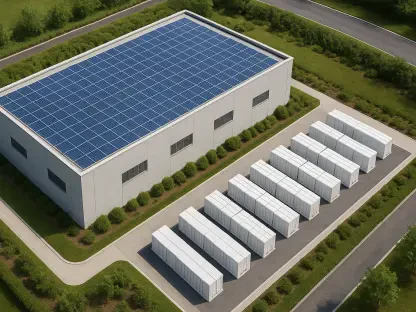
Public concern often shifts toward the physical presence of a data center, specifically regarding noise and how it affects the surrounding area’s tranquility and residential property values. While the interior of a server room is quite loud due to powerful cooling fans and hardware hum, modern facility design ensures that this sound is contained entirely within the building’s thick, insulated walls. External noise is typically limited to the sound of HVAC units located on the roof, which are often shielded by sound walls or landscaping to blend into the ambient noise of an industrial or commercial zone. When facilities are designed with the community in mind, they can exist in close proximity to neighborhoods without being a source of auditory disruption, provided that the initial site planning accounts for proper setbacks and acoustic shielding. By addressing these misconceptions through transparent data and smart zoning, local governments can better understand how to integrate these digital backbones.
Advancing Sustainable Cooperation and Municipal Resilience
The successful integration of data centers into local municipalities required a shift toward more collaborative planning and transparent communication between operators and city officials throughout the region. By 2026, many communities successfully balanced the need for digital expansion with the preservation of local resources by implementing strict standards for energy efficiency and noise mitigation. Moving forward, stakeholders prioritized early engagement and the development of specialized zoning districts that accommodated high-density infrastructure while protecting the acoustic and aesthetic integrity of surrounding neighborhoods. It became clear that when utility providers and data center engineers worked in tandem, the resulting infrastructure improvements bolstered the entire city’s power grid, turning potential resource challenges into long-term municipal assets. These actionable steps paved the way for a sustainable coexistence, ensuring that the physical hardware of the internet supported local prosperity.