


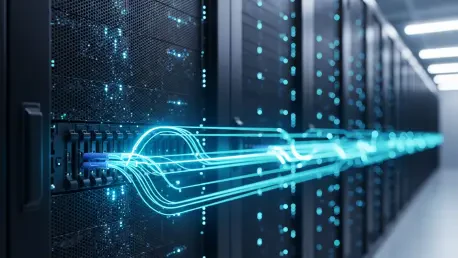

The traditional enterprise network, once viewed merely as a static arrangement of cables and switches, has reached a critical breaking point where manual human intervention is no longer capable of sustaining the exponential growth of modern data processing. For several decades, the primary role of a network administrator was one of a reactive troubleshooter, a professional who spent the majority of the day responding to connectivity tickets, manually configuring individual ports, and attempting to decipher cryptic log files during unexpected outages. However, the rise of generative AI models and the massive parallel processing required by contemporary workloads have rendered these legacy methodologies obsolete. The modern digital environment demands a level of agility and foresight that human operators simply cannot provide in real-time, leading to a fundamental shift in how infrastructure is conceived, deployed, and maintained within the professional landscape.
This evolution is perhaps most clearly demonstrated by the recent consolidation within the networking industry, specifically the integration of HPE and Juniper Networks, which has signaled a definitive move toward AI-native architectures. This shift represents a transition from treating the network as a simple utility to viewing it as an intelligent, self-healing platform that is deeply integrated into the core business strategy. By embedding advanced artificial intelligence directly into the hardware and software layers, organizations are now able to automate the complex decision-making processes that previously hindered operational speed. The primary objective has moved beyond the basic requirement of maintaining an active link; it is now centered on providing a seamless, high-performance experience that anticipates potential failures and resolves them before a single end-user experiences a disruption in service.
Building a Robust Foundation for Modern Workloads
Ensuring Stability for High-Intensity AI Applications
The success of any enterprise-level AI initiative is fundamentally tethered to the underlying strength of the network infrastructure, which must act as a reliable foundation for massive data movement. Much like a skyscraper requires an incredibly deep and stable foundation to remain upright under pressure, advanced AI applications require a network that is specifically engineered to handle ultra-low latency and consistent throughput across thousands of nodes. Without this specialized design, the significant financial investments that companies make in high-end processing units and specialized accelerators are effectively wasted, as the network becomes a persistent bottleneck that drags down model training times and causes failures in real-time inferencing tasks. The modern networking environment must therefore be built to support these high-intensity loads with a level of precision that ensures data is delivered exactly when and where it is needed without hesitation or interruption.
Transitioning to this new era requires IT professionals to abandon the traditional “best-effort” approach to traffic management in favor of a more deterministic and outcome-oriented performance model. In the previous technological cycle, the health of a network was often judged by simple metrics like link utilization or uptime, but the AI era demands a more sophisticated focus on actual business results and application performance. Future network designs are being optimized to ensure that server-to-server communication remains fluid and predictable, which is essential for large language models to sync across various clusters without experiencing jitter or packet loss. By prioritizing this high-level stability, enterprises can ensure that their AI models function at the absolute peak of their theoretical efficiency, providing a reliable platform for innovation that is not limited by the physical constraints of an outdated and unresponsive connection framework.
Enhancing Connectivity Through Hardware and Software Integration
Modern enterprise networking is witnessing a deep convergence between high-speed hardware and intelligent software stacks to eliminate the friction points that historically plagued large-scale data transfers. In current deployments, the use of RDMA over Converged Ethernet (RoCE) and InfiniBand-like performance in standard Ethernet environments has become a prerequisite for handling the traffic spikes associated with model training. These technologies allow for direct memory access between servers, bypassing the traditional operating system overhead and significantly reducing the CPU cycles required for data transport. This structural efficiency is critical when thousands of GPUs must work in perfect synchronization to process a single dataset, as even a millisecond of delay in synchronization can lead to a cascading failure in the training pipeline that takes hours to recover from in a production setting.
Furthermore, the implementation of programmable silicon and smart network interface cards has allowed for much of the traffic management logic to be offloaded directly to the hardware. This shift enables the network to perform complex packet processing and congestion control at wire speed, ensuring that high-priority AI traffic is never delayed by standard office background data. By integrating these advanced hardware capabilities with a centralized AI-native control plane, administrators can gain a holistic view of the entire fabric, allowing for the dynamic reallocation of resources based on the specific demands of a given workload. This level of granular control ensures that the network is not just a passive conduit for information but an active participant in the optimization of the enterprise’s digital assets, providing the flexibility needed to adapt to the rapidly changing requirements of the global market.
The Rise of Autonomous and Self-Driving Systems
Transitioning from Human-Led to AI-Driven Management
The sheer scale and multifaceted nature of modern enterprise environments have officially surpassed the cognitive limits of human management, necessitating the widespread adoption of autonomous “self-driving” network operations. By leveraging sophisticated agentic AI frameworks and virtual assistants, modern networks can now engage in proactive problem-solving based on a continuous stream of real-time telemetry data harvested from every corner of the infrastructure. These systems essentially create a high-fidelity digital twin of the user experience, monitoring every individual connection and session every minute of the day to identify subtle anomalies that a human operator would likely overlook. Instead of the traditional model where an administrator waits for a support ticket to be filed, the AI can detect rising interference on a specific frequency or an overloaded access point and resolve the issue by reconfiguring the system on the fly.
This technological evolution is drastically redefining the professional identity of the network engineer, moving the role away from daily “firefighting” and toward a more strategic position as a high-level supervisor of automated systems. Rather than losing hours to the diagnosis of intermittent connectivity glitches or minor configuration errors, engineers are now focusing their expertise on establishing the guardrails and service level agreements that guide the actions of the autonomous system. The primary metric for success has shifted from the theoretical uptime of hardware components to the actual quality of time spent by the end-user, with a specific focus on identifying and eliminating “bad user minutes.” This focus on the human experience ensures that the infrastructure serves the people using it, rather than forcing the people to adapt to the limitations of a rigid and unforgiving mechanical system.
Optimizing Operational Efficiency Through Predictive Analytics
Predictive analytics have become the cornerstone of modern network maintenance, allowing organizations to move away from reactive repairs toward a model of preventative care based on data-driven insights. By analyzing historical performance patterns and comparing them to current conditions, AI-native systems can predict when a hardware component is likely to fail or when a specific branch office will experience a surge in demand that exceeds its current capacity. This foresight allows IT departments to schedule maintenance or upgrades during periods of low activity, effectively eliminating the unplanned downtime that has traditionally cost enterprises millions of dollars in lost productivity. The ability to see around the corner and anticipate the needs of the business allows for a much more efficient allocation of human and capital resources, as teams are no longer constantly reacting to emergencies.
Moreover, these predictive systems facilitate a much smoother scaling process as the enterprise grows, providing clear recommendations on where and when to expand capacity based on actual usage trends rather than guesswork. When a new facility is opened or a department moves to a more data-intensive workflow, the AI-native management platform can automatically provision the necessary virtual networks and security policies to support the change. This level of automation reduces the time required for deployment from weeks to mere minutes, providing the business with a competitive advantage in an environment where speed to market is a critical differentiator. By offloading the burden of routine operational tasks to an intelligent system, the enterprise can ensure that its technical talent is focused on driving innovation and creating new value for the organization and its customers.
Unifying Fabrics and Strengthening Security
Integrating Connectivity with Proactive Defense
The ongoing convergence of diverse networking platforms is aimed at creating a unified fabric that seamlessly bridges the gap between small branch offices and massive, multi-regional data centers under a single, cohesive AI engine. This integration is supported by modern microservices-based architectures that allow for a “develop once, deploy anywhere” strategy, ensuring that operational policies and performance standards remain consistent regardless of the underlying hardware. By treating the entire infrastructure as code and utilizing API-first automation, organizations can thoroughly validate configuration changes in a virtual staging environment before they are ever pushed to the live production network. This methodology drastically reduces the risk of human-error-induced downtime during major updates, as every change is tested against a comprehensive suite of performance and security benchmarks.
Simultaneously, the traditional boundaries that once separated networking and security are rapidly dissolving, as the speed and sophistication of modern cyber threats require a more integrated approach to defense. Because AI has enabled attackers to launch faster and more adaptive strikes, the network itself must now serve as the primary line of defense, acting as a sentient sensor that monitors every packet for signs of malicious intent. Modern AI-native systems integrate deep packet inspection and behavioral analysis directly into the connection process, allowing the infrastructure to recognize when a user’s behavior deviates from their established persona. In such cases, a zero-trust architecture can instantly isolate the affected segment and block any lateral movement, ensuring that security operates at the same blistering speed as the network itself, effectively neutralizing threats before they can cause significant damage.
Strengthening Resilience Through Automated Policy Enforcement
The implementation of automated policy enforcement across the unified fabric has become a vital component of the modern enterprise’s resilience strategy, ensuring that security and compliance are maintained without manual oversight. In a globalized work environment where employees access sensitive data from a variety of locations and devices, maintaining a consistent security posture is a monumental challenge that can only be solved through intelligent automation. AI-native networks utilize identity-based access controls that follow the user wherever they go, dynamically adjusting permissions based on the context of the connection, such as the security health of the device or the geographic location of the login. This level of granular, automated control ensures that the organization remains compliant with international data protection regulations while simultaneously providing employees with the flexibility they need to remain productive.
Furthermore, the ability to automate the remediation of security vulnerabilities across thousands of nodes simultaneously has fundamentally changed the risk landscape for large organizations. When a new vulnerability is discovered, the AI-driven management platform can automatically identify every affected device in the network and apply the necessary patches or configuration changes in a matter of seconds. This rapid response capability is a critical defense against zero-day exploits, which often rely on the delay between the discovery of a flaw and the manual application of a fix by a human administrator. By turning the network into a self-healing and self-protecting entity, enterprises can significantly reduce their attack surface and build a level of digital resilience that was previously unattainable, allowing them to operate with confidence in an increasingly complex and hostile online environment.
Prioritizing Experience at Global Scale
Validating AI-Native Design Through Real-World Applications
The tangible impact of AI-native networking is most readily apparent in high-scale environments where any failure carries immediate and public consequences, such as massive university campuses or global media production studios. In these high-pressure scenarios, managing the concurrent connections of tens of thousands of users who are all streaming high-definition content or accessing cloud-based research tools requires a level of throughput that defies traditional management. By adopting AIOps and AI-driven resolution, these organizations have observed a dramatic reduction in the time required to solve complex connectivity issues, often dropping from several hours of manual investigation to just a few minutes of automated analysis. This proven performance demonstrates that intelligent automation is no longer a luxury but a fundamental necessity for managing the sheer density and complexity of modern digital life.
Ultimately, the overarching trend is moving toward an “experience-first” model where the network becomes essentially invisible to the end-user, functioning so reliably and efficiently that its presence is never felt. Whether it is a healthcare provider who needs instantaneous access to high-resolution patient imaging or a filmmaker moving petabytes of raw footage across the globe for post-production, the infrastructure must be both resilient and silent. By focusing on the specific operational needs of different industries and leveraging the power of self-driving tools, enterprises can build a digital foundation that is far more than a collection of expensive hardware. Instead, they are creating a vital engine for the ongoing digital revolution, one that provides the speed, security, and intelligence required to thrive in a world where data is the most valuable currency.
Driving Business Innovation Through Network Intelligence
As organizations successfully navigated the transition to AI-native networking, the conversation shifted from cost containment to the enablement of new business models that were previously impossible due to technical limitations. The high degree of visibility provided by AI-driven telemetry allowed business leaders to gain a much deeper understanding of how their physical and digital spaces were being utilized, providing insights that informed everything from real estate investments to product development. In the retail sector, for example, the network provided precise location data that helped managers optimize store layouts based on customer traffic patterns, while in the manufacturing sector, it enabled the real-time tracking of assets across vast factory floors. These applications transformed the network from a cost center into a strategic asset that directly contributed to the organization’s bottom line and competitive positioning.
The transition facilitated a culture of experimentation, as IT teams were finally freed from the burden of maintaining basic connectivity and could instead collaborate with other departments to build custom solutions that leveraged the network’s intelligence. This collaborative approach led to the development of edge computing applications that processed data closer to where it was generated, reducing latency for critical tasks like autonomous vehicle coordination and remote surgical procedures. By bridging the gap between infrastructure and application, enterprises were able to deliver a superior level of service to their clients, fostering loyalty and driving long-term growth. The journey toward an AI-native architecture proved to be a transformative experience, one that empowered organizations to stop worrying about the limitations of their technology and start focusing on the unlimited possibilities of their ideas.
The move toward an AI-native networking environment proved to be a pivotal shift for enterprises that sought to maintain a competitive edge in a rapidly accelerating digital economy. Organizations recognized that the era of manual configuration was over and prioritized the integration of telemetry across all operational silos to ensure that every data point contributed to the broader intelligence of the system. To fully capitalize on this transition, it became essential for business leaders to bridge the gap between their IT departments and their strategic business units, ensuring that the network was viewed as a primary driver of user experience rather than a background utility. Future success depended on a commitment to continuous learning and the adoption of an “experience-first” mindset that placed the needs of the end-user at the center of every technological decision. Those who successfully implemented these AI-driven strategies moved beyond the role of a traditional enterprise and emerged as agile, data-centric leaders capable of navigating any technological disruption.







