
The northern tip of the Commonwealth has long served as the silent heart of the global internet, but the landscape of Data Center Alley is undergoing its most radical transformation yet as policymakers pivot from aggressive tax incentives to a direct consumption levy on electrical power. For nearly two decades, Virginia successfully courted tech giants by offering some of the most generous fiscal packages in the United States, effectively transforming Loudoun and Prince William Counties into a digital fortress. This era of unfettered expansion met a turning point as the sheer volume of electricity required to fuel the rise of generative artificial intelligence began to outpace the local grid’s immediate capacity. The newly implemented framework introduces a consumption tax of 1.1 cents per kilowatt-hour, a move designed to reconcile the state’s budget with the massive infrastructure demands of hyperscale facilities. By imposing this fee, Virginia is testing a model that seeks to capture revenue directly from the resource most consumed by these facilities.
A Pivotal Shift: Balancing Global Tech Dominance with Fiscal Sustainability
This legislative transition did not occur in a vacuum but followed years of intense debate regarding the long-term viability of the Commonwealth’s previous incentive-heavy strategy. While early policies were instrumental in establishing the region as a global leader, the maturation of the industry suggested that developers would prioritize existing fiber connectivity and proximity to end-users even if the tax environment evolved. The resulting compromise is a sophisticated attempt to maintain Virginia’s status as a premier tech destination while addressing the massive revenue gaps created by previous exemptions. By capping the annual revenue from the power tax at $600 million, the state provides a necessary safety net for the industry, ensuring that the highest consumers are not disproportionately penalized in a way that might trigger a mass exodus to emerging hubs in Ohio or Texas. This structured predictability allows both the state and the developers to forecast their financial commitments with a higher degree of accuracy through 2028.
A critical component of this fiscal balancing act involves the preservation of the sales and use tax exemption on computer equipment, which is currently slated to remain in effect until 2035. This exemption has historically been the primary driver for hardware refreshes, encouraging companies to continuously upgrade their server fleets with the latest and most efficient processors. By decoupling equipment taxes from energy consumption levies, the state ensures that the highest-value investments remain shielded while the operational burden is more equitably shared among high-volume users. This dual-track approach signals to the global market that Virginia is still a stable environment for capital-intensive projects, even as it demands a higher contribution toward the public utility systems that make those projects possible. Industry analysts suggest that this stability is vital for the continued development of massive cloud regions, which require decades of planning and execution to reach their full operational potential across multiple jurisdictions.
Infrastructure Pressures: The Rising Cost of Powering Artificial Intelligence
The surge in demand for high-performance computing has placed an unprecedented strain on the regional electrical grid, necessitating billions of dollars in upgrades to transmission lines and substations. As data centers are projected to account for nearly 30 percent of the total electricity consumption in Virginia by the end of the current decade, the physical reality of power distribution has become a limiting factor for growth. The new tax revenue is specifically envisioned as a mechanism to help offset the costs of these critical upgrades, ensuring that residential ratepayers do not bear the full brunt of the infrastructure expansion required by commercial hyperscalers. High-density server racks, often drawing ten times the power of traditional storage units, are driving a transition toward liquid cooling systems and more complex electrical architectures. This evolution requires a more robust and resilient power backbone, and the state’s decision to tax the electricity itself creates a direct link between the burden placed on the grid and funding for modernization.
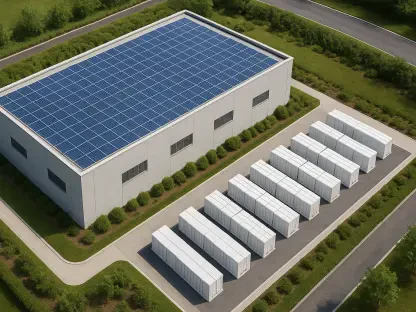
Beyond the immediate need for more transmission capacity, the shift toward sustainable energy sources adds another layer of complexity to the region’s digital expansion strategy. Hyperscalers have made ambitious commitments to carbon neutrality, yet the local energy mix still relies heavily on traditional generation to meet the baseline needs of a 24/7 digital economy. The integration of massive solar farms and battery storage solutions is essential to meet these corporate goals, but such projects often face their own set of regulatory and land-use hurdles. The revenue generated by the new power tax could theoretically support state-level initiatives to accelerate the deployment of clean energy technology, creating a circular economy of power production and consumption. However, the transition remains a delicate dance between maintaining reliability and achieving environmental targets, as any lapse in power quality could result in millions of dollars in losses for data center tenants. Consequently, the focus has shifted toward creating a more intelligent grid capable of handling the volatile loads associated with AI.
Strategic Resilience: Navigating Regional Growth and Resource Management
Public sentiment regarding the expansion of data centers shifted significantly as the physical footprint of these facilities became more visible in suburban neighborhoods. Recent studies indicated that approximately 71 percent of the population expressed reservations or outright opposition to the construction of new large-scale AI facilities near residential zones. Concerns often centered on the acoustic impact of massive cooling fans and the sheer volume of water required to dissipate heat from the latest generation of GPUs. To address these quality-of-life issues, the legislative framework expanded the oversight capabilities of the Department of Environmental Quality, granting them broader authority to monitor and enforce standards related to noise and water consumption. This move represented a transition from a purely economic development mindset to one of comprehensive resource management. By creating a centralized regulatory body with the power to intervene in local land-use disputes, the state provided a more consistent and transparent process for both developers and residents.
Stakeholders eventually determined that the most successful data center projects were those that integrated advanced power-saving technologies and prioritized alternative cooling methods to reduce reliance on local water supplies. Companies that thrived under the new tax regime focused on building stronger partnerships with local governments, ensuring that their projects provided clear benefits to the surrounding communities beyond simple tax revenue. The state also took proactive steps to streamline the permitting process for facilities that exceeded environmental standards, creating a “fast track” for projects that utilized on-site renewable generation or advanced waste-heat recovery systems. This shift transformed the regional market from one of raw growth into one defined by technological sophistication and environmental responsibility. Moving forward, the industry adopted a model where transparency in resource usage became a competitive advantage, allowing for a more balanced coexistence between the digital economy and the residents of the Commonwealth.