
The transition from massive, specialized cooling rooms to standardized server racks marks a pivotal moment for enterprise computing where the legendary reliability of “big iron” finally meets the spatial requirements of modern facilities. For decades, the mainframe was a monolith, a physical and operational island that required its own ecosystem of power, climate control, and personnel. Today, this isolation is disappearing as the z17 series and the LinuxOne Rockhopper 5 redefine what high-performance computing looks like in a contemporary environment. By fitting these systems into a standard 19-inch rack, IBM is addressing the critical shortage of data center floor space while simultaneously dismantling the technical barriers that once separated specialized hardware from the rest of the IT stack. This strategic move ensures that mission-critical processing is no longer a niche specialty but a seamless part of a unified, hybrid cloud infrastructure, enabling a more cohesive approach to scaling operations in a high-density world.
Standardized Configurations: Breaking the Glass House Tradition
The move to a standardized 19-inch rack-mounted configuration is the most visible change in the current hardware lineup, allowing enterprises to integrate mainframe components directly into the same rows as their networking gear and x86 servers. This design choice effectively eliminates the need for “mainframe corners,” which were historically isolated zones with specific floor-loading and power requirements. By adopting a form factor that matches the rest of the data center, companies can reclaim valuable floor space that was previously wasted on awkward footprints. This is particularly vital as data center rental rates continue to soar in major metropolitan hubs, where every square foot must be optimized for maximum compute density. Modern infrastructure teams now view the mainframe not as a specialized outlier, but as a high-density compute node that fits perfectly into existing aisle-based cooling systems. This alignment streamlines the entire physical deployment process for large-scale enterprise hubs.
Beyond simple rack compatibility, the redesigned single-frame models introduce the concept of “white space” at the bottom of the chassis, offering a unique opportunity for hardware consolidation. This intentional design choice allows users to co-locate non-mainframe equipment, such as top-of-rack Ethernet switches, specialized storage arrays, or security appliances, within the same physical frame as the mainframe itself. This level of consolidation is essential for reducing the complexity of cable management and decreasing the physical distance between high-speed networking components and the core processing units. By housing these disparate elements together, data center managers can achieve a more streamlined and organized infrastructure that is easier to maintain and troubleshoot. This shift reflects a broader industry trend toward converged infrastructure, where the boundaries between different hardware categories are increasingly blurred to improve overall efficiency and reduce the physical footprint of the entire server room floor.
Architectural Advancements: Processing Power for the Modern Enterprise
Internal hardware upgrades are just as significant as the outward changes, spearheaded by the introduction of the Telum II processor which delivers a ten percent increase in throughput per core. This silicon advancement allows for massive performance gains without expanding the physical footprint, providing the necessary horsepower for the most demanding enterprise applications. With support for up to eighteen terabytes of memory, these systems are specifically engineered to handle the massive data volumes associated with modern financial services and large-scale transactional workloads. This high-density memory architecture ensures that data remains close to the processor, minimizing latency and maximizing the efficiency of complex queries. By packing this level of performance into a standardized rack, the barrier between extreme compute power and ease of deployment has been significantly lowered. This allows organizations to scale their core processing capabilities while maintaining the same physical constraints as their other server assets.
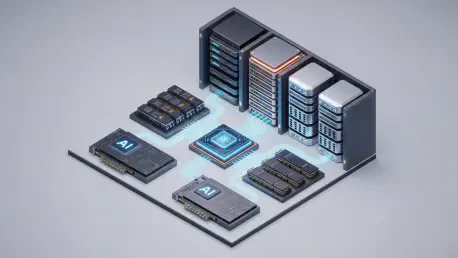
To address the rapidly expanding requirements of artificial intelligence, the current hardware generation supports the integrated Spyre Accelerator cards designed for specialized tasks. This dedicated hardware allows the mainframe to perform complex AI functions, such as real-time fraud detection and sophisticated money-laundering analysis, directly on the machine where the primary data resides. By keeping AI processing local to the transactional data, enterprises avoid the latency and security risks associated with moving large datasets to external GPU clusters for analysis. A single unit is capable of processing billions of encrypted transactions every day with the near-zero downtime that has long been the hallmark of these systems. This capability ensures that as companies move into more advanced AI use cases, they can do so without sacrificing the reliability or security of their core business processes. The integration of specialized AI silicon within a standard rack format represents a major leap forward in making enterprise-grade AI both accessible and efficient.
Economic Impacts: Consolidation and Strategic Resource Management
The shift toward standardized rack configurations offers a clear financial advantage that extends far beyond the initial purchase price of the hardware. As global data center operational costs continue to climb, the ability to pack more computing power onto a single floor tile helps significantly reduce the total cost of ownership. Some large-scale enterprises have reported saving as much as sixty-five percent by migrating their high-density workloads from scattered, distributed systems to a consolidated LinuxOne platform. These savings are achieved through reduced power consumption, lower cooling requirements, and the elimination of redundant management overhead. When workloads are concentrated on a smaller number of high-efficiency machines, the complexity of the entire environment drops, allowing for better resource allocation across the board. This financial logic makes the mainframe a compelling choice for businesses looking to optimize their spending without compromising on the performance or security of their critical digital operations.
Beyond the immediate real estate and operational savings, the control over the entire supply chain provides a distinct logistical edge in a market often plagued by volatility. While many organizations have struggled with long backorders for general-purpose GPUs and other specialized components, the production of custom silicon can often be delivered in a matter of days. This rapid turnaround allows businesses to scale their operations quickly and respond to sudden market shifts without the months of waiting typically required for critical hardware upgrades. The ability to deploy high-performance compute resources on demand is a major competitive advantage in an era where speed to market is a primary driver of success. By manufacturing their own processors and specialized accelerators, the dependency on external vendors is minimized, ensuring a stable and predictable path for hardware refreshes from 2026 to 2028. This reliability in the supply chain complements the physical versatility of the rack-mounted design.
Talent and Software: Bridging the Specialized Skills Gap
To solve the persistent shortage of specialized mainframe talent, the introduction of the agentic AI platform known as IBM Bob has transformed how developers interact with legacy systems. This tool acts as an intelligent assistant, helping modern engineers understand and modernize complex codebases, including legacy languages like COBOL, through contextual guidance. By providing real-time suggestions and automating repetitive engineering tasks, this assistant makes it possible for generalist developers to manage and update mainframe systems without needing decades of specialized training. This shift democratizes the management of “big iron,” allowing a new generation of IT professionals to apply their existing skills to the most powerful computers in the data center. The AI-driven approach significantly reduces the time required for application modernization projects, which were previously seen as too risky or time-consuming to undertake. As a result, the valuable business logic buried in decades-old applications can be safely extracted and updated.
The integration of industry-standard management tools like Terraform further bridges the gap between traditional mainframe environments and the modern cloud ecosystem. By adopting Infrastructure-as-Code principles, IT teams can now provision and configure their most powerful systems using the same interfaces and workflows they use for their entire public and private cloud deployments. This move ensures that the mainframe remains a relevant and accessible part of the modern data center, rather than an isolated silo that requires its own set of tools and procedures. Developers can use familiar scripts to spin up environments, manage networking, and deploy updates, which speeds up the development lifecycle and reduces the likelihood of manual configuration errors. This unified management strategy allows for greater collaboration between different teams and ensures that security policies are applied consistently across the entire infrastructure. By making these machines behave like any other server in the DevOps pipeline, the friction of the past is gone.
Strategic Evolution: Navigating the New Enterprise Landscape
The transition toward a fully integrated data center model provided a clear roadmap for organizations seeking to balance legacy stability with modern agility. Leaders who successfully implemented these rack-mounted systems found that they could modernize their operations without the high risk of a complete platform migration. By utilizing the new AI-driven tools, teams were able to accelerate their development cycles while maintaining the strict security standards required for financial and government workloads. This approach encouraged a shift in thinking, where the mainframe was no longer viewed as a burden of the past but as a cornerstone of a resilient digital infrastructure. Those who prioritized this consolidation early on were better positioned to handle the increasing demands of real-time data processing and enterprise-scale AI. This strategic alignment between hardware form factor and modern software practices allowed businesses to focus on innovation rather than infrastructure maintenance, leading to a responsive environment.
Organizations that sought to capitalize on these advancements were advised to conduct thorough audits of their existing server density and power utilization. By identifying high-latency workloads that resided far from their core databases, IT leaders were able to pinpoint the most effective candidates for consolidation within the new rack-mounted systems. This proactive approach allowed companies to maximize the benefits of the Telum II architecture and the Spyre AI accelerators from the very beginning of their deployment. Furthermore, investing in training for generalist developers to utilize agentic AI tools proved to be a critical step in maintaining long-term operational health. These strategic moves ensured that the infrastructure remained flexible and capable of meeting technological shifts without requiring a complete overhaul of the physical data center. Ultimately, the successful integration of these systems depended on a willingness to embrace a unified management philosophy that treated every asset as a part of a single, powerful ecosystem.