
The distinction between hyperscale centers owned by tech giants and smaller colocation facilities is critical, as the former typically generate more significant gains in telecommunications employment. As Louisiana maneuvers through an unprecedented industrial pivot, the state finds itself at a crossroads where massive capital investments meet complex social and labor realities. With more than $81.6 billion in announced data center spending now in progress, the promise of modernization and the creation of roughly 2,000 permanent roles serves as the primary justification for aggressive state support. However, the sheer scale of these projects has ignited a profound debate regarding the long-term depth of their economic impact on local communities. While officials celebrate these deals as historic victories for the regional economy, a growing chorus of skeptics and researchers suggests that the actual labor market benefits might be more modest than the headline figures imply. The challenge lies in determining whether these multibillion-dollar facilities will act as sustainable engines for growth or merely as temporary construction hubs with minimal lasting employment.
Lessons Learned: The Texas Labor Market
Research into the Texas labor market provides a sobering perspective on the relationship between high-tech infrastructure and job stability. A comprehensive study of over 250 counties across two decades revealed a significant disconnect between the magnitude of data center investment and sustained local employment growth. While these massive projects undeniably stimulate the economy during their construction phases, creating a flurry of activity and high demand for specialized building roles, these gains frequently evaporate once the facilities become fully operational. The nature of modern data storage is inherently capital-intensive rather than labor-intensive, meaning that once the physical servers are installed and configured, the staffing requirements drop significantly. For many rural areas, this creates a boom-and-bust cycle where the initial excitement of a billion-dollar project leads to a minimal long-term operational footprint that fails to transform the local job market. This dynamic suggests that while the initial influx of capital is impressive, it does not always translate into the career-long stability promised to residents.
Industrial Outposts: The Lack of Tech Clustering
The expectation that these facilities act as anchors for wider technological clusters has not been supported by recent data trends. Many local governments offer significant tax exemptions under the assumption that a data center will serve as a magnet for professional technical services, software firms, and other high-growth information technology businesses. However, analysis shows no reliable evidence that these facilities naturally attract related industries to the surrounding region. Instead, these data centers often function as isolated high-tech outposts, operating independently of the local economic ecosystem. This lack of industry clustering raises serious questions about the fiscal wisdom of forgoing billions in tax revenue through incentives. If the secondary economic ripple effects do not materialize, the cost of these subsidies may outweigh the benefits, particularly when that revenue could have been directed toward broader public services, education, or other forms of diverse economic development that provide broader community advantages.
Measurable Gains: Brookings Institution Research Findings
Looking at broader national data provides a more nuanced view of what Louisiana can expect from its digital expansion. Analysis suggests that a county receiving its first large-scale data center can typically expect to gain between 100 and 200 permanent positions over the long term. While these figures represent a measurable increase in the local data processing sector, they represent only a tiny fraction of the total investment value. For example, a multibillion-dollar campus might create fewer permanent jobs than a single medium-sized manufacturing plant or a regional distribution center. Over a decade, these facilities do contribute to a steady rise in telecommunications and technical employment, but the overall impact on the regional labor force remains relatively small. This reality often clashes with the lofty expectations set by industry lobbyists and political figures who may overstate the capacity of these high-tech hubs to solve systemic unemployment or provide a massive number of entry-level jobs for the surrounding local population.
Infrastructure Priorities: Reliability Over Tax Incentives
Another critical finding for policymakers involves the primary drivers behind location decisions for tech giants like Amazon, Meta, and Microsoft. While tax breaks are frequently used as a competitive tool between states, research indicates they are often a minor factor compared to infrastructure availability. For hyperscale developers, the priority is access to high-capacity fiber-optic networks, vast tracts of suitable land, and, most importantly, a reliable and massive supply of electricity. Tax incentives frequently represent as little as two percent of the total construction investment for these organizations, suggesting they might have chosen their locations regardless of the subsidies offered. This shifting understanding of corporate motivation implies that Louisiana might achieve better results by investing in grid reliability and telecommunications infrastructure rather than competing on the basis of lost tax revenue, which could have been used to improve the state’s overall economic competitiveness and general quality of life for all its citizens.
Project Scale: The Meta Hyperion Global Campus
The most prominent example of this high-stakes strategy is the Meta Hyperion campus in Richland Parish, a project of such immense scale that it has reshaped the regional economic conversation. With a staggering $50 billion investment, this facility is intended to be one of the largest of its kind globally, and Meta has committed to providing approximately 1,000 permanent positions. Such a flagship project represents the crown jewel of the state’s technological ambitions, yet its sheer size has brought intense scrutiny regarding the transparency of public support. Louisiana has granted 20-year exemptions from state and local sales and use taxes for the project, but the total amount of revenue being forgiven remains undisclosed to the public. This lack of clarity has led to calls for more rigorous oversight to ensure that the promised employment benefits and the massive capital injection actually result in a net positive fiscal outcome for the people of Louisiana, rather than serving as a hidden drain on public resources.
Energy Demands: Regulatory Battles and Ratepayer Risks
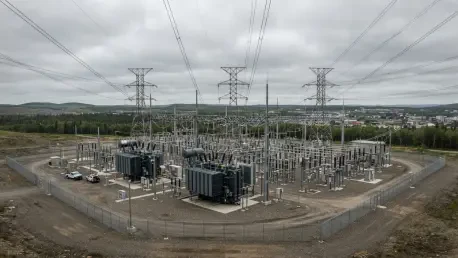
Beyond the debate over taxation, the energy requirements of the Hyperion campus have sparked a major regulatory and legal confrontation. To meet the unprecedented power demands of the facility, utility providers are seeking approval to construct several new natural gas-fired generating units. This move has encountered fierce opposition from environmental advocacy groups and consumer protection organizations who worry about the long-term implications for the state’s energy grid. The primary concern is that the massive costs associated with building and maintaining this new power infrastructure could eventually be shifted onto residential ratepayers and small business owners. Legal challenges are currently underway to compel more transparency regarding the specific electricity needs of the data center, as critics argue that the public should not have to subsidize the utility costs of a global corporation through higher monthly bills. The outcome of this dispute will likely set a precedent for how the state manages the high energy costs of the digital economy.
Economic Surges: Rising Sales Tax in Richland Parish
In the immediate term, the physical construction of the Meta project has triggered a significant economic surge in Northeast Louisiana. Data from regional development organizations shows that sales tax collections in Richland Parish skyrocketed by nearly 400 percent during the first half of the year compared to previous reporting periods. This massive influx of revenue is primarily driven by the thousands of construction workers currently on-site, who spend money at local hotels, restaurants, and retail establishments. Furthermore, Meta has already reported awarding over a billion dollars in contracts to Louisiana-based firms, providing a substantial boost to the state’s construction and service sectors. For a region that has historically struggled with economic stagnation, this injection of capital has provided a vital lifeline, demonstrating the powerful short-term benefits that these mega-projects can deliver to local businesses and the municipal treasury through increased commercial activity and job creation.
Community Impact: Traffic and Quality of Life
However, this rapid industrialization has also introduced significant quality-of-life challenges that have strained the social fabric of the surrounding communities. Residents near the construction site have reported a dramatic increase in heavy truck traffic, which has led to a spike in road accidents and created persistent issues with noise, dust, and diesel exhaust. These disruptions are particularly felt by local institutions like elementary schools, where the constant flow of industrial vehicles has altered the daily environment. There is also a growing concern regarding the construction cliff expected to occur around 2030. As the building phase concludes and the thousands of temporary workers depart, local businesses that expanded to meet the current demand may find themselves in a precarious financial situation. This potential for a sharp economic contraction highlights the difficulty of translating a temporary building boom into a stable and diversified local economy that can thrive after the heavy construction equipment is gone.
Strategic Balance: Protecting Future State Development
The ultimate success of Louisiana’s foray into the data center industry will be determined by how effectively the state manages the transition from a construction-driven spike to a stable digital economy. It is clear that the focus must move beyond simply attracting billions of dollars in hardware to ensuring that these facilities do not remain isolated from the local workforce. Policymakers and community leaders emphasized the importance of developing robust training programs that allow residents to transition into the technical roles required for facility maintenance and operation. While the fiscal gains in Richland Parish were significant, the real value was found in the long-term improvements to the state’s energy grid and telecommunications infrastructure. By the end of the decade, the state aims to establish a model for sustainable development that protects ratepayers while fostering a new sector of high-quality employment. Louisiana is working to prove that with proper oversight, the data center boom can provide a lasting foundation.