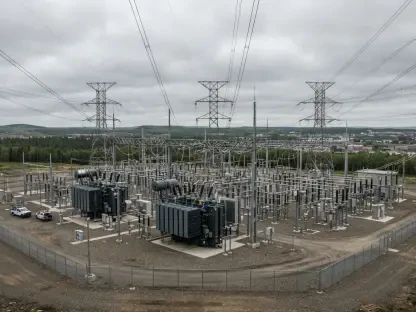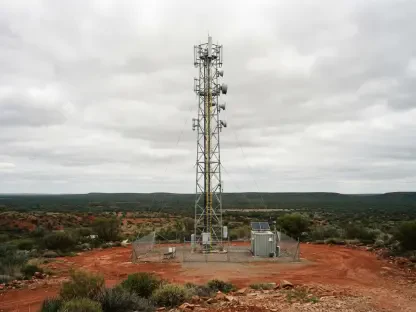

Modern structural health monitoring systems rely on sensors that are frequently compromised by nonlinear hardware degradation and unpredictable network congestion. These Wireless Sensor Networks (WSNs) form the essential backbone of contemporary industrial automation, environmental tracking, and infrastructure safety monitoring. However, their operational efficiency is often hindered by intermittent faults, which are malfunctions that appear and disappear without any discernible pattern. Unlike permanent hardware failures that are relatively simple to pinpoint, these sporadic glitches are driven by fluctuating environmental conditions and hardware wear. Detecting such faults remains a significant challenge for engineers because the resulting anomalies often mimic legitimate data fluctuations, leading to either missed detections or excessive false alarms. Traditional frameworks generally struggle to separate true system errors from natural variations in sensor readings, highlighting a pressing need for more sophisticated diagnostic tools.
Combining Convolutional Networks and Transformer Encoders
To address these diagnostic limitations, researchers at the Vellore Institute of Technology have introduced a hybrid deep learning architecture that integrates spatial feature extraction with sophisticated sequential relationship modeling. At the core of this system is a residual convolutional network, commonly known as a ResNet, which is specifically tasked with deep feature extraction. By utilizing residual connections, the model effectively bypasses the vanishing gradient problem that often plagues deep neural networks, allowing it to learn intricate and multi-layered representations of the input data. Once the ResNet identifies these patterns, the data is passed to a Transformer encoder. This component excels at modeling the complex interactions between five distinct input variables, including sensor readings, mote identification, humidity, temperature, and single-hop status. This holistic approach ensures that the system understands how a sudden spike in environmental temperature might correlate with a specific sensor’s failure rate.
The most innovative breakthrough in this architecture is the integration of approximate Bayesian inference through the use of Monte Carlo dropout layers. While conventional models operate under a deterministic “forced choice” paradigm—providing a binary “fault” or “no fault” output regardless of data quality—this new system quantifies its own internal uncertainty. By keeping dropout layers active during the prediction phase, the model generates multiple variations of a diagnosis for a single data point. The variance between these different outputs allows the system to calculate epistemic uncertainty, effectively measuring what the model does not know about the input. This transparency represents a significant shift away from the opaque “black box” nature of traditional artificial intelligence. It empowers network administrators to distinguish between high-confidence alerts and ambiguous data points that may require further human investigation, thereby streamlining the maintenance process for critical infrastructure and reducing the waste of technical resources.
Analyzing Accuracy and Model Reliability Results
The true operational value of this hybrid model was demonstrated through its performance in selective prediction scenarios, where accuracy reached unprecedented levels. When the system was configured to provide diagnoses only for its most confident samples—specifically those in the top decile of certainty—it achieved a remarkable accuracy rate of 99.84 percent. This selective mechanism allows the network to withhold a classification if the internal uncertainty level is too high, prioritizing reliability over raw output volume. Even when the parameters were broadened to include the 80 percent of cases where the model felt most certain, the accuracy remained consistently high, ranging between 84.00 and 84.29 percent. This capability is particularly vital for preventing “alarm fatigue” among network operators, as it ensures that the vast majority of triggered alerts correspond to genuine hardware malfunctions. Furthermore, the model showed a very low Expected Calibration Error, meaning its probabilities were representative.
In addition to accuracy, the study focused on the system’s resilience against intentional data corruption and adversarial interference. Using the Fast Gradient Sign Method to simulate noise and spikes, the Bayesian CNN-Transformer model maintained its integrity better than any existing deterministic baseline, proving that uncertainty-aware components provide a natural defense against corrupted inputs. However, this level of sophistication required a larger computational footprint, with the model utilizing approximately 2.19 million parameters compared to the much smaller architectures of the past. As the industry moves toward 2027 and 2028, the next logical step involves deploying these models onto edge computing devices to confirm their performance in unpredictable field conditions. The researchers successfully moved the field toward more interpretable diagnostic tools by prioritizing self-assessment over simple binary outcomes. This approach effectively suggests that future network management should focus on integrating uncertainty quantification to ensure automated systems remain trustworthy.