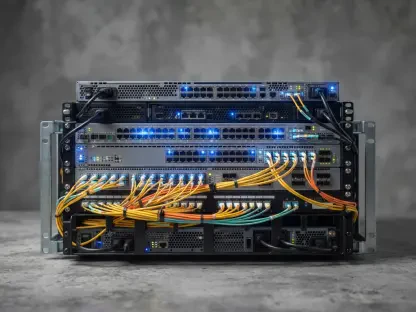

Transitioning from basic shared environments to high-performance VPS solutions utilizing AMD EPYC processors ensures the rapid data retrieval necessary for modern production environments. The web hosting landscape has reached an unprecedented scale, now encompassing over 330,000 providers worldwide, each vying to support the massive expansion of global e-commerce and the unrelenting demand for high-speed site performance. This growth is no longer just a numbers game; it represents a fundamental shift in quality and capability, driven by the emergence of generative AI-ready server architectures. For the contemporary developer, the criteria for selecting a host have evolved far beyond simple uptime metrics and storage capacity. Modern priorities are now centered on Developer Experience (DevEx), integrated artificial intelligence tools, and seamless deployment pipelines. The hosting environment has transformed from a static storage space into a dynamic, critical component of the software development lifecycle, necessitating a sophisticated approach to infrastructure selection that aligns with these technological demands.
Evolution of Modern Hosting Architectures
Infrastructure Versatility and Scalability Patterns
Navigating the complex market requires developers to clearly distinguish between traditional infrastructure and specialized platforms that cater to modern workflows. Infrastructure-as-a-Service (IaaS) continues to provide the raw building blocks, such as virtual machines and storage volumes, offering maximum flexibility for those who wish to configure every aspect of their stack. In contrast, Platform-as-a-Service (PaaS) provides highly managed environments where the underlying infrastructure is abstracted away, allowing teams to focus exclusively on code. This distinction is critical because the choice between them determines the balance between granular control and automated deployment efficiency. As digital ecosystems grow more complex, many organizations are opting for a hybrid approach that leverages the reliability of dedicated hardware alongside the rapid scaling capabilities of the cloud. This architectural flexibility is essential for handling unpredictable traffic spikes while maintaining a consistent baseline of performance for core application logic.
Parallel to this architectural shift is the increasing necessity for sustainable, “green” hosting solutions that do not compromise on performance or power. By 2026, environmental impact will have become a core business metric, leading providers to invest heavily in carbon-neutral data centers and energy-efficient hardware. Beyond sustainability, the shift toward AI-native infrastructure has redefined what developers expect from their servers. Modern hosting environments now include specialized hardware acceleration and pre-configured environments for large language models, enabling faster training and inference cycles. This technological maturity means that developers no longer have to spend days configuring drivers or manually managing complex dependencies. Instead, they can deploy complex, AI-driven applications with the same ease as a static website, provided they choose a platform that has successfully integrated these modern capabilities into its core offering.
Traditional Models and Their Current Utility Remain Highly Relevant in the Contemporary Era as They Provide Essential Frameworks for Understanding Complex Systems Across Diverse Professional Disciplines
Shared hosting remains the most affordable entry point for many, yet it is increasingly viewed as inadequate for professional development in the current era. The inherent limitations of shared resources and lack of server-level control create significant bottlenecks for applications that require high performance or specific security configurations. Consequently, Virtual Private Servers (VPS) have emerged as the favored middle ground for most developers. By utilizing Kernel-based Virtual Machine (KVM) virtualization, providers can partition a single physical server into multiple isolated virtual machines, ensuring that each user receives dedicated CPU, RAM, and NVMe storage resources. This isolation provides the stability and security of a dedicated server at a fraction of the cost, making it ideal for everything from staging environments to production-ready web applications that require consistent resource availability.
For high-traffic projects or those with strict regulatory requirements, dedicated hosting continues to offer the pinnacle of hardware control and security. Having an entire physical server reserved for a single user eliminates the risks associated with multi-tenancy and allows for deep customization of the hardware stack, including specific NVMe drive configurations or high-bandwidth network cards. Meanwhile, cloud hosting has become the definitive standard for scalability, utilizing vast, interconnected server networks rather than single physical units. This model is characterized by high availability and a pay-as-you-go pricing structure, which allows developers to scale resources up or down in real time. Whether utilizing public, private, or hybrid clouds, the focus remains on ensuring that infrastructure can grow alongside the application without requiring significant manual intervention or costly hardware migrations.
Comprehensive and High-Performance Virtual Private Server Solutions Tailored for Robust Enterprise Applications
Performance Leaders in the VPS Market
Bluehost VPS has successfully transitioned from its roots as a basic shared provider into a high-performance contender specifically tailored for modern development stacks. By utilizing AMD EPYC processors and high-speed NVMe SSD storage, the platform ensures that data-intensive applications can retrieve and process information with minimal latency. Its 100Gbps port speed and robust 99.99% uptime Service Level Agreement make it a reliable choice for production environments where performance is non-negotiable. One of the most notable trends in 2026 is its support for specialized AI-driven stacks like Claude Code and OpenClaw, which come preconfigured for rapid deployment. This level of specialization allows developers to bypass the tedious setup phase of AI projects and move directly into building features, providing a significant competitive advantage in a fast-paced market.
Hostinger VPS has positioned itself as an “AI-first” platform, catering to developers who prioritize a competitive price-to-RAM ratio without sacrificing hardware quality. Utilizing KVM virtualization on enterprise-grade Dell and HPE hardware, the platform ensures complete resource isolation and high reliability. A standout feature of the current offering is the AI-managed experience, which allows developers to use plain language to instruct an AI agent to handle technical tasks such as troubleshooting or server optimization. This integration extends to the Model Context Protocol (MCP) connector, enabling seamless communication between AI chatbots and server infrastructure. For developers operating on a budget, this platform offers a unique combination of high-end hardware and advanced management tools that were previously only available at much higher price points, effectively democratizing access to high-performance computing resources.
Cloud-Native Infrastructure and Automation Tools
DigitalOcean remains a dominant force for developers who value simplicity and rapid deployment through its signature “Droplets.” These virtual machines can be spun up in a matter of seconds, providing a predictable monthly pricing model that avoids the complexity of many larger cloud providers. The platform supports both horizontal and vertical scaling, allowing developers to resize their infrastructure as their user base grows. Crucially, it is fully compatible with Terraform, enabling Infrastructure as Code (IaC) automation that simplifies the management of complex environments. Recent expansions into GPU Droplets have further solidified its position as a leader for AI application development, providing the raw power needed for modern machine learning tasks. This focus on clear, developer-friendly tools ensures that teams can manage their infrastructure with minimal overhead.
Supporting these infrastructure choices are managed agents and advanced monitoring tools that connect cloud instances to thousands of external services. This ecosystem allows developers to automate everything from security patches to database backups, ensuring that the operational burden remains low. The ability to integrate these agents directly into the deployment pipeline means that security and performance checks are performed automatically every time code is pushed. This shift toward automated, self-healing infrastructure is a hallmark of the 2026 hosting landscape, where the goal is to eliminate manual intervention as much as possible. By providing a platform that balances deep control with powerful automation, DigitalOcean continues to attract a wide range of users, from individual hobbyists building their first apps to large engineering teams managing global microservices architectures.
Managed Services and Frontend Deployment Engines
Managed services and frontend deployment engines represent critical infrastructure components that allow modern development teams to automate their workflows and ensure high availability for their web applications across global networks.
Simplifying the inherent complexities associated with cloud infrastructure to empower modern development teams to build and deploy applications more efficiently
Cloudways operates as a sophisticated management layer over massive infrastructure providers like AWS and Google Cloud, bridging the gap between raw power and ease of use. It offers specialized tiers such as “Autonomous” for seamless WordPress autoscaling and “Velocity” for near-instant Node.js deployment, catering to the specific needs of different development frameworks. This platform is particularly valuable for developers who require enterprise-grade reliability and global reach but wish to avoid the steep learning curve associated with manual server administration. By handling the “boring” aspects of hosting—such as security firewalls, automated backups, and SSL management—Cloudways allows development teams to focus their energy on building core product features. This managed approach ensures that performance is optimized at the server level without requiring a dedicated DevOps engineer on staff.
AWS Lightsail serves as an essential entry point for developers who find the broader Amazon Web Services ecosystem overwhelming but still want the reliability of its underlying infrastructure. It replaces the often confusing usage-based billing of the main AWS platform with predictable monthly bundles that include compute, storage, and networking resources. Lightsail provides preconfigured blueprints for common stacks like Node.js, LAMP, and WordPress, allowing for rapid testing and deployment of new ideas. It represents a perfect middle ground for developers who want the peace of mind that comes with AWS reliability but require a more straightforward interface and pricing model. As projects grow in complexity, the platform offers a clear path to migrate to more advanced AWS services, ensuring that the initial choice of a simple hosting environment does not become a long-term technical limitation.
Optimizing Frontend and Full-Stack Workflows
Vercel has established itself as the gold standard for frontend deployment, particularly for those working with modern frameworks like Next.js, Django, or Astro. Its primary strength lies in its Git-based workflow, where every code push triggers an automatic deployment with a unique preview link, facilitating easy team collaboration and rapid feedback loops. The platform utilizes a highly efficient “agentic infrastructure” to support AI-native applications, using serverless functions to handle traffic surges without manual intervention. This level of automation acts as a significant workflow accelerator, allowing developers to move from a local development environment to a global, production-ready site with minimal friction. For teams focused on creating high-performance user interfaces, Vercel provides an unparalleled set of tools that optimize everything from image delivery to edge computing.
Netlify continues to be a primary competitor in this space, maintaining a strong focus on Jamstack-native infrastructure. By separating the frontend from the backend, it ensures incredibly fast global delivery via its custom content delivery network, which is optimized for static assets and edge functions. Its Framework API is a standout feature, allowing for zero-configuration optimization of modern tools like React and Vite. This approach is particularly appealing to startups and freelancers who need to build and deploy modern, static-heavy web applications quickly. Netlify has also invested heavily in serverless technology, providing a robust backend environment that scales automatically to meet demand. The emphasis remains on providing a seamless experience where the complexities of the global network are hidden behind a simple, intuitive deployment interface that rewards modern architectural choices.
Streamlined and unified development environments are essential for facilitating the rapid deployment of modern software applications across diverse infrastructures
Render provides a unified environment for deploying the entire application stack—including front ends, back ends, and databases—within a single, cohesive platform. It automates essential technical tasks such as PostgreSQL management, SSL certificate provisioning, and the configuration of cron jobs for scheduled background processes. If a developer uses a framework that is not natively supported, Render offers the flexibility to containerize the application using Docker, ensuring that almost any project can be hosted with ease. This all-in-one approach significantly reduces the overhead of managing multiple service providers and simplifies the troubleshooting process when issues arise. By offering isolated preview environments for every pull request, Render ensures that developers can test new features in a production-like setting before they are merged into the main codebase, enhancing overall software quality.
Railway distinguishes itself through an exceptional user interface and the innovative “Railpack” system, which automatically detects project languages to generate optimized container images without manual configuration. This platform is designed for speed and simplicity, making it an excellent choice for rapid prototyping and medium-sized projects where developer time is the most valuable resource. Railway integrates deeply with modern AI coding agents like Cursor and Codex, creating a highly integrated development environment that spans from the editor to the production server. This focus on streamlining the developer experience ensures that projects can move from concept to deployment in a matter of minutes. While it may offer less granular infrastructure control than a raw VPS or a major cloud provider, the gains in productivity and the reduction in operational complexity make it a compelling choice for many modern engineering teams.
Strategic Trends Defining the Industry
Artificial Intelligence and Security Baselines
The integration of artificial intelligence has moved beyond being a simple marketing buzzword to become a standard differentiator in the 2026 hosting market. Leading providers have integrated AI directly into their core infrastructure to handle complex tasks such as automated resource scaling, predictive maintenance, and real-time security threat detection. This shift toward AI-native hosting means that the servers themselves are becoming more proactive, identifying potential bottlenecks or vulnerabilities before they can impact the end-user experience. Furthermore, support for AI coding agents has changed how developers interact with their hosting environments, allowing for a more conversational and automated approach to infrastructure management. This evolution has raised the bar for what is considered a standard hosting package, pushing providers to innovate constantly in the realm of intelligent automation and proactive support.
Security and compliance have also transitioned from optional “add-ons” to essential baselines that every reputable provider must offer. As data regulations tighten globally, features like SOC 2 Type 2 and ISO 27001 certifications have become mandatory for any host targeting enterprise-level projects. Automated DDoS protection, managed firewalls, and edge-level security are now integrated into the standard service offerings of most top-tier platforms. This focus on security is driven by the increasing sophistication of cyber threats and the high cost of data breaches in a highly regulated digital economy. Developers now expect their hosting providers to handle the heavy lifting of compliance and infrastructure security, allowing them to focus on securing their own application logic. Any provider failing to meet these high security standards is quickly finding itself obsolete in a market that prioritizes trust and data integrity above all else.
Performance Benchmarks and Hardware Standards
Performance optimization has reached a new baseline that involves the ubiquitous use of NVMe PCIe 5.0 SSDs and high-clock-speed processors like the latest AMD EPYC and Intel Xeon series. In the 2026 landscape, the speed of data retrieval and the latency of server-side processing are the primary factors that determine search engine rankings and user satisfaction. This has led to a race among providers to offer the fastest possible hardware at every price point, ensuring that even entry-level VPS plans benefit from significant processing power. The widespread adoption of edge computing has further reduced latency by bringing compute resources closer to the user, a trend that is particularly beneficial for global applications with a dispersed user base. This focus on hardware excellence ensures that developers have the underlying power necessary to run complex, modern applications without being throttled by outdated infrastructure.
Parallel to hardware advancements is a clear shift toward specialization, with hosting platforms carving out specific niches to better serve different segments of the developer community. Instead of trying to be a general-purpose host for everyone, providers are focusing on being the best for WordPress, the best for front-end frameworks, or the best for AI research. This specialization allows them to build highly optimized environments that offer superior performance and support for their target audience. For developers, this means that the choice of a host is now more closely tied to the specific technology stack they are using. By selecting a provider that specializes in their framework of choice, developers can take advantage of deep optimizations that simply are not possible on more generic platforms. This move toward specialized, high-performance environments represents the ultimate maturation of the hosting industry.
Choosing the Ideal Hosting Environment
How to Assess Developer Experience Effectively by Implementing Metrics that Measure Productivity and Satisfaction?
When evaluating potential hosting platforms, the first priority should be the quality of the Developer Experience (DevEx). A host that offers a robust command-line interface (CLI) and an intuitive, well-documented dashboard can save a team hundreds of hours in operational overhead. It is important to check how well the platform supports modern version control systems like Git and whether it offers features like automatic staging environments and preview URLs for every pull request. These tools are no longer luxuries; they are essential for maintaining a high velocity in modern software development. A platform that prioritizes DevEx will also provide clear, actionable error messages and easy access to logs, making the debugging process much less painful. Ultimately, the best host is the one that stays out of the developer’s way while providing all the tools necessary to manage the application effectively.
Beyond the interface, the robustness of the deployment workflow is a critical factor in the DevEx assessment, and developers should look for platforms that support integrated CI/CD pipelines, allowing code to be automatically tested and deployed whenever changes are merged. The ability to perform zero-downtime deployments and easy rollbacks in the event of an error is also a vital safety net for any production application. By choosing a host that understands and supports the modern development lifecycle, teams can reduce the risk of manual errors and ensure a more consistent release process. This focus on a seamless, automated workflow is what distinguishes a top-tier hosting provider from a simple infrastructure vendor. In 2026, the best platforms are those that act as true partners in the development process, providing a foundation that enhances productivity and encourages technical excellence.
A Comprehensive Guide on How to Plan for Long-Term Scalability to Ensure Your Infrastructure Can Handle Future Growth
Planning for long-term scalability requires a host that offers a clear and painless migration path as the application grows. It is essential to choose a provider that can handle a sudden increase in traffic or data storage requirements without requiring a complete rewrite of the infrastructure code or a complex manual migration to a different platform. This means looking for hosts that offer both vertical scaling—the ability to add more power to an existing instance—and horizontal scaling, which involves adding more instances to handle the load. A host with global data center locations also provides the flexibility to expand into new geographic markets as needed, ensuring low latency for a global user base. By selecting a platform with a proven track record of handling high-growth applications, developers can avoid the “scaling wall” that often forces successful startups to undergo costly and risky infrastructure overhauls.
Finally, the long-term pricing and value must be carefully reviewed beyond the initial introductory rates, as many providers offer low starting prices to attract new users but then significantly increase renewal costs or add high fees for bandwidth and storage overages. Developers should analyze the cost of scaling their specific applications, considering how much more they will pay as their user base and data requirements expand. It is also wise to consider the value of included managed services; a slightly more expensive host that includes automated backups, security monitoring, and premium support may actually be more cost-effective in the long run than a cheaper unmanaged alternative. By taking a holistic view of both performance and long-term costs, developers can ensure that their chosen hosting platform remains a viable and sustainable home for their applications for years to come.
Conclusion
The 2026 web hosting landscape proved to be more diverse and technologically advanced than ever before, offering developers a wide array of tools specifically tailored to modern application demands. High-performance VPS solutions, particularly those powered by AMD EPYC processors, established a new standard for data retrieval speeds, while AI-native infrastructure became the baseline for cutting-edge development. The market transition significantly favored platforms that prioritized developer experience and automated deployment workflows, recognizing that developer time was the most valuable asset in any engineering project. This shift allowed teams to move away from the manual server management of the past and toward a future where infrastructure was integrated seamlessly into the software development lifecycle.
Moving forward, the most successful developers were those who carefully aligned their technology stacks with the unique strengths of specialized hosting providers. Whether leveraging the frontend optimization of Vercel or the raw, scalable power of DigitalOcean, the industry reached a consensus that there was no one-size-fits-all solution. Instead, the focus turned toward choosing the right category of service—be it IaaS, PaaS, or a managed cloud layer—based on specific project requirements for control and automation. As security and environmental sustainability became non-negotiable standards, the selection process evolved into a sophisticated evaluation of long-term scalability and integrated intelligence. These developments ensured that the hosting environment remained a dynamic and empowering foundation for the next generation of global digital products.